The newbuild underscores how cruise operators are adopting dual-fuel LNG propulsion to meet tightening emissions rules while managing fuel-cost volatility and port infrastructure gaps.
Advertisement
Advertisement
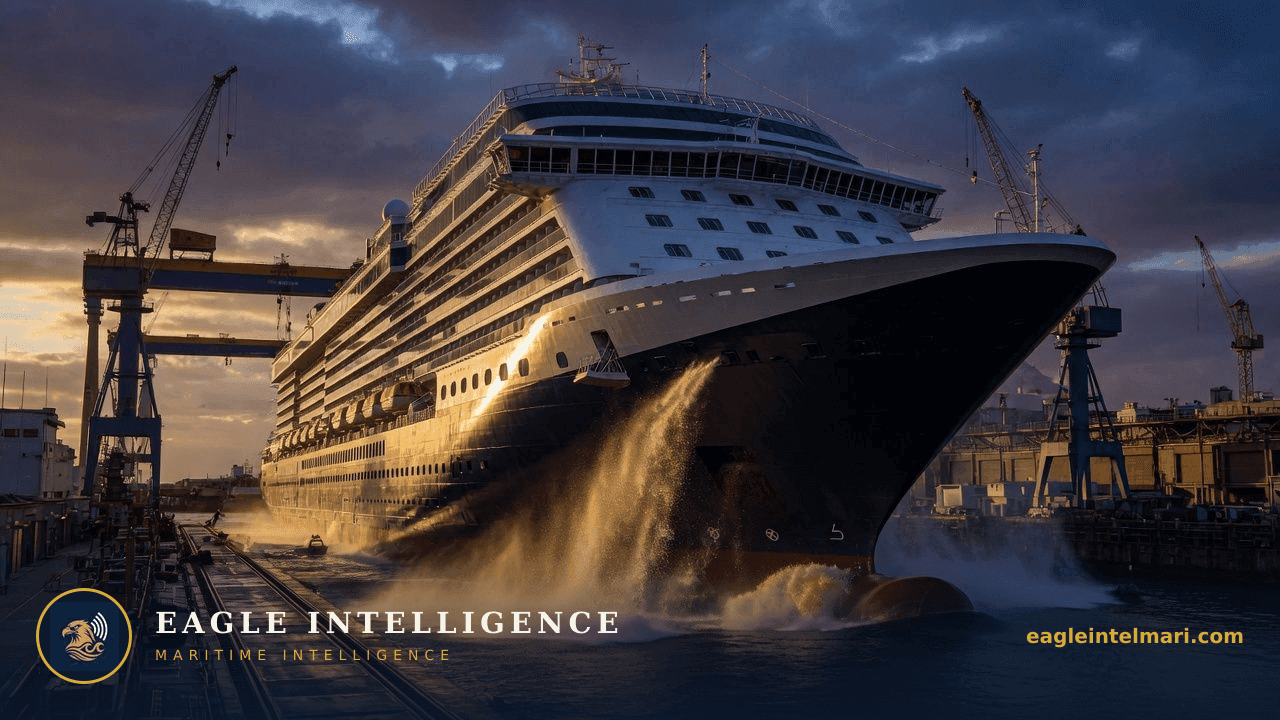
Fincantieri’s latest dual-fuel cruise ship launch underscores the accelerating adoption of LNG propulsion in passenger shipping, a move that balances regulatory compliance with operational economics amid tightening emissions rules.
Owners ordering new tonnage now must weigh LNG’s immediate compliance advantage against the longer-term risk that methanol or ammonia infrastructure matures faster than expected. Dual-fuel designs protect against CII and FuelEU Maritime penalties in the near term, yet they lock capital into engines that may require expensive retrofits by the mid-2030s if green-fuel prices fall. Charterers, particularly the large vacation brands, are already embedding fuel-flexibility clauses in newbuilding contracts to avoid stranded assets.
Major cruise ports in the Mediterranean and Caribbean still lack sufficient LNG capacity for simultaneous large-vessel calls. Operators scheduling dual-fuel ships therefore face routing constraints that can add days to itineraries or force reliance on costlier spot bunkers. Flag states and port authorities that move first on dedicated LNG berths will capture increased turnaround traffic; those that delay risk losing calls to competitors such as Barcelona or Miami.
Insurers view LNG cruise ships as lower-emission risks for pollution cover but higher for machinery damage during the first two years of operation. Early claims data from similar dual-fuel ferries and containerships show elevated incidence of gas-handling system faults. Underwriters are therefore applying modest premium loadings on new dual-fuel tonnage while demanding enhanced crew-training attestations before granting full navigation limits.
Seafarers transitioning to dual-fuel cruise vessels require STCW endorsements for gas-fuel handling that are still in short supply. Companies that invest early in simulator-based training programs reduce downtime during the first six months post-delivery. Unions are already negotiating higher wage scales for certified LNG officers, creating a two-tier labor market that will affect crewing costs across the passenger sector.
If global LNG spot prices remain below $12 per million Btu, more than 60 percent of new cruise orders will specify dual-fuel LNG. Should methanol achieve cost parity with LNG by 2028, the current wave of dual-fuel contracts will slow sharply and owners will pivot to methanol-ready designs. A third pathway sees regulatory tightening that effectively penalizes fossil LNG after 2027, forcing rapid adoption of drop-in biofuels on existing dual-fuel hulls and accelerating scrubber retrofits on older tonnage.
The cruise sector’s visible commitment to LNG sends a demand signal that influences LNG carrier and bunkering-vessel ordering cycles. Energy traders tracking these movements can anticipate regional price dislocations at ports preparing for cruise inflows. Shipowners in the ro-ro and ferry segments watch the same orderbook closely, using cruise yard slots as a proxy for overall dual-fuel equipment availability and pricing.
Advertisement
Advertisement
⚠️ Intelligence Disclaimer: This analysis is produced by Eagle Intelligence's AI-assisted automated analysis system and is provided for informational purposes only. See our editorial standards. It is not a substitute for official maritime safety advisories from UKMTO, MSCHOA, IMO, or flag state authorities. Operational decisions should always be based on official guidance and professional judgment. Eagle Intelligence accepts no liability for any loss arising from reliance on this content.
Live chokepoint status, war-risk shifts, and the daily maritime wire, straight to your inbox. Free.
Leave a comment
All comments moderated for quality
