Shipowners finalising newbuilding strategies now confront a clear market signal that LNG has captured the majority of alternative-fuel commitments, locking in fuel and compliance choices for the next decade.
Advertisement
Advertisement
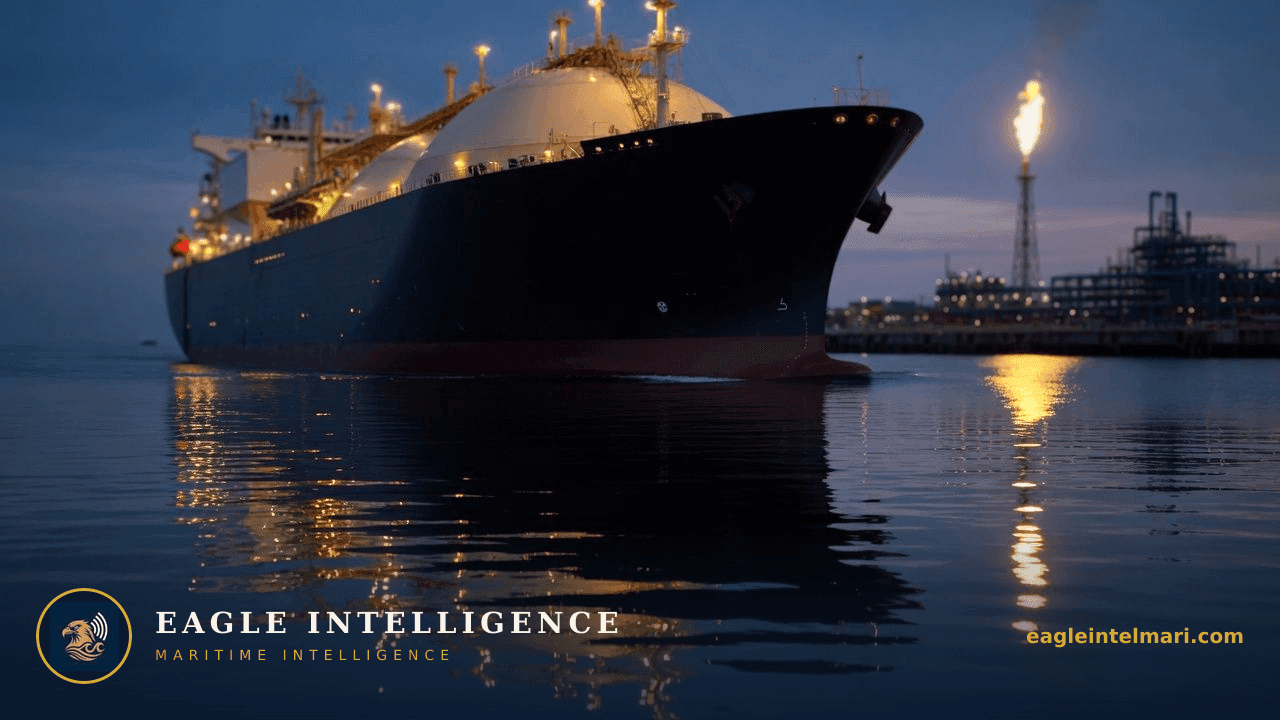
Shipowners and charterers placing newbuilding orders must now treat LNG as the dominant near-term alternative fuel after DNV data showed ten of the fifteen alternative-fuelled vessels contracted in June will run on LNG.
The single-month split leaves little ambiguity. Ten vessels opted for LNG propulsion while the remaining five were spread across methanol, ammonia and battery hybrids. For owners weighing capital commitments today, this ratio translates into concrete yard availability, engine supply chains and class-society experience that other fuels still lack.
An owner ordering a 180,000-cbm LNG carrier or a 14,000-TEU containership now secures an engine type already in serial production and supported by an established global bunkering footprint. Delaying the decision in hope of ammonia-ready designs risks losing slot priority at yards already allocating capacity to dual-fuel LNG projects. For fleets with replacement cycles between 2027 and 2030, the June figures effectively shorten the decision horizon by one to two years.
Charterers negotiating multi-year time charters on these newbuildings will face higher fixed hire rates reflecting the premium for LNG dual-fuel tonnage, yet they gain predictable voyage costs and regulatory headroom under both IMO and EU ETS rules. Those unwilling to absorb the differential will increasingly find themselves competing for a shrinking pool of conventional tonnage whose residual trading life is being compressed by port restrictions and investor ESG screens.
Underwriters are already modelling the lower frequency but higher severity profile of LNG-fuelled casualties, particularly containment and cryogenic system failures. Early indications suggest modest premium reductions for vessels with proven containment systems and experienced crews, while methanol and ammonia newbuildings may carry temporary loading until loss records accumulate. Owners of the ten June LNG orders can therefore expect differentiated terms once the vessels enter service.
Major bunkering hubs from Singapore to Rotterdam have accelerated LNG infrastructure spend precisely because orderbook visibility now supports throughput forecasts. Flag states offering tonnage-tax rebates for alternative-fuel vessels are likewise seeing the clearest uptake from LNG projects, creating a self-reinforcing loop that further distances ammonia and methanol on regulatory incentives.
Should July or August figures show methanol or ammonia crossing the 30 percent share threshold, the current momentum could stall. Conversely, sustained LNG dominance above 60 percent would accelerate yard standardisation around single engine platforms, raising the cost of switching later and widening the commercial gap between early LNG adopters and those still holding conventional tonnage.
Watch the July DNV release for the next monthly share reading; any sustained move above two-thirds LNG would lock the near-term fuel pathway for the majority of the orderbook through 2028.
Advertisement
Advertisement
⚠️ Intelligence Disclaimer: This analysis is produced by Eagle Intelligence's AI-assisted automated analysis system and is provided for informational purposes only. See our editorial standards. It is not a substitute for official maritime safety advisories from UKMTO, MSCHOA, IMO, or flag state authorities. Operational decisions should always be based on official guidance and professional judgment. Eagle Intelligence accepts no liability for any loss arising from reliance on this content.
Live chokepoint status, war-risk shifts, and the daily maritime wire, straight to your inbox. Free.
Leave a comment
All comments moderated for quality
