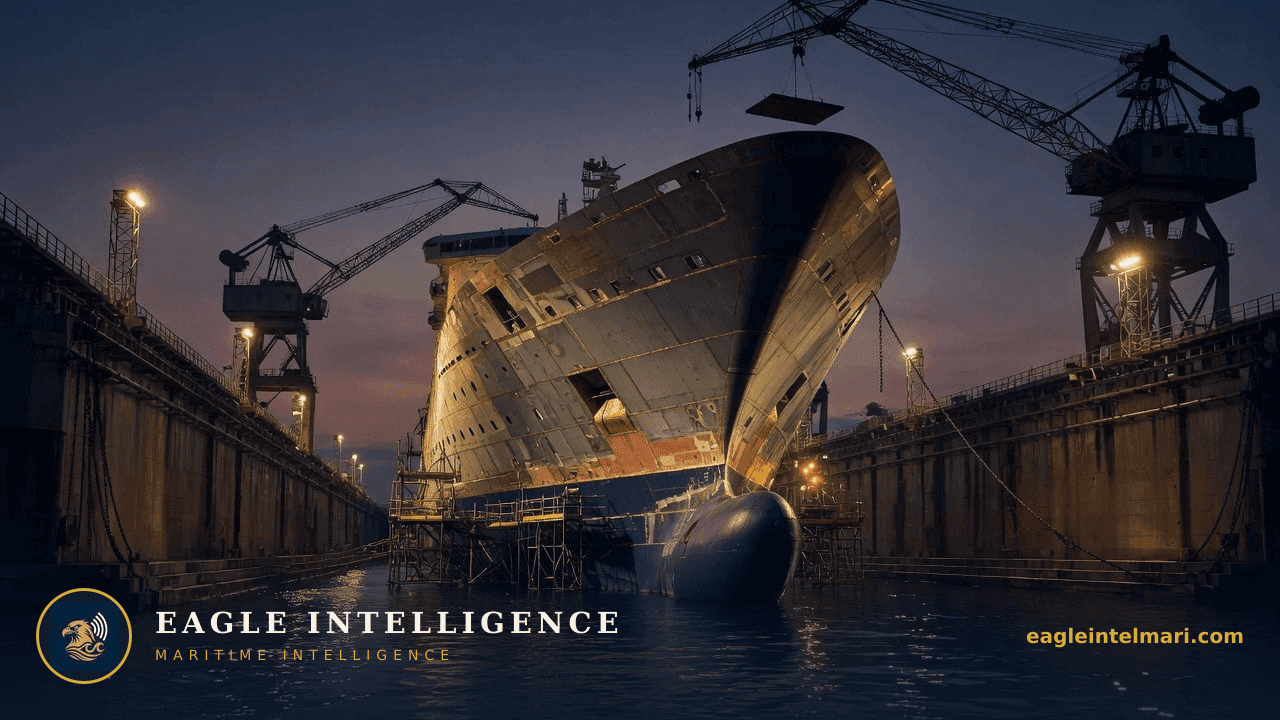
MSC Cruises and MEYER WERFT are finalizing a four-ship newbuilding deal with options for two more, tightening slots at the German yard and shaping financing, delivery schedules and competitive dynamics for passenger tonnage through 2030.
Advertisement
Advertisement
Cruise operators and European shipbuilders now face a concrete decision on whether to commit capital and yard capacity to four large passenger vessels whose construction will stretch into the early 2030s.
MEYER WERFT’s Papenburg and Rostock facilities have limited remaining availability for vessels above 140,000 gross tons. Securing four firm orders plus two options will lock roughly 1.2 million gross tons of complex outfitting work through 2031. For owners of LNG carriers or offshore units still contemplating European builds, the window for 2028-2029 deliveries is closing faster than Asian alternatives can absorb.
The letter of intent signed in December 2025 already specifies “next-generation” features. Industry sources indicate MSC is pressing for dual-fuel capability plus substantial battery-hybrid systems and advanced wastewater treatment to meet both IMO and EU ETS requirements from delivery. Early selection of these systems will fix long-term fuel procurement strategies and determine whether the vessels can avoid costly retrofits once the FuelEU Maritime regulation tightens in 2030.
P&I and hull underwriters are watching the financing package closely. Four-vessel deals of this scale typically require 60-70 percent debt supported by export credit guarantees from Germany and Italy. The terms negotiated in the coming weeks will set benchmarks for cover ratios and premium levels on future cruise newbuildings. Any widening of deductibles or introduction of cyber-risk exclusions will ripple across the entire passenger fleet segment.
Each new vessel will require approximately 1,800 crew. With four hulls arriving in quick succession, MSC will need to expand its recruitment pipeline well before steel is cut. Manning agencies rotating officers through Mediterranean and Caribbean home ports should model a 15-20 percent increase in senior bridge and engine-room billets between 2028 and 2032.
The vessels are expected to exceed 180,000 gross tons, requiring deeper dredged approaches and larger turning basins at several planned home ports. Terminal operators in Barcelona, Miami and Singapore that have already committed capital expenditure schedules through 2028 now have a clearer signal on when they must accelerate quay and passenger-flow upgrades.
Royal Caribbean and Carnival have held back from fresh European orders since 2023. If MSC closes this contract, the remaining two major yards capable of building vessels above 150,000 gross tons will have fewer open slots before 2030. Charterers and private-equity funds evaluating second-hand tonnage will see a sharper bifurcation between modern, fuel-efficient units and older vessels facing higher compliance costs.
Advertisement
Advertisement
⚠️ Intelligence Disclaimer: This analysis is produced by Eagle Intelligence's AI-assisted automated analysis system and is provided for informational purposes only. See our editorial standards. It is not a substitute for official maritime safety advisories from UKMTO, MSCHOA, IMO, or flag state authorities. Operational decisions should always be based on official guidance and professional judgment. Eagle Intelligence accepts no liability for any loss arising from reliance on this content.
Live chokepoint status, war-risk shifts, and the daily maritime wire, straight to your inbox. Free.
Leave a comment
All comments moderated for quality
