Hormuz Reopening Bets Trigger Indian Ocean Tanker Reversals
At least two oil tankers bound for African discharge have reversed course in the Indian Ocean this week, repositioning for Gulf loadings ahead of any Strait of Hormuz reopening.
Live war-risk alerts, Hormuz status, regulatory changes, port disruptions and shipping-market intelligence — updated around the clock.

Seven sanctioned Russian tankers have been spoofing AIS signals for 90 days to mask voyages from Novorossiysk while US-sanctioned LPG carriers were removed from Iran’s PGSA non-compliance list; the pattern shows enforcement announcements outpacing actual detentions and leaves charterers, agents and crews exposed to unpaid claims and port refusals.
Eagle Intelligence · Read full article →

At least two oil tankers bound for African discharge have reversed course in the Indian Ocean this week, repositioning for Gulf loadings ahead of any Strait of Hormuz reopening.

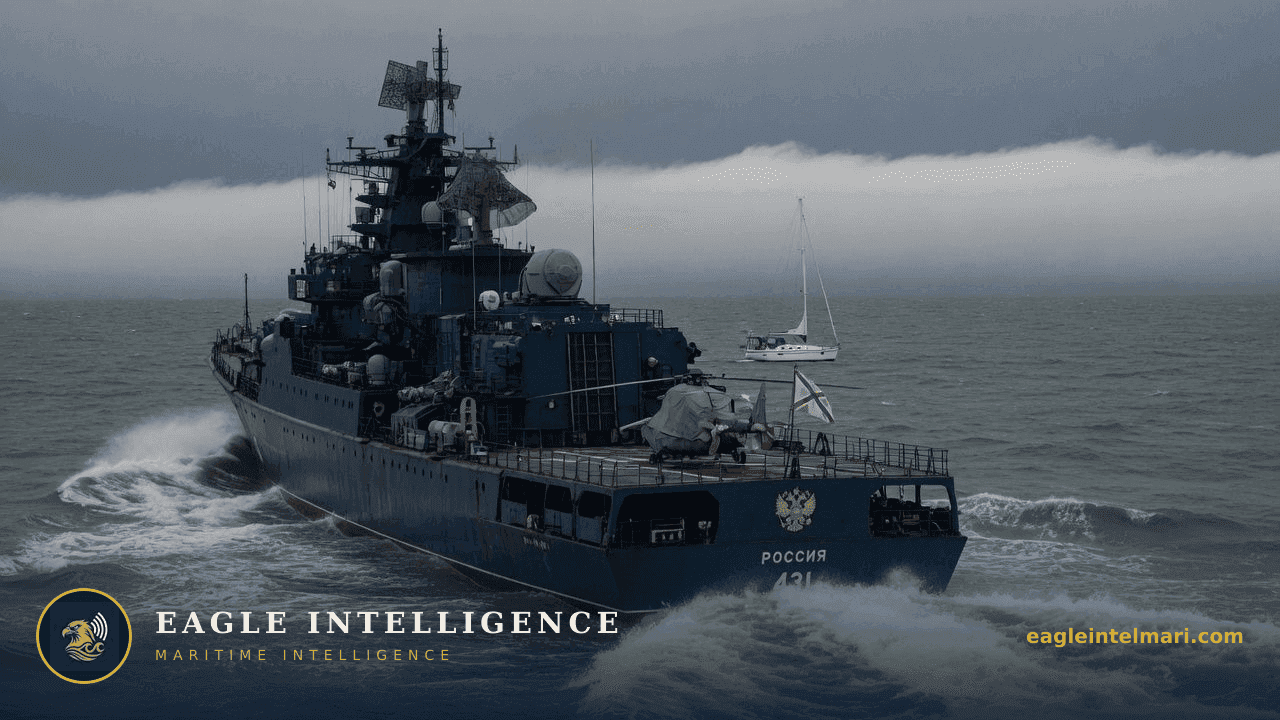
Prime Minister Starmer branded the incident reckless after a Russian frigate fired warning shots to divert a UK-flagged yacht close to British waters, underscoring fresh naval friction in the Dover Strait.

Ottawa's addition of 121 shadow-fleet ships and tighter service prohibitions raises the operational cost and legal exposure for any entity still moving Russian energy cargoes, with immediate knock-on effects for insurers, charterers and flag registries.

Fresh Pentagon routing advice exposes elevated threats along the southern corridor through the Strait of Hormuz just as Washington and Tehran prepare to implement a de-escalation memorandum.

CMA CGM’s new peak-season surcharge of US$450 per TEU from northern and central China to Durban, Port Elizabeth and Cape Town signals tightening capacity and rising seasonal demand on the trade lane just as carriers reposition vessels for northern summer peaks.

The Dutch contract for F21 heavyweight torpedoes marks the weapon’s debut in a NATO conventional submarine force, sharpening undersea striking power in the North Atlantic and Baltic approaches.

The day's source material is dominated by reporting on a US-Iran ceasefire and preliminary agreement to reopen the Strait of Hormuz, with multiple outlets confirming initial ship movements and a 60-day toll-free window whose extension remains unclear. Secondary items include new granular LNG emissions data for IMO consideration, Indian missile tests expanding anti-ship coverage in the northern Indian Ocean, and firming LNG export volumes that support Atlantic carrier demand. These threads connect through their direct effects on routing, premiums and regulatory pressure in key energy lanes.

A new GAO report to Congress highlights critical organizational gaps that threaten the Navy’s timeline for deploying robotic autonomous systems at the scale required to counter peer adversaries in dispersed operations.

House and Senate defense committees have stripped presidential waiver authority for foreign-built warships in the FY2027 bill, directly constraining the administration's plan to supplement domestic yards with allied construction.

SEA-LNG’s white paper, built on Rystad’s full-cargo tracking, gives regulators and flag states the granular proof they lacked to move LNG shipping from voluntary targets to binding rules.
Showing 401–410 of 921 articles