Ottawa's addition of 121 shadow-fleet ships and tighter service prohibitions raises the operational cost and legal exposure for any entity still moving Russian energy cargoes, with immediate knock-on effects for insurers, charterers and flag registries.
Advertisement
Advertisement
Canada has expanded its Russia sanctions to encompass 121 shadow-fleet vessels and five trading venues, materially increasing the legal and financial friction surrounding Russian energy exports.
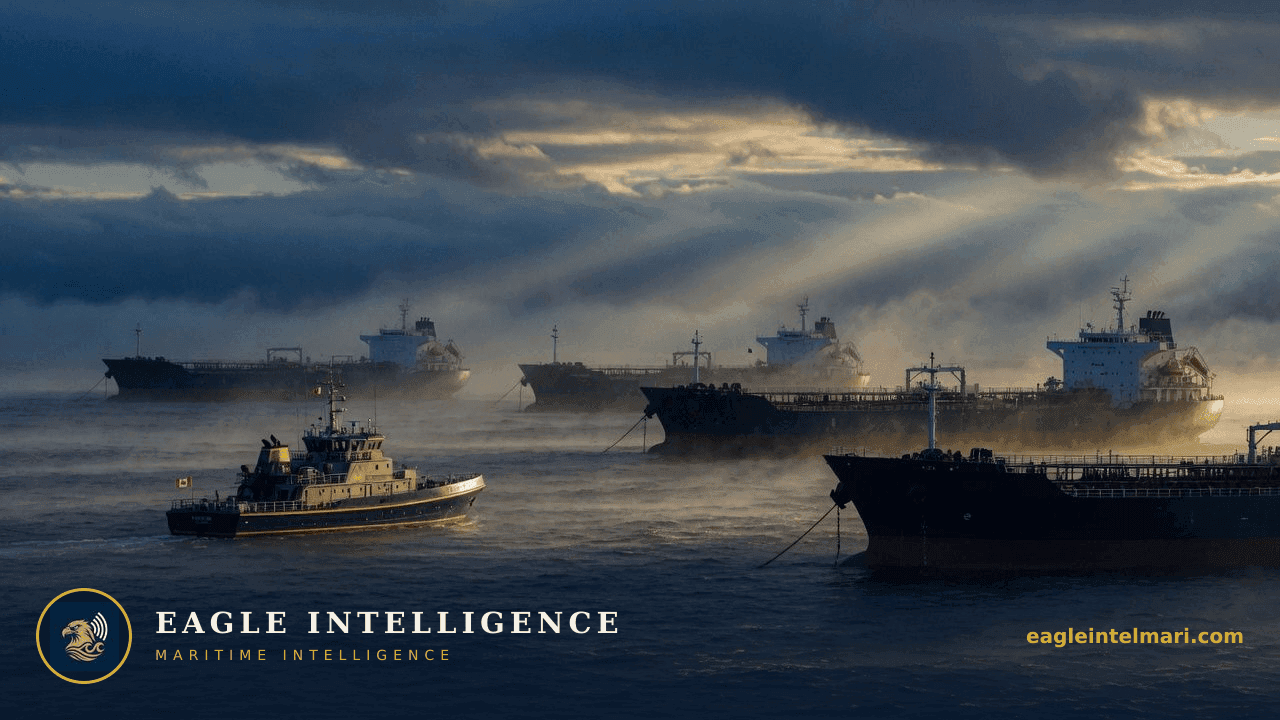
The list sweeps across vessel types far beyond the usual crude-oil tankers. Product tankers, LNG carriers, bulk carriers, container ships, Ro-Ro vessels, offshore supply ships and even floating storage units now appear. This diversity signals that Ottawa is no longer focused solely on crude exports but is targeting the wider logistics web that sustains Russian seaborne trade, including secondary movements of refined products and project cargo supporting the defence-industrial base.
The amended regulations now explicitly bar any person outside Canada from receiving financial, insurance or other services linked to the listed ships. Because the prohibition applies extraterritorially, a Singapore-based manager or a Dubai-based insurer can no longer safely handle cover or financing for any of the 121 vessels without risking secondary sanctions exposure. The measure effectively converts Canadian sanctions into a global compliance trigger for counterparties that previously treated Ottawa's list as secondary to EU or UK measures.
Many shadow-fleet operators rely on rapid flag changes and obscure registries to evade designation. By publishing such a large batch at once, Canada reduces the pool of clean flags available for quick rotation. Registries that still accept Russian-linked tonnage now face heightened due-diligence costs and the prospect of their own vessels appearing on future lists. Historical precedent from the Iran shadow fleet shows that once three or more major jurisdictions align on designations, average flag tenure drops from months to weeks.
Traders who have continued to lift Russian crude or products on non-designated tonnage must now audit entire voyage histories. Any vessel that has carried a listed ship’s cargo or used shared ship-to-ship transfer equipment risks being viewed as benefiting a designated person. The result is likely a further bifurcation of the fleet: a shrinking core of designated or high-risk tonnage that commands deep discounts, and a premium segment of verified non-Russian tonnage that faces longer queue times at loading terminals.
Protection-and-indemnity clubs and hull underwriters are the first commercial actors required to act. Most clubs already exclude cover for sanctioned trades; the new Canadian list gives them explicit grounds to issue notices of cancellation or to demand enhanced warranties. Clubs with significant North American membership are particularly exposed, because providing even defence cover to a listed vessel could be interpreted as a prohibited service. Expect accelerated withdrawal of cover and a sharp rise in war-risk and sanctions-related premium loadings within the next quarter.
If enforcement remains declaratory and few vessels are physically detained, the designations will function mainly as a compliance tax, slowly eroding shadow-fleet margins without halting flows. Should Canada coordinate with the US and UK on joint detentions or port-state actions in the coming months, a rapid contraction in available shadow tonnage could follow, pushing Russian export discounts wider. A third scenario sees Russia accelerate ship-to-ship transfers inside its own territorial waters and increase reliance on its own flagged or allied-state tonnage, shortening voyage legs and raising demurrage costs for buyers. The trigger distinguishing these outcomes will be whether Canada or its allies move from designation to active interdiction within the next 90 days.
Advertisement
Advertisement
⚠️ Intelligence Disclaimer: This analysis is produced by Eagle Intelligence's AI-assisted automated analysis system and is provided for informational purposes only. See our editorial standards. It is not a substitute for official maritime safety advisories from UKMTO, MSCHOA, IMO, or flag state authorities. Operational decisions should always be based on official guidance and professional judgment. Eagle Intelligence accepts no liability for any loss arising from reliance on this content.
Live chokepoint status, war-risk shifts, and the daily maritime wire, straight to your inbox. Free.
Leave a comment
All comments moderated for quality
