SEA-LNG’s white paper, built on Rystad’s full-cargo tracking, gives regulators and flag states the granular proof they lacked to move LNG shipping from voluntary targets to binding rules.
Advertisement
Advertisement
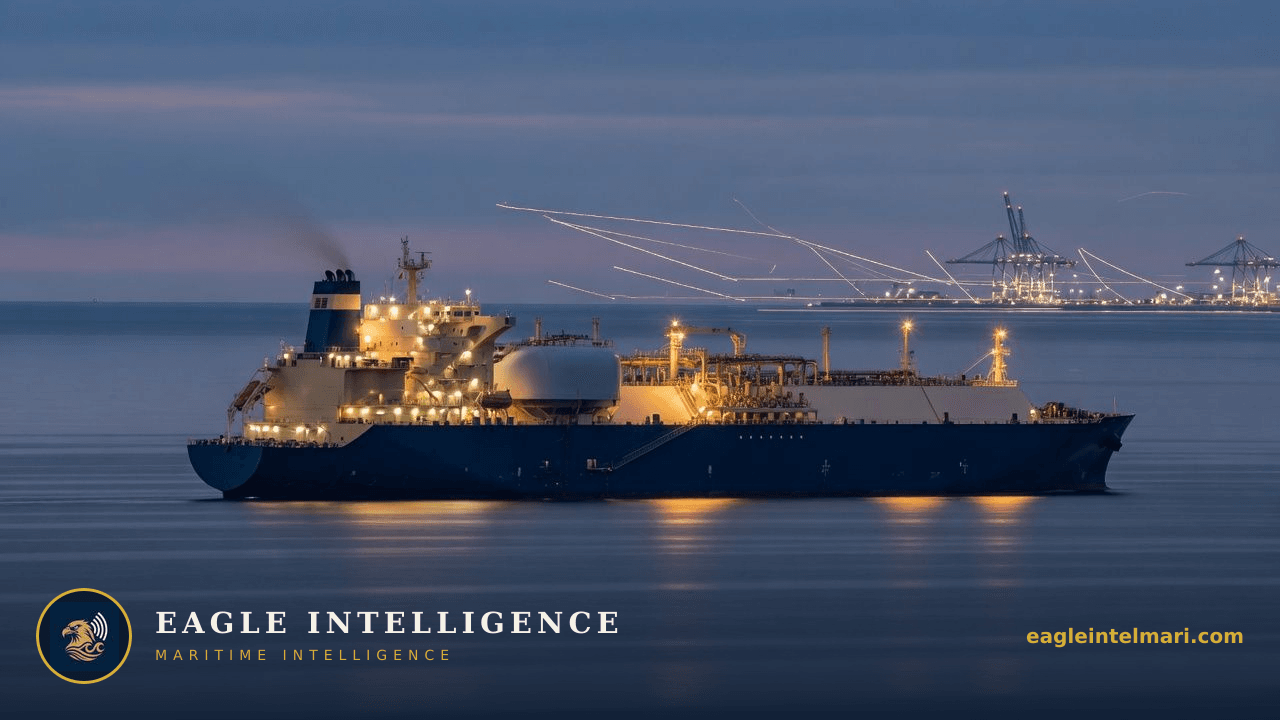
Norway and South Korea have thrown their weight behind the first global study that replaces modelled estimates with actual per-cargo emissions figures for every LNG voyage completed in recent years. The work, commissioned by SEA-LNG and executed with Rystad Energy’s vessel-level dataset, has been formally lodged at the International Maritime Organization and is already shaping the technical case for tighter methane and CO₂ accounting.
Rystad’s methodology follows each LNG parcel from liquefaction plant through dedicated carriers to the receiving terminal, capturing fuel consumption, boil-off rates and auxiliary power use at the individual ship level. This replaces the broad-brush emission factors previously used by the IMO’s Marine Environment Protection Committee. The shift matters because LNG carriers exhibit wide variance in age, propulsion type and containment system; a 2020-built X-DF vessel burns markedly less fuel than a steam-turbine ship built before 2010.
Roughly 18 % of the current LNG fleet still relies on steam turbines. These vessels appear at the high end of the new emissions ledger. Charterers already screen candidates on EEXI and CII performance; once the Rystad figures become reference data, older tonnage will attract shorter charters or outright exclusion from certain routes. Japanese and Korean owners holding legacy steam ships are therefore accelerating dual-fuel retrofits or early recycling programmes.
Hull and machinery insurers have long priced LNG risks on loss history and technical specification. Emissions data now enters the risk matrix through potential regulatory non-compliance fines and port-state detentions. Clubs are expected to introduce differentiated premiums for vessels whose verified methane slip exceeds forthcoming IMO thresholds. Early movers that fit continuous-emission monitoring systems could secure 8–12 % reductions in annual cover costs.
Energy traders have historically passed emissions responsibility down the chain via standard charter-party clauses. With cargo-level attribution now available, major buyers in Europe and Northeast Asia can demand verified low-emission cargoes. This creates a two-tier spot market: cargoes lifted on modern tonnage command a measurable premium, while those on older ships face discounts or outright rejection by ESG-sensitive offtakers.
Norway’s sponsorship signals that the Norwegian Maritime Authority will likely incorporate the Rystad methodology into its port-state control targeting matrix. South Korea’s support suggests Busan and Ulsan may become early adopters of emissions-based berthing priority. Flag registries competing for LNG tonnage, notably Liberia and Marshall Islands, are quietly preparing guidance that mirrors the new dataset to retain market share.
If the white paper gains traction at MEPC 83, the most likely outcome is a methane slip correction factor added to the CII formula from 2027. A second scenario sees regional schemes—EU ETS expansion or California’s proposed maritime rules—adopt the dataset first, creating compliance fragmentation that raises administrative costs for global operators. The third, lower-probability path involves a full well-to-wake standard that forces owners to report upstream liquefaction emissions as well, shifting leverage toward integrated energy majors that control both production and shipping.
Advertisement
Advertisement
⚠️ Intelligence Disclaimer: This analysis is produced by Eagle Intelligence's AI-assisted automated analysis system and is provided for informational purposes only. See our editorial standards. It is not a substitute for official maritime safety advisories from UKMTO, MSCHOA, IMO, or flag state authorities. Operational decisions should always be based on official guidance and professional judgment. Eagle Intelligence accepts no liability for any loss arising from reliance on this content.
Live chokepoint status, war-risk shifts, and the daily maritime wire, straight to your inbox. Free.
Leave a comment
All comments moderated for quality
