U.S. Energy Secretary Chris Wright reports meaningfully higher ship traffic and oil exports through the Strait of Hormuz despite the ongoing three-month war, indicating that commercial operators are pressing through elevated threats rather than halting movements.
Advertisement
Advertisement
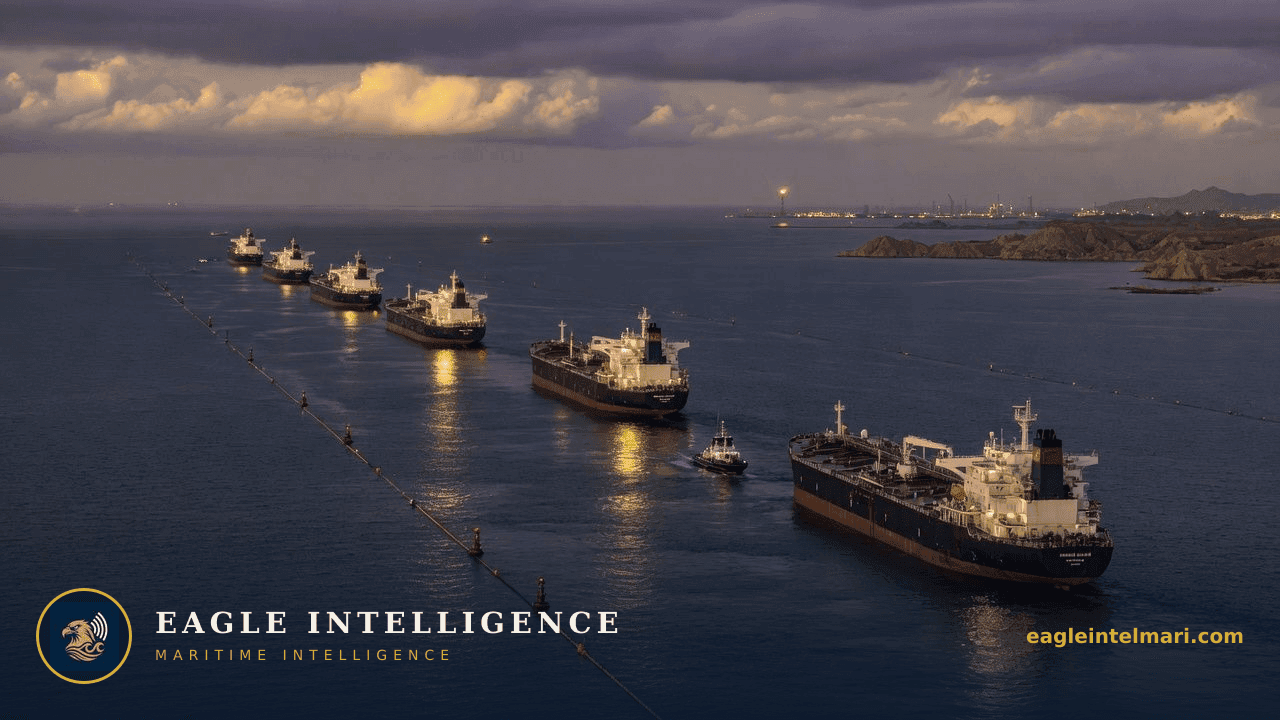
U.S. Energy Secretary Chris Wright’s Tuesday remark that tanker traffic and crude exports through the Strait of Hormuz are rising meaningfully, even as Washington and Tehran remain locked in a three-month war, marks a notable shift in commercial behavior under sustained kinetic conditions.
Tanker operators have not withdrawn; instead they appear to be testing the practical limits of Iranian strike capability and U.S. escort availability. The strait’s narrow shipping lanes remain the only viable export route for roughly 18 million barrels per day of Gulf crude and condensate. With storage onshore already near capacity in several Iranian terminals, owners and charterers have evidently concluded that the revenue premium for moving barrels now outweighs the daily war-risk exposure.
Hull and P&I underwriters have already adjusted. Recent fixture reports show war-risk premiums for Hormuz transits holding in the 0.8–1.2 percent of hull-value range for most VLCCs, down from the initial spike above 2 percent when hostilities began in early March. The modest compression suggests insurers now treat the threat as chronic rather than acute, provided vessels maintain daylight transits and accept routing advisories issued by EUNAVFOR and the U.S. Fifth Fleet.
Oil traders and national oil companies have responded by extending period charters rather than relying on spot tonnage. Average VLCC rates from the Gulf to China have settled near $65,000 per day, roughly double pre-conflict levels, yet still below the peaks seen in April. Charterers appear willing to absorb the cost because alternative routing around the Cape adds 18–22 days and erodes the delivered margin on Middle Eastern barrels.
Seafarer unions have quietly raised concerns over fatigue and psychological strain. Many vessels now operate with augmented crews of 28–30 rather than the standard 22–24, increasing operating costs and complicating crew-change logistics. Flag states such as Liberia and Panama have issued fresh guidance urging masters to file detailed voyage plans 72 hours in advance, a step that adds administrative friction but has not yet triggered widespread reflagging.
Scenario one sees traffic remain elevated through the summer if Tehran continues calibrated harassment without closing the strait; sustained exports would keep Brent near $78–82 and VLCC earnings above $50,000 per day. Scenario two involves a sharp escalation—perhaps a successful strike on a major tanker—that pushes premiums above 3 percent and forces a 30–40 percent drop in transits within two weeks. Scenario three is a negotiated stand-down by late August that restores pre-war traffic patterns and collapses the war-risk surcharge within a month; the trigger would be verifiable U.S.–Iran deconfliction talks rather than mere statements.
Fujairah and other regional storage hubs are already expanding ullage reservations, anticipating possible future disruptions. Energy traders have widened their option books for September and October loadings, while hull insurers have begun modeling a prolonged “gray-zone” environment lasting into 2027. The single clearest signal from Wright’s assessment is that the market has absorbed the reality of conflict without yet reaching a breaking point.
Advertisement
Advertisement
Live Hormuz transit status and war-risk band.
Live 1–5 shipping war-risk level across monitored chokepoints.
⚠️ Intelligence Disclaimer: This analysis is produced by Eagle Intelligence's AI-assisted automated analysis system and is provided for informational purposes only. See our editorial standards. It is not a substitute for official maritime safety advisories from UKMTO, MSCHOA, IMO, or flag state authorities. Operational decisions should always be based on official guidance and professional judgment. Eagle Intelligence accepts no liability for any loss arising from reliance on this content.
Live chokepoint status, war-risk shifts, and the daily maritime wire, straight to your inbox. Free.
Leave a comment
All comments moderated for quality
