The U.S.-Iran framework agreement announced today ends the immediate blockade and tanker attacks but defers the nuclear issue, triggering an initial drop in oil prices while exposing shipowners, insurers and traders to prolonged uncertainty over implementation.
Advertisement
Advertisement
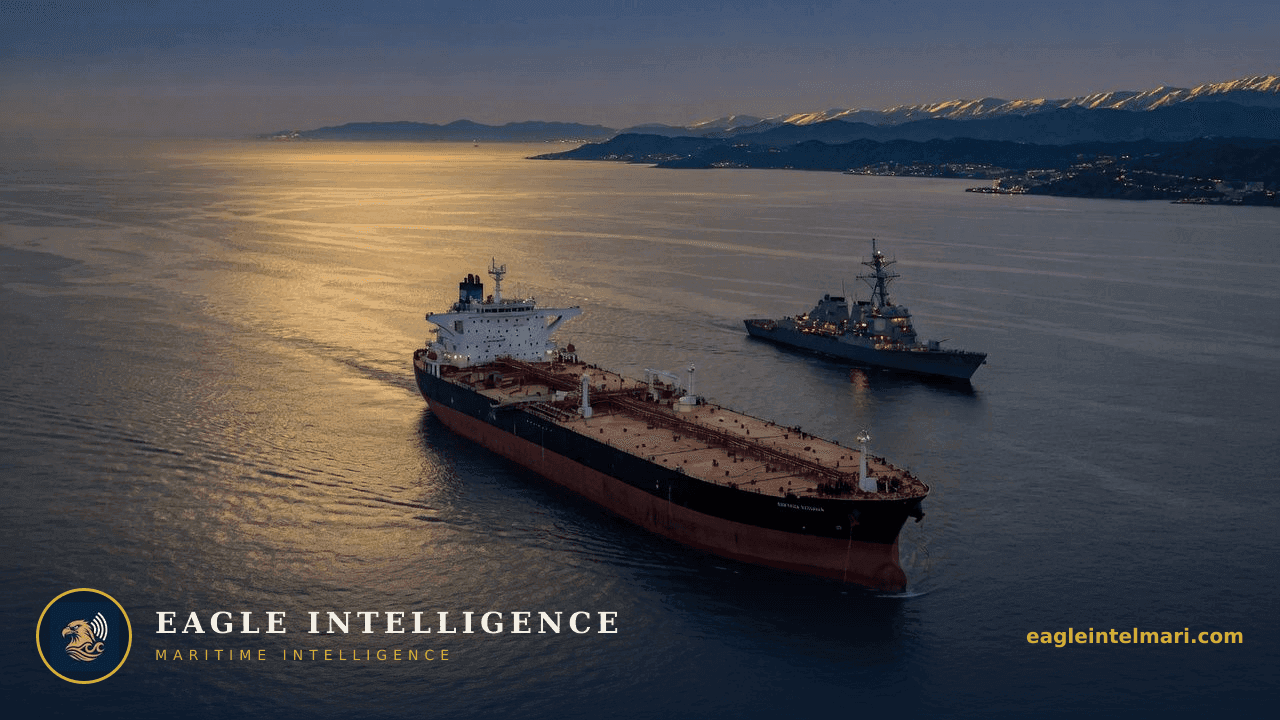
Washington and Tehran have now publicly confirmed a framework that halts active hostilities and lifts the U.S. naval blockade, allowing commercial traffic through the Strait of Hormuz to resume within days. Oil benchmarks fell sharply on the news, yet the accord explicitly shelves the Iranian nuclear program for separate talks, leaving the most durable source of regional friction untouched.
Brent crude shed more than four dollars a barrel in early trading after the announcement, reflecting immediate relief that 21 percent of global oil shipments can once again transit the 21-mile-wide chokepoint. Charterers who had diverted VLCCs around the Cape for the past six weeks are already issuing revised voyage orders, though most fixtures still carry war-risk riders that keep rates 35-40 percent above pre-crisis levels. The price reaction is narrower than the 12-dollar spike recorded after the initial mining incidents, signalling that markets are pricing a fragile truce rather than a comprehensive settlement.
Leading war-risk underwriters in London and Oslo have signalled they will maintain the current 0.75 percent additional premium on Hormuz transits for at least another 30 days pending written confirmation that Iranian naval assets have stood down. Several hull syndicates are demanding fresh AIS and escort data before releasing vessels that have been sheltering in Fujairah and Khor Fakkan. The decision keeps daily extra costs for a 300,000-dwt tanker above $180,000 on a loaded passage, preserving revenue for insurers even as physical risk declines.
Roughly 1,400 crew members remain on vessels that diverted or anchored during the closure; many contracts now exceed 11 months. Manning agencies report that Filipino and Indian seafarers are refusing re-engagement on Hormuz routes until written guarantees from flag states are in place. This hesitation is tightening the supply of experienced tanker officers at a moment when charterers want to accelerate sailings, pushing officer premiums up by an estimated 12 percent for the third quarter.
Panama and Liberia have both issued temporary guidance requiring enhanced reporting for vessels resuming Hormuz transits, while Fujairah is preparing to handle a 40 percent increase in bunker calls within the next fortnight. Omani authorities at Duqm are accelerating dredging of an additional berth to capture overflow from congested UAE facilities. These administrative moves will determine whether the physical reopening translates into smooth throughput or creates new bottlenecks at anchorage.
The framework’s durability hinges on two unresolved elements. First, the speed and transparency of Iranian mine clearance operations will decide whether owners accept the waterway as safe within the next ten days. Second, the separate nuclear negotiations lack a published timetable; any Iranian announcement of resumed enrichment above 60 percent would immediately re-trigger secondary sanctions and naval deployments. Should either trigger activate, daily transits could again fall below 20 vessels, restoring the $7-9 per barrel risk premium observed in late May.
A best-case path sees written mine-sweeping assurances issued within 72 hours and nuclear talks opened under IAEA auspices by mid-July, allowing war-risk premiums to halve by August. A middle path keeps limited naval patrols in place and nuclear talks stalled, sustaining elevated but predictable freight rates. A breakdown scenario follows any verified attack on a commercial vessel or Iranian enrichment announcement, prompting immediate re-imposition of the blockade and a renewed spike in both physical insurance costs and shadow-fleet activity.
Advertisement
Advertisement
Live Hormuz transit status and war-risk band.
Live 1–5 shipping war-risk level across monitored chokepoints.
⚠️ Intelligence Disclaimer: This analysis is produced by Eagle Intelligence's AI-assisted automated analysis system and is provided for informational purposes only. See our editorial standards. It is not a substitute for official maritime safety advisories from UKMTO, MSCHOA, IMO, or flag state authorities. Operational decisions should always be based on official guidance and professional judgment. Eagle Intelligence accepts no liability for any loss arising from reliance on this content.
Live chokepoint status, war-risk shifts, and the daily maritime wire, straight to your inbox. Free.
Leave a comment
All comments moderated for quality
