Oil shipments through the Strait of Hormuz increased sharply on Friday following the US-Iran ceasefire, yet Gulf exporters now face fresh questions over the conditions Iran intends to impose on vessels using the chokepoint.
Advertisement
Advertisement
Oil shipments through the Strait of Hormuz picked up on Friday after the United States and Iran signed a ceasefire deal, with Gulf producers preparing to raise exports despite concerns over conditions set by Tehran for using the vital waterway.
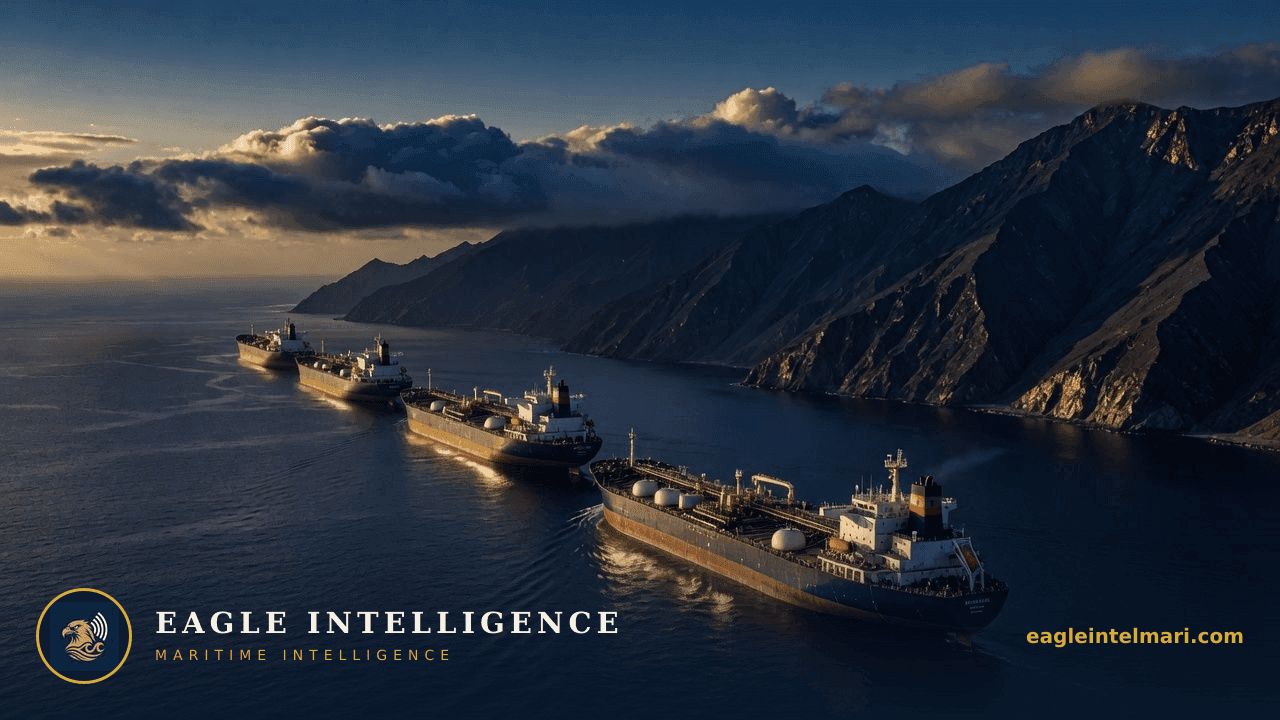
The sudden uptick in transits reflects the rapid unwinding of a defensive posture that had kept several very large crude carriers (VLCCs) and suezmaxes at anchor off Fujairah and in the Gulf of Oman for days. With hostilities paused, masters received revised routing instructions overnight, allowing laden vessels to resume the 21-mile transit between the Iranian and Omani shores. Early reports indicate at least nine VLCCs cleared the strait by midday Friday, a volume roughly double the daily average recorded during the preceding week of heightened alerts.
Iranian authorities have not published formal new rules, yet shipping sources describe demands for prior notification of cargo details, flag-state declarations, and in some cases an Iranian naval escort through the designated traffic separation scheme. These measures stop short of an outright closure but reassert Tehran’s longstanding claim that it can regulate passage in its territorial waters adjacent to the strait. The approach mirrors tactics used in 2019 when similar notification requirements were floated without ever being fully enforced.
Charterers who had already booked tonnage for July loadings now confront the prospect of additional war-risk surcharges even after the ceasefire. London market underwriters have indicated that rates for Hormuz transits may remain at 0.25–0.35 percent of hull value for the next 30 days while the scope of Iranian conditions is clarified. Some operators are exploring the longer Cape route for West African or European discharge, adding 12–14 days and roughly $1.8 million in extra fuel and hire costs per VLCC round voyage.
Protection and indemnity clubs are reviewing their cover for vessels that accept Iranian escorts or file the required notifications. Several clubs have already circulated draft circulars warning that any deviation from normal traffic-separation-scheme routing could trigger a requirement for additional premium or even temporary suspension of cover. Hull insurers, meanwhile, are tightening navigation warranties, particularly for vessels flagged in jurisdictions that maintain sanctions lists overlapping with Iranian entities.
Masters and chief officers on tankers regularly transiting Hormuz are receiving updated guidance from manning agents to log all communications with Iranian authorities and to avoid any action that could be construed as accepting a pilot or escort. Some Filipino and Indian crewing agencies have begun offering hazard bonuses for Hormuz passages, while a handful of senior officers have declined contracts that include the strait until the situation stabilizes.
The first scenario assumes Iran’s conditions remain largely administrative and are absorbed into routine reporting, allowing exports from Saudi Arabia, Iraq and the UAE to rise toward pre-ceasefire levels within three weeks. The second sees Tehran escalate by selectively delaying tankers that refuse escorts, pushing freight rates higher and prompting a temporary rerouting of perhaps 15 percent of Gulf crude via the Cape. The third and most disruptive pathway involves a fresh incident—whether accidental or deliberate—inside the strait that collapses the ceasefire and triggers a rapid reimposition of war-risk exclusions by major insurers.
Advertisement
Advertisement
Live Hormuz transit status and war-risk band.
Live 1–5 shipping war-risk level across monitored chokepoints.
⚠️ Intelligence Disclaimer: This analysis is produced by Eagle Intelligence's AI-assisted automated analysis system and is provided for informational purposes only. See our editorial standards. It is not a substitute for official maritime safety advisories from UKMTO, MSCHOA, IMO, or flag state authorities. Operational decisions should always be based on official guidance and professional judgment. Eagle Intelligence accepts no liability for any loss arising from reliance on this content.
Live chokepoint status, war-risk shifts, and the daily maritime wire, straight to your inbox. Free.
Leave a comment
All comments moderated for quality
