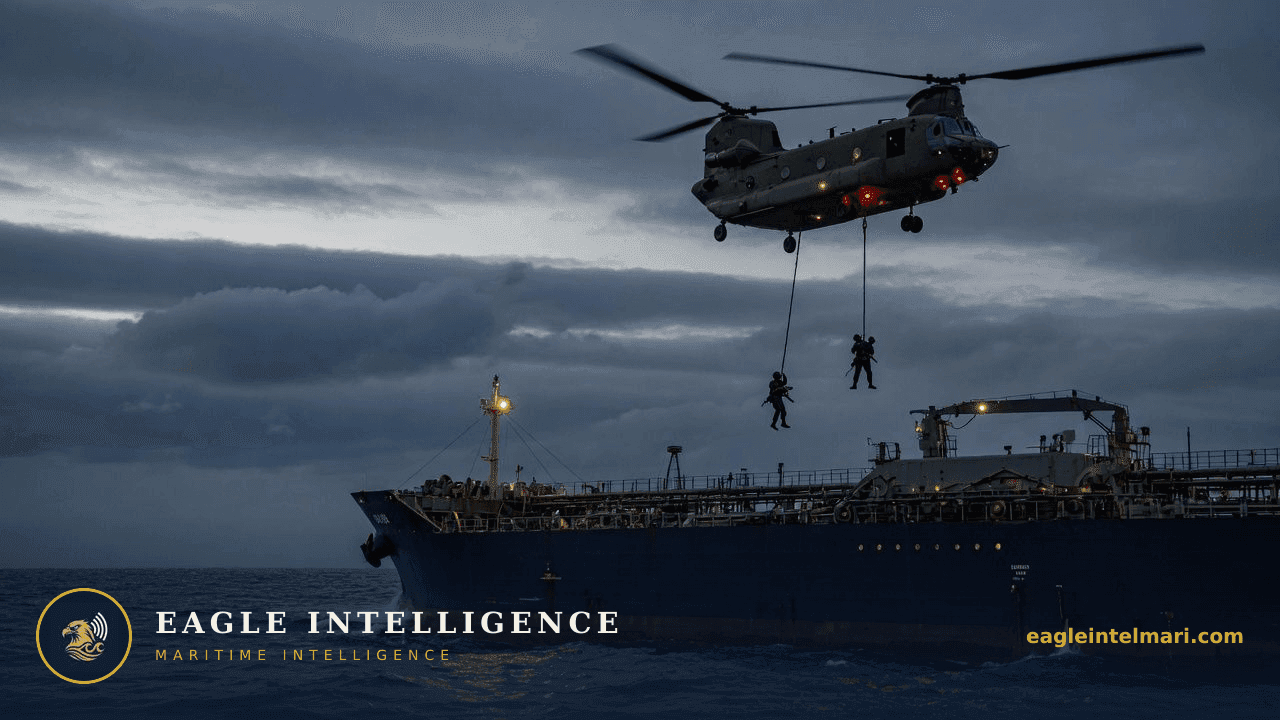
Royal Marine Commandos fast-roped onto a 244-metre Aframax tanker in the English Channel before dawn on Sunday, marking the first known UK interdiction of a suspected Russian shadow fleet vessel and exposing new enforcement risks for sanctioned oil movements.
Advertisement
Advertisement
Royal Marine Commandos fast-roped from RAF Chinooks onto the deck of a 244-metre Aframax in the pre-dawn hours of 14 June, executing the first publicly confirmed British boarding of a vessel linked to Russia’s shadow fleet. The operation signals London’s willingness to use kinetic enforcement inside its own waters to disrupt sanctioned crude flows.
The narrow shipping lane offers British forces sovereign jurisdiction, radar coverage, and rapid helicopter access from bases in Cornwall and Hampshire. Unlike distant chokepoints, the Channel allows immediate follow-on actions such as forced port entry or cargo detention without needing third-country cooperation. Operators who previously treated UK waters as a low-risk transit corridor must now recalculate routing.
The target vessel’s size, Aframax dimensions, and timing suggest it was attempting a routine ship-to-ship transfer handover near the UK’s 12-mile limit before proceeding to a European discharge port under a new name or flag. Fast-roping tactics indicate intelligence had already confirmed the vessel’s ownership chain and recent STS activity. Such operations reveal that Western navies can now match the speed and stealth previously enjoyed only by the shadow fleet.
Insurers that still provide cover to vessels with opaque ownership structures face direct questions from regulators. A successful boarding creates a paper trail that can be used to demonstrate knowledge of sanctions evasion, potentially triggering policy exclusions or regulatory fines. Clubs with high exposure to Greek or Turkish-managed tonnage are already reviewing their due-diligence thresholds for vessels that linger near STS zones.
Seafarers on shadow fleet vessels now confront a tangible risk of detention or criminal investigation in a NATO port. Masters who accept last-minute flag or name changes may find themselves personally liable under UK sanctions law. Recruitment agencies serving Russian-linked operators are likely to see higher wage demands or outright refusals from officers unwilling to sail through the Channel.
If follow-on boardings occur within the next four weeks, operators will divert tonnage around the north of Scotland, adding 1,200 nautical miles and roughly $180,000 in fuel and time costs per voyage. Should the operation remain an isolated demonstration, the fleet may simply increase night-time transits and reduce AIS gaps. A third path sees European ports adopt similar boarding protocols, forcing a rapid contraction in the number of vessels willing to carry discounted Russian crude.
Any sustained rerouting will tighten Aframax availability in the Atlantic basin and support higher TCEs for compliant tonnage. European refiners already paying a shadow-fleet premium may accelerate purchases of non-Russian barrels, shifting arbitrage flows toward West African and Brazilian grades. Energy traders are monitoring Baltic loadings for signs that volume is being held back until safer routing is confirmed.
Advertisement
Advertisement
⚠️ Intelligence Disclaimer: This analysis is produced by Eagle Intelligence's AI-assisted automated analysis system and is provided for informational purposes only. See our editorial standards. It is not a substitute for official maritime safety advisories from UKMTO, MSCHOA, IMO, or flag state authorities. Operational decisions should always be based on official guidance and professional judgment. Eagle Intelligence accepts no liability for any loss arising from reliance on this content.
Live chokepoint status, war-risk shifts, and the daily maritime wire, straight to your inbox. Free.
Leave a comment
All comments moderated for quality
