Ukrainian unmanned surface vessel attacks that sank a Rosatom-owned civilian ship and killed another Filipino crew member have shifted the conflict's maritime front line from military targets to commercial vessels, raising immediate questions over crew protection, war-risk premiums and flag-state duties.
Advertisement
Advertisement
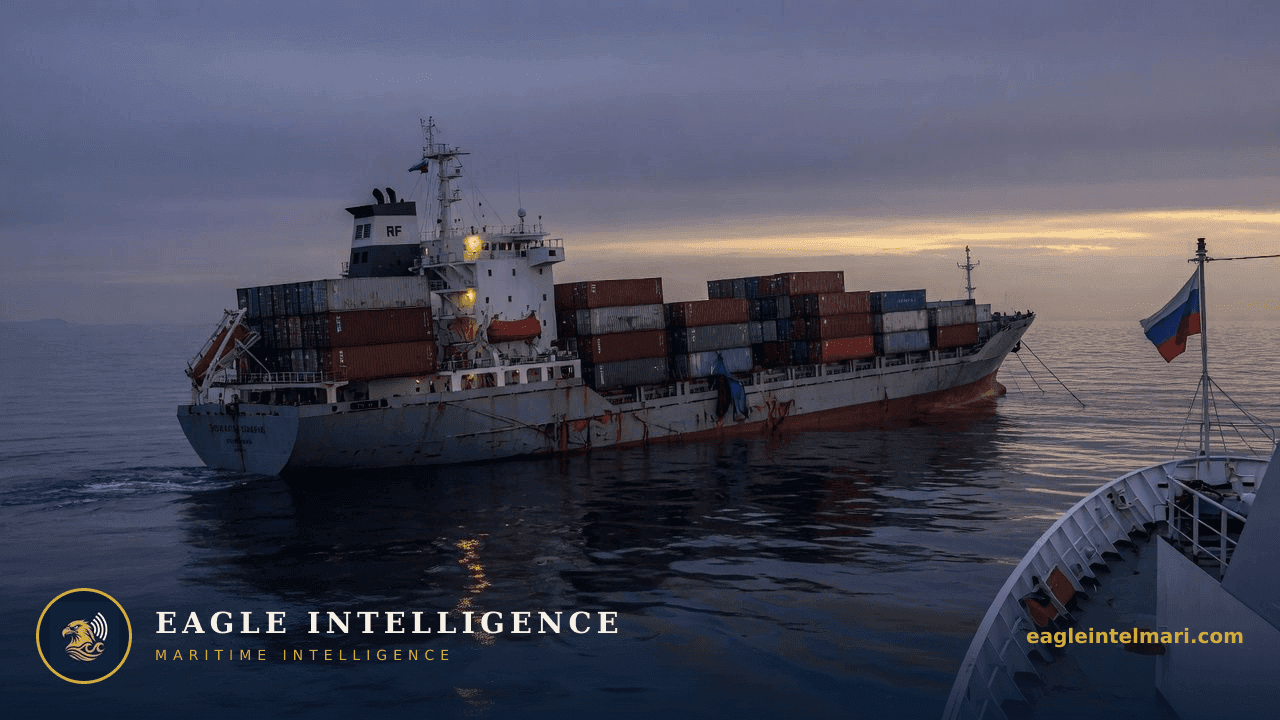
The day's reporting contains multiple Red Sea and Hormuz items, yet the editorial rotation explicitly bars repetition of Strait of Hormuz coverage unless a genuinely new dimension emerges. The clearest high-consequence development instead sits in the Black Sea. On 1 August 2026 two Ukrainian drones sank a civilian vessel owned by Russian state nuclear corporation Rosatom, while separate reporting confirmed the death of another Filipino seafarer in the same campaign. These incidents move the Ukraine conflict's maritime dimension from attacks on naval auxiliaries to direct strikes on commercial tonnage carrying mixed or civilian cargoes. The human and contractual consequences are immediate: seafarers from third countries now face lethal risk on vessels that are not flagged or owned by the combatant states.
Rosatom head Alexei Likhachev stated that two Ukrainian drones struck and sank the vessel overnight on 31 July–1 August while it was sailing in the Black Sea. The ship was described as civilian and owned by the state nuclear corporation. Parallel reporting from Ukrainian sources and The Maritime Executive confirmed the sinking of a Russian-flagged containership by Ukrainian USVs on the same night. A separate incident involved an oil tanker struck by similar means. On 1 August the Daily Tribune reported that another Filipino seafarer had died in the Black Sea attacks, adding to an earlier casualty. No official casualty figures beyond the single named fatality have been released by either side. Ukrainian authorities have not publicly claimed the Rosatom sinking, while Russian state media attributed both incidents to Kyiv-directed drones.
Black Sea routing for Russian-linked tonnage has already narrowed to corridors close to Russian and Turkish territorial waters. The sunk Rosatom vessel was not part of a declared convoy yet still came under sustained USV attack, indicating that Ukrainian forces now possess the endurance and targeting data to strike vessels outside organised naval formations. Container and tanker operators must therefore weigh the choice between accepting Russian naval escort—itself a potential target—or transiting without protection at higher speed and with darkened navigation lights. Both options increase fatigue for bridge teams and raise the probability of collision or grounding in the confined waters near the Kerch Strait approaches. Port calls at Novorossiysk and Tuapse remain open but now carry explicit war-risk declarations that many hull insurers are pricing on a per-voyage rather than annual basis.
Crew change logistics have deteriorated. Filipino ratings, who constitute a large share of Russian-owned tonnage, face flight cancellations and consular delays when attempting to join or leave vessels in the region. Manning agencies in Manila have begun advising members to refuse contracts that include Black Sea calls without enhanced war-risk bonuses and guaranteed repatriation clauses. The added cost per seafarer for a typical 4-month contract now exceeds $4,000 according to agency circulars, a figure that will be passed to charterers through rider clauses.
The vessel was Russian-owned yet civilian in character. Under the San Remo Manual, merchant vessels lose protection only when they make an effective contribution to military action and the targeting offers a definite military advantage. Ukrainian statements have framed all Russian commercial traffic as dual-use; however, no public evidence has been supplied that the Rosatom ship was carrying military cargo. Flag-state obligations under the Russian Federation therefore sit in tension with coastal-state duties of Turkey and Romania to render assistance to survivors. The absence of a declared exclusion zone further complicates insurance warranty compliance. Many policies still reference the 2022 JWC Hull War List, which lists the Black Sea north of 44°N as a high-risk area but does not automatically void cover for innocent passage. Operators that continue to trade without notifying underwriters within the contractual 48-hour window risk denial of claims.
Seafarer rights under the Maritime Labour Convention remain intact, yet enforcement is weak. The Philippines Overseas Employment Administration has not yet issued a formal advisory, but the death of a second national has triggered internal review. Abandonment risk rises if a struck vessel is declared a total loss and the owning company refuses to fund repatriation from a third country.
War-risk premiums for Black Sea transits have already moved from 0.8–1.2 % of hull value in late July to 1.8–2.5 % within 24 hours of the Rosatom sinking, according to London broker indications. The differential is largest for vessels with any Russian beneficial ownership, even when the flag is Marshall Islands or Liberia. Reinsurance treaties that cap aggregate losses per conflict theatre are now being stress-tested; several syndicates have signalled they will impose sub-limits of $50 million per vessel for USV strikes. Cargo interests are responding by diverting high-value containerised goods to rail via China or to longer sea routes around the Cape, adding 12–18 days to delivery schedules and increasing container repositioning costs by an estimated $1,800 per FEU.
Second-order effects appear in the containership newbuilding market. While Asian yards continue to book orders for scrubber-fitted tonnage, several Greek and German owners have inserted Black Sea exclusion clauses into long-term charter contracts, effectively capping the earnings potential of vessels under 8,000 TEU that were previously earmarked for regional service.
The death of the Filipino seafarer marks the second confirmed fatality among non-combatant nationals in less than a month. Families in the Philippines receive only statutory death benefits of roughly $3,000 under POEA contracts unless the vessel owner maintains additional war-risk life cover. Many small owners do not. The psychological impact on remaining crew manifests in rising refusal rates for Black Sea voyages; manning agents report a 17 % increase in contract terminations since mid-July. Fatigue is compounded by the requirement to maintain visual lookout for low-profile USVs at night while already short-handed because of delayed crew changes.
Ukraine's use of USVs against commercial tonnage signals an intent to impose economic costs on Russia beyond the military theatre. By targeting a vessel linked to Rosatom, Kyiv also sends a message to third states that any Russian state-owned asset is fair game. Russia, for its part, has increased naval patrols but has not declared a formal convoy system for civilian traffic, presumably to avoid legitimising Ukrainian claims of military use. Turkey maintains its Montreux Convention obligations while quietly facilitating insurance cover through its own war-risk pool, thereby preserving leverage over both sides.
The incidents highlight the maturation of Ukrainian USV operations. Commercial satellite imagery and open-source tracking now allow real-time identification of vessel ownership and routing, reducing the friction that previously protected mixed-cargo ships. However, attribution remains contested: Russian sources claim the drones were launched from Ukrainian-controlled ports, while Kyiv has not confirmed the platform. The absence of recovered wreckage or published forensic data leaves open the possibility that some incidents involve mines or misfires. Insurers therefore treat every loss as provisional until independent surveyors can access the site, extending claims settlement timelines by weeks.
The strongest alternative reading holds that these strikes remain exceptional and will not generalise. Ukrainian forces may have selected the Rosatom vessel because of its state ownership rather than its commercial character; future attacks could revert to purely military targets once political signalling objectives are met. Historical precedent from the 2022–2024 phase shows that both sides have periodically de-escalated maritime strikes after high-visibility incidents. If Ukrainian command issues fresh targeting guidance that excludes non-naval auxiliaries, and if Russia accelerates convoys or reroutes tonnage through the Sea of Azov, the casualty rate could fall sharply within 30 days. Evidence that would support this scenario includes a public Ukrainian statement restricting USV operations to vessels on a published military list and a measurable drop in premium quotes by mid-September.
Shipowners with Russian-linked beneficial ownership face the immediate prospect of flag-state pressure to accept naval escort or cease trading, while non-Russian owners must decide whether to insert force-majeure clauses that allow charterers to cancel without penalty. P&I clubs are reviewing whether crew negligence claims arising from USV evasion manoeuvres will be covered under standard rules or treated as war-risk exclusions. Energy traders who rely on Russian crude and product exports via the Black Sea now confront a 15–20 % probability of force-majeure declarations on August cargoes, pushing Dated Brent differentials wider and accelerating the shift toward Iraqi and Turkish pipeline volumes under the newly signed one-year deal. Port authorities in Constanta and Varna must prepare for increased traffic of diverted vessels and the associated congestion costs, while manning agencies in Manila and Odessa face reputational damage if further fatalities occur without improved contractual safeguards.
What specific targeting criteria are Ukrainian forces applying to distinguish commercial from military-linked Russian tonnage, and has this guidance been shared with any flag or coastal state?
Which hull war-risk policies contain an automatic 48-hour notification requirement for Black Sea transits, and how many vessels currently underway are already outside that window?
How will the Philippines Overseas Employment Administration adjust its standard employment contract language if a third Filipino fatality is confirmed within the next seven days?
What aggregate loss threshold would trigger reinsurance treaty exhaustion for USV strikes in the Black Sea, and which syndicates are closest to that limit?
Can Turkish authorities provide independent verification of wreckage or survivor accounts within the next 72 hours that would allow insurers to close provisional total-loss reserves?
Next 24 hours: Any public Ukrainian military statement narrowing or expanding USV targeting rules; Rosatom confirmation of the vessel's last cargo manifest.
Next seven days: Publication of the second Filipino seafarer’s name and employer; movement in London war-risk premium indications below 1.5 % or above 3 %; first formal advisory from the Philippine Department of Migrant Workers.
Next thirty days: Evidence of sustained convoy operations under Russian naval escort; measurable decline in containership fixtures for Novorossiysk; or a formal Turkish protest to either party regarding territorial-water incursions during evasion manoeuvres.
Advertisement
Advertisement
Indicative Additional War Risk Premium (AWRP) ranges — not a binding insurance quote.
Live 1–5 shipping war-risk level across monitored chokepoints.
⚠️ Intelligence Disclaimer: This analysis is produced by Eagle Intelligence's AI-assisted automated analysis system and is provided for informational purposes only. See our editorial standards. It is not a substitute for official maritime safety advisories from UKMTO, MSCHOA, IMO, or flag state authorities. Operational decisions should always be based on official guidance and professional judgment. Eagle Intelligence accepts no liability for any loss arising from reliance on this content.
Live chokepoint status, war-risk shifts, and the daily maritime wire, straight to your inbox. Free.
Leave a comment
All comments moderated for quality
