A two-alarm fire on the Charles L. Gilliland's lifeboats while docked in Baltimore raises questions about the operational readiness of the U.S. government's logistics fleet amid heightened global sealift demands.
Advertisement
Advertisement
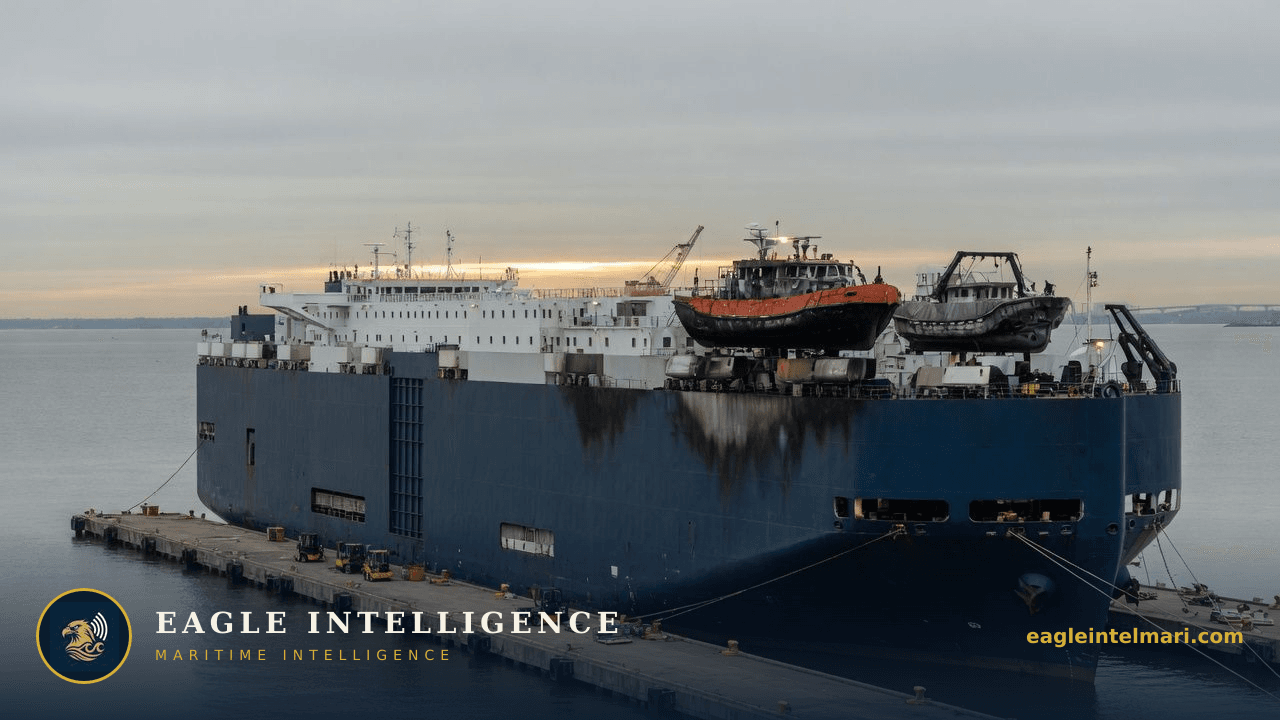
A fire that broke out on two lifeboats aboard the U.S. Maritime Administration's roll-on, roll-off vessel Charles L. Gilliland on 13 July 2026 in the Port of Baltimore points to deeper vulnerabilities in how the United States maintains its reserve sealift capacity.
Baltimore City Fire Department responded to the two-alarm blaze around 11 a.m. local time. Flames were confined to the lifeboats; no injuries occurred and the cause remains under investigation. The vessel has been laid up in Baltimore since 2024 alongside its sister ship Gary I. Gordon. MARAD has declined to provide further information on damage extent or operational status.
The Gilliland belongs to MARAD's ready reserve force of logistics ships intended to support military surge operations. Prolonged lay-up status does not eliminate the requirement for routine safety and maintenance checks. A fire originating in lifeboats suggests either deferred upkeep or undetected deterioration in critical safety equipment.
Recent awards such as the $2.2 billion contract to TOTE Services for new Medium Landing Ships and the first-ever Presidential Unit Citation for two Military Sealift Command vessels underscore Washington's push to strengthen sealift. Yet these forward investments sit alongside aging assets that remain vulnerable to basic shipboard failures while idle.
As a government-owned asset, the Gilliland falls outside standard commercial hull and P&I frameworks. Any damage assessment will therefore rest with federal budgets rather than market underwriters. Still, the incident tests whether MARAD's internal risk controls meet the same standards applied to privately operated tonnage.
Although no crew were hurt, the event highlights fatigue and oversight risks for personnel assigned to long-term lay-up duties. Port of Baltimore authorities now face additional coordination burdens while the cause is probed. Nearby commercial traffic may experience minor delays if access restrictions are imposed during the investigation.
The strongest alternative reading is that the fire represents nothing more than a contained equipment fault on an inactive hull with no wider implications for active fleet readiness. Evidence supporting this view would include a rapid public release of the investigation findings showing simple electrical or material degradation with no systemic maintenance shortfalls.
Next 24 hours: Any MARAD or USCG statement confirming the scope of damage or activation of a formal inquiry board. Next 7 days: Release of preliminary fire-cause findings or visible movement of the vessel from its berth. Next 30 days: Publication of updated MARAD readiness statistics that either include or exclude the Gilliland from surge-available status.
Advertisement
Advertisement
⚠️ Intelligence Disclaimer: This analysis is produced by Eagle Intelligence's AI-assisted automated analysis system and is provided for informational purposes only. See our editorial standards. It is not a substitute for official maritime safety advisories from UKMTO, MSCHOA, IMO, or flag state authorities. Operational decisions should always be based on official guidance and professional judgment. Eagle Intelligence accepts no liability for any loss arising from reliance on this content.
Live chokepoint status, war-risk shifts, and the daily maritime wire, straight to your inbox. Free.
Leave a comment
All comments moderated for quality
