Four in five crew deaths are now from illness, not accidents, according to Britannia P&I analysis of nearly 3,000 claims. This explainer answers what Filipino seafarers and their families can do when cardiovascular disease or mental health issues force medical action at sea.
Advertisement
Advertisement
Kapag biglang sumakit ang dibdib mo habang nasa dagat o parang nawawala ang ulo mo sa sobrang stress, ano talaga ang karapatan mo bilang seafarer? The Britannia P&I Club report released this week shows that more than four in five crew deaths come from illness rather than accidents, with cardiovascular disease as the top killer and rising mental health concerns among younger crew. This directly hits Filipino seafarers on POEA contracts because most of you sail on foreign-flag ships where the principal must still follow medical care rules. The question every kabayan asks is what happens next for sickness allowance, repatriation and claims when illness strikes.
Ang Batas, Simple Lang
The supplied evidence from the Britannia P&I analysis does not contain the exact wording of any POEA-SEC section or DMW circular on sickness allowance. Therefore this explainer cannot quote specific numbered paragraphs from the standard employment contract. What the report does establish is the scale of the problem: nearly 3,000 crew-related claims reviewed, over 80 percent traced to illness. Under the Maritime Labour Convention 2006 that the Philippines has ratified, shipowners remain responsible for medical care and repatriation when a seafarer falls ill on board, yet the evidence here gives no further detail on enforcement mechanisms or exact allowance amounts. Without the contract text itself we cannot confirm current rates for sickness allowance or the precise number of days covered before repatriation. The report instead points to the practical gap between the rule requiring care and the rising number of illness cases that still end in death.
The evidence also does not name any specific POEA-SEC clause on mental health support or cardiovascular screening. This means we cannot state whether pre-employment medical examinations must now include stress tests or ECGs for all ages. What remains clear from the data is that younger seafarers face growing mental health risks, yet the report supplies no figures on how many claims were denied or how many families received full benefits. Any seafarer needing the precise wording must go directly to the latest POEA-SEC copy attached to their contract and ask the manning agency for the current DMW circular on medical repatriation.
Ano'ng Mangyayari Sa Totoong Buhay
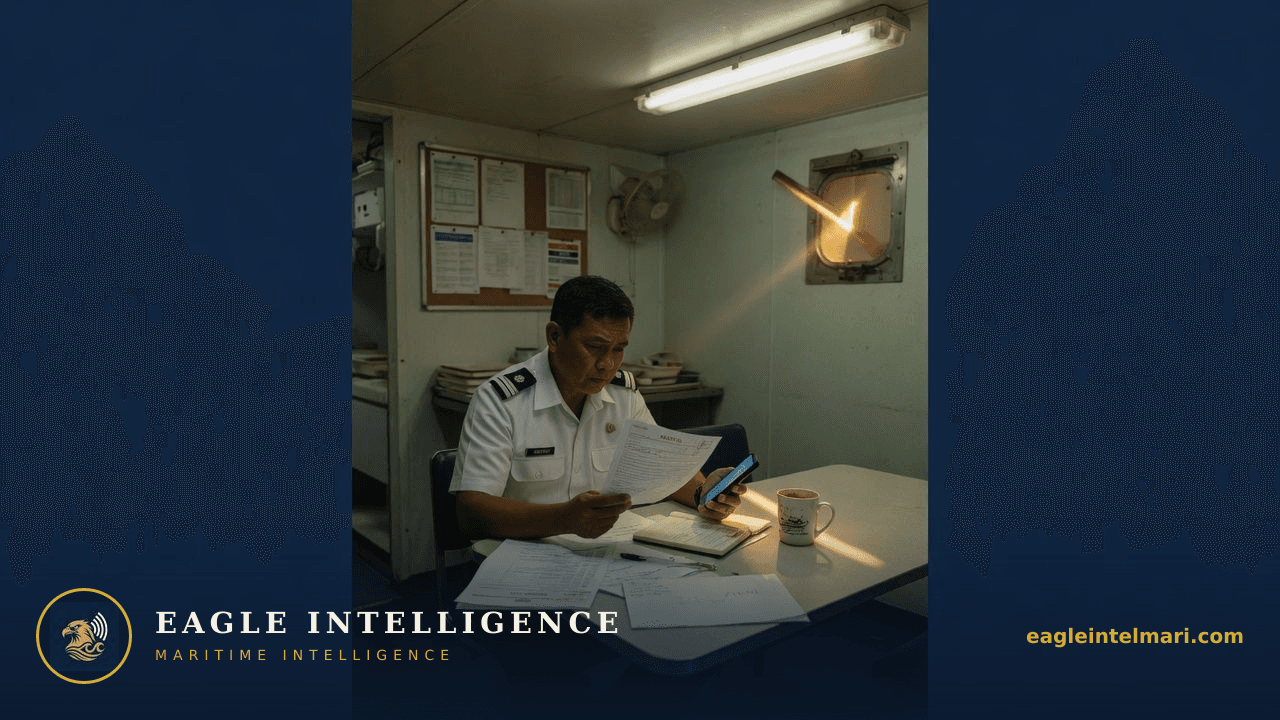
On board, when you report chest pain or extreme fatigue, the master logs the complaint and usually contacts the company doctor by radio or satellite. The Britannia data shows that in most illness cases the vessel continues trading while the seafarer waits for the next port or a possible helicopter evacuation. Cardiovascular cases often move fast once symptoms appear, yet the report records that many fatalities still occur before the seafarer reaches proper medical facilities. For mental health issues the evidence indicates younger crew may hide symptoms longer, leading to sudden breakdowns that force emergency sign-off. In practice the manning agency then coordinates with the principal to arrange air tickets and a replacement, but delays happen when the next suitable port is weeks away.
Allotments usually continue during the first weeks of illness, but once medical repatriation is confirmed the agency must settle outstanding wages and arrange sickness allowance until you are fit or the claim is assessed. The report does not give numbers on how many families experienced delayed allotments after an illness repatriation, yet the pattern of 80 percent illness deaths suggests that financial pressure on the family starts the moment the seafarer stops working. In real cases the crew change happens at the next convenient port, the seafarer flies home with medical records, and the family must then deal with the agency in Manila for the full claim. The gap between the rule and practice appears when the principal questions whether the illness was pre-existing, even though the report shows most cases develop during the contract.
Ano'ng Gagawin Mo
Report the symptom immediately to the master or officer of the watch and insist the incident is entered in the medical log with date, time and exact complaint. Keep a photo or copy of that log entry if possible.
Ask for a medical referral or telemedical advice right away and note the name of the doctor or service contacted. Do not wait for the next scheduled port if symptoms worsen.
If the company decides on repatriation, obtain all medical reports, prescriptions and the company’s written instruction for sign-off before leaving the vessel. Keep your own copy of the air ticket and any cash advance given for travel.
Within 48 hours of arriving in Manila go to the manning agency with the complete set of documents and request the formal sickness allowance application under your POEA-SEC. Ask for a written acknowledgement of receipt.
If the agency delays or disputes the claim, write a short letter to the DMW seafarer welfare desk describing the timeline and attach copies of every document. Keep the original receipts and medical certificates in a safe folder.
Follow up every seven days in writing and ask for the current status of the claim in email or text so you have a record.
Mga Pagkakamali Na Madalas
Many seafarers wait until the pain becomes unbearable before reporting, losing the chance for early intervention that the Britannia report shows could prevent fatal outcomes. Others sign the sign-off form without first securing a copy of the medical log or the company doctor’s advice, making later claims harder to prove. Some families accept the first offer from the agency without checking whether sickness allowance continues until full recovery or disability grading. A common fourth mistake is throwing away the original medical certificates after the first agency meeting, leaving no evidence when the case reaches conciliation.
Saan Ka Hihingi Ng Tulong
Start with the manning agency’s own grievance desk because every licensed agency must have an internal complaints procedure under DMW rules. Next approach the Department of Migrant Workers (DMW) seafarer assistance center for guidance on POEA-SEC claims. If the agency still does not act, file for conciliation at the National Conciliation and Mediation Board (NCMB) nearest your home province. Your union or the ITF inspector network can also review the documents and advise on next steps. Contact details for these offices are listed on the official DMW and NCMB websites; the evidence supplied for this explainer does not include telephone numbers or addresses.
This is general information based on the Britannia P&I report dated around 1 September 2026 and does not constitute legal advice for any individual case. Every contract and medical situation differs, so verify the exact wording in your own POEA-SEC and consult the proper authorities with your documents.
The report’s finding that cardiovascular disease leads fatalities and that younger seafarers show higher mental health risks means families should watch for early signs even on short contracts. When a seafarer is repatriated for illness the second-order effect hits the allotment schedule and the principal may ask for a replacement cost, yet the evidence gives no figure on how often that cost is passed to the family. Third-order consequences include longer gaps between contracts while the claim is processed and possible pressure on the next medical examination. The data also suggests that ports in high-traffic areas may see more medical disembarkations, increasing the chance that the next crew change is rushed.
The strongest counterargument to focusing only on illness claims is that the same report period still records accident deaths, and some analysts argue that safety equipment and training have reduced accidents more successfully than illness prevention. The evidence would support this view if future Britannia updates showed accident deaths rising again while illness deaths fell. Until that data appears, the current numbers still point to illness as the dominant risk.
Mga Tanong na Dapat Itanong ng mga Decision-Makers
Paano masusubaybayan ng manning agency ang cardiovascular screening results bago mag-deploy? The evidence does not provide an answer.
Kailan dapat i-update ang POEA medical examination standards para isama ang mental health assessment? No specific timeline is given in the report.
Paano mapapabilis ang medical repatriation kapag nasa Strait of Hormuz area ang barko? The supplied items mention Hormuz incidents but give no medical evacuation protocol.
Ano ang mangyayari sa sickness allowance kapag ang illness ay nauwi sa death? The report records fatalities but does not detail final benefit calculations.
Paano masisiguro na ang younger seafarers ay hindi nagtatago ng sintomas dahil sa takot mawalan ng trabaho? The data flags the risk but offers no operational solution.
Paano makikipagtulungan ang mga P&I clubs sa DMW para mabawasan ang 80 percent illness death rate? The evidence stops at the statistic.
Watch for the next Britannia P&I claims update within the next 30 days for any change in the illness-to-accident ratio. Within seven days monitor DMW announcements on any new circular about medical repatriation after the 1 September report. In the next 24 hours check whether your own manning agency has posted guidance on illness reporting following the release of this data.
Advertisement
Advertisement
Placement fees, repatriation, offenses and penalties under DMW Circular 06.
⚠️ Intelligence Disclaimer: This analysis is produced by Eagle Intelligence's AI-assisted automated analysis system and is provided for informational purposes only. See our editorial standards. It is not a substitute for official maritime safety advisories from UKMTO, MSCHOA, IMO, or flag state authorities. Operational decisions should always be based on official guidance and professional judgment. Eagle Intelligence accepts no liability for any loss arising from reliance on this content.
Live chokepoint status, war-risk shifts, and the daily maritime wire, straight to your inbox. Free.
Leave a comment
All comments moderated for quality
