When a ship is struck by a projectile and the crew must abandon or one seafarer goes missing, what does POEA-SEC require for repatriation, wages and support, and how do recent attacks in the Strait of Hormuz change the practical steps a Filipino seafarer should take?
Advertisement
Advertisement
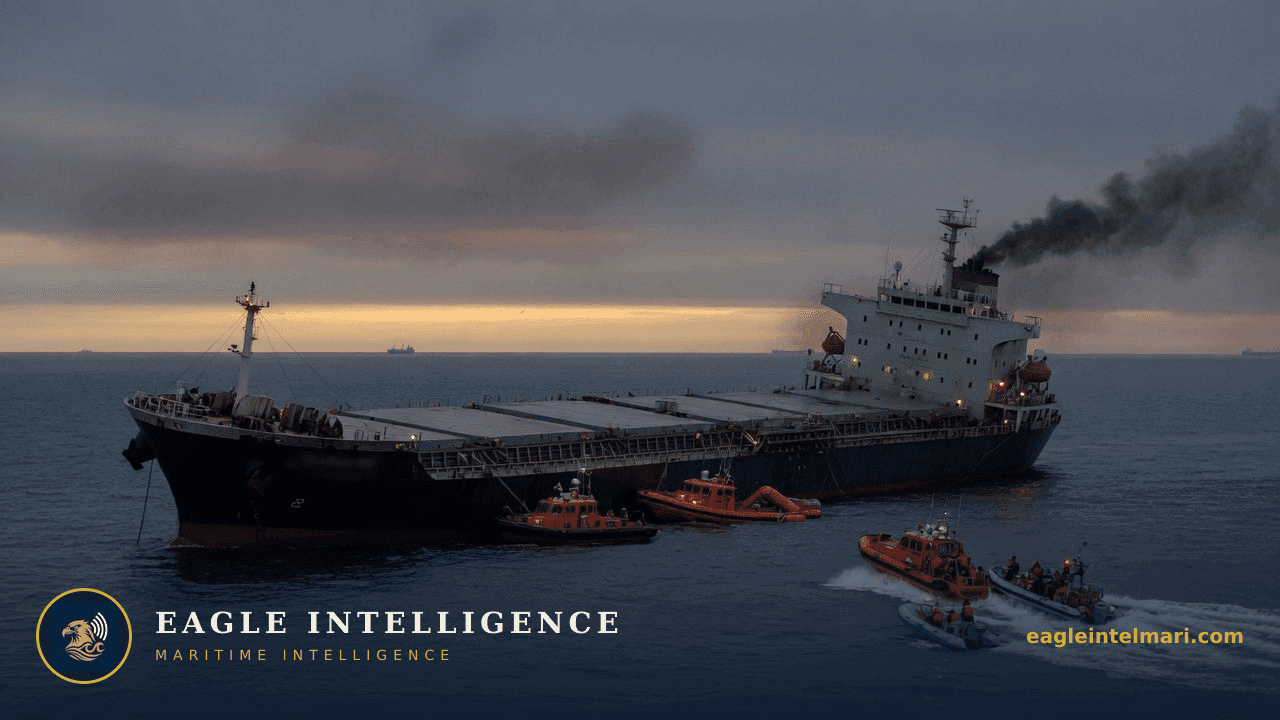
Standfirst: The question every seafarer asks after hearing about a bulker hit in the Strait of Hormuz with one crew member missing and the rest abandoning ship is simple: what exactly am I entitled to, and what must I do if my own vessel comes under attack? This affects any Filipino officer or rating on a foreign-flagged ship trading through high-risk areas where incidents have occurred in early August 2026. The answer rests on the POEA-SEC contract you signed and the manning agency that deployed you, not on headlines.
Ang Batas, Simple Lang: The evidence supplied for 5 August 2026 contains no specific POEA-SEC section numbers or DMW circulars that spell out abandonment procedures after an attack. Therefore the precise wording on wage continuation, sickness allowance duration or disability grading for injury caused by projectile cannot be quoted from today’s items. What the items do show is repeated crew abandonment and one missing seafarer on a Liberia-flagged bulker struck near Oman, plus an Indian cargo vessel sunk off Hodeidah with 14 rescued. Under the general framework every POEA-SEC references, the principal and manning agency remain responsible for repatriation once the flag state or coastal state releases the crew, and the contract continues to run until sign-off is effected. MLC 2006 Regulation 2.5 on repatriation is the international baseline the POEA-SEC incorporates, yet the supplied reports give no further detail on how that regulation is applied in these exact incidents.
Ano'ng Mangyayari Sa Totoong Buhay: In the Strait of Hormuz case the third engineer was reported missing after the projectile struck the engine room and fire broke out in accommodation; the remaining crew abandoned into survival craft while still fighting the fire. The operator, based in Greece, issued no immediate public statement on wage status or next-of-kin notification timelines. In the Red Sea sinking the 14 rescued crew were brought ashore, but the items do not record how long it took the Indian flag administration or the manning agency to arrange flights or whether allotments continued during the period they waited for new sign-on. When a vessel is disabled and declared a total loss, the practical sequence is usually: coast guard or navy takes custody of survivors, the flag state is notified, the manning agency is contacted by the master or company security officer, and the agency then coordinates with the Philippine embassy or DMW for repatriation. The gap that appears in these reports is the time between abandonment and the first written confirmation to families that allotments will not be interrupted. Seafarers who have lived through similar events describe waiting 48 to 72 hours before the agency confirms that the contract remains active and wages are still accruing.
The second reality is medical and mental-health follow-up. A missing crew member triggers both a search and a separate process for the rest of the crew to receive post-incident debriefing and any necessary psychological support. The supplied items mention no such programme being activated in either the Hormuz or Red Sea cases, which leaves open whether the manning agency or the principal is currently funding it. On board, the master must log the incident, preserve the voyage data recorder if possible, and ensure every surviving seafarer signs a statement before leaving the rescue vessel. Failure to do so has, in past cases, complicated later claims for compensation.
Ano'ng Gagawin Mo: Number one, as soon as you are aboard a rescue craft or safe port, ask the master or the coast-guard liaison for a copy of the incident report and the list of survivors; photograph it with your phone and send the image to your family and the manning agency contact you were given at sign-on. Number two, within 24 hours send a formal email or WhatsApp message to the crewing manager stating the date and time of the incident, your current location, and that you are awaiting instructions for repatriation while reserving all rights under the POEA-SEC. Keep that message and any reply. Number three, contact the nearest Philippine embassy labour attaché or DMW office in the country where you have been landed; give them your full name, vessel IMO, and POEA-SEC contract number so they can open a file. Number four, do not sign any release or waiver from the principal or agency until you have spoken to a union or DMW-accredited lawyer. Number five, once repatriated, go to the manning agency within seven days with your passport, POEA-SEC, and medical certificate if you were injured, and request a written statement of benefits still due, including any sickness allowance or disability assessment schedule.
Mga Pagkakamali Na Madalas: The most common error is waiting for the agency to call first instead of sending the initial written notice yourself; without that paper trail the agency can later claim it had no knowledge of your status. Second, deleting photos of the incident report or the rescue craft manifest because “it is just for family”; those images become evidence if wages are later disputed. Third, signing a company statement that the incident was “an act of God” or that the seafarer “voluntarily abandoned” the vessel; such wording can be used to deny claims. Fourth, returning home without obtaining a fit-to-travel certificate from the local doctor arranged by the agency; this can delay sickness allowance payments. The items show that in both the Hormuz and Red Sea cases the crews were rescued quickly, yet no follow-up documentation timeline is mentioned, which increases the chance that families remain uncertain for days.
Saan Ka Hihingi Ng Tulong: Start with the manning agency’s own grievance desk; every licensed agency must have one under DMW rules. If the response is slow, go to the DMW regional office that processed your POEA-SEC or the DMW Seafarer’s One-Stop Processing Center in Manila. The National Conciliation and Mediation Board (NCMB) handles voluntary arbitration between seafarers and agencies when money claims arise. Your union, if you are a member, can also file on your behalf. The Philippine embassy in the country of landing keeps a list of accredited lawyers and welfare officers. This is general information only and not legal advice for any individual case; outcomes depend on the exact wording of your POEA-SEC and the facts of the incident.
Second- and third-order consequences spread beyond the individual seafarer. Families waiting for allotments face immediate cash-flow problems when the vessel is declared a constructive total loss and the agency delays confirmation. Port agents in Oman or Yemen become reluctant to handle crew changes for any ship that has recently transited the same waters, lengthening sign-off times for everyone. Insurers raise war-risk premiums, which can reduce the number of Filipino officers offered contracts on those routes, indirectly affecting promotion prospects. The Greek operator in the Hormuz case and the Indian owner in the Red Sea case both face flag-state inquiries; those inquiries can produce documents that later support or weaken crew claims, yet the items give no indication that the results will be shared with the seafarers themselves.
The strongest counter-argument is that the master and company security team already handle all notifications, so individual crew action is unnecessary and may even create conflicting records. Evidence from the supplied items shows no public statement from either operator confirming that families were contacted within 24 hours, which weakens that claim. The alternative scenario would be proven correct only if the agencies or flag states released contemporaneous logs showing immediate next-of-kin notification and uninterrupted allotment instructions; those logs are not in the evidence.
The Questions Decision-Makers Should Be Asking
How quickly must a manning agency confirm that POEA-SEC wages continue after an attack-induced abandonment, and is that timeline written in the current contract template?
What specific document must a surviving seafarer receive from the rescue authority before the agency can begin repatriation processing?
If a crew member remains missing after 30 days, at what point does the disability or death benefit claim process begin under the POEA-SEC?
Does the principal’s war-risk insurance automatically cover psychological support for the entire crew after an attack, or must the seafarer request it separately?
When a vessel is abandoned in the Strait of Hormuz, which coastal state’s authorities have primary jurisdiction over the crew’s temporary accommodation and medical care?
Timed triggers to watch: In the next 24 hours, monitor whether the Greek operator or the Indian owner issues any statement on crew status or wage continuation. Over the next seven days, check DMW or union channels for any advisory on transiting the Strait of Hormuz or Red Sea. Over the next 30 days, watch for any DMW circular updating repatriation procedures or sickness-allowance rules following the August 2026 incidents.
Advertisement
Advertisement
Placement fees, repatriation, offenses and penalties under DMW Circular 06.
Live Hormuz transit status and war-risk band.
⚠️ Intelligence Disclaimer: This analysis is produced by Eagle Intelligence's AI-assisted automated analysis system and is provided for informational purposes only. See our editorial standards. It is not a substitute for official maritime safety advisories from UKMTO, MSCHOA, IMO, or flag state authorities. Operational decisions should always be based on official guidance and professional judgment. Eagle Intelligence accepts no liability for any loss arising from reliance on this content.
Live chokepoint status, war-risk shifts, and the daily maritime wire, straight to your inbox. Free.
Leave a comment
All comments moderated for quality
