Hormuz Clearance Underway After Iran-US Accord
Shipowners and charterers must now decide whether to resume Hormuz transits or maintain longer routings after the IMO unveiled its evacuation plan following the Iran-US memorandum.
Live war-risk alerts, Hormuz status, regulatory changes, port disruptions and shipping-market intelligence — updated around the clock.

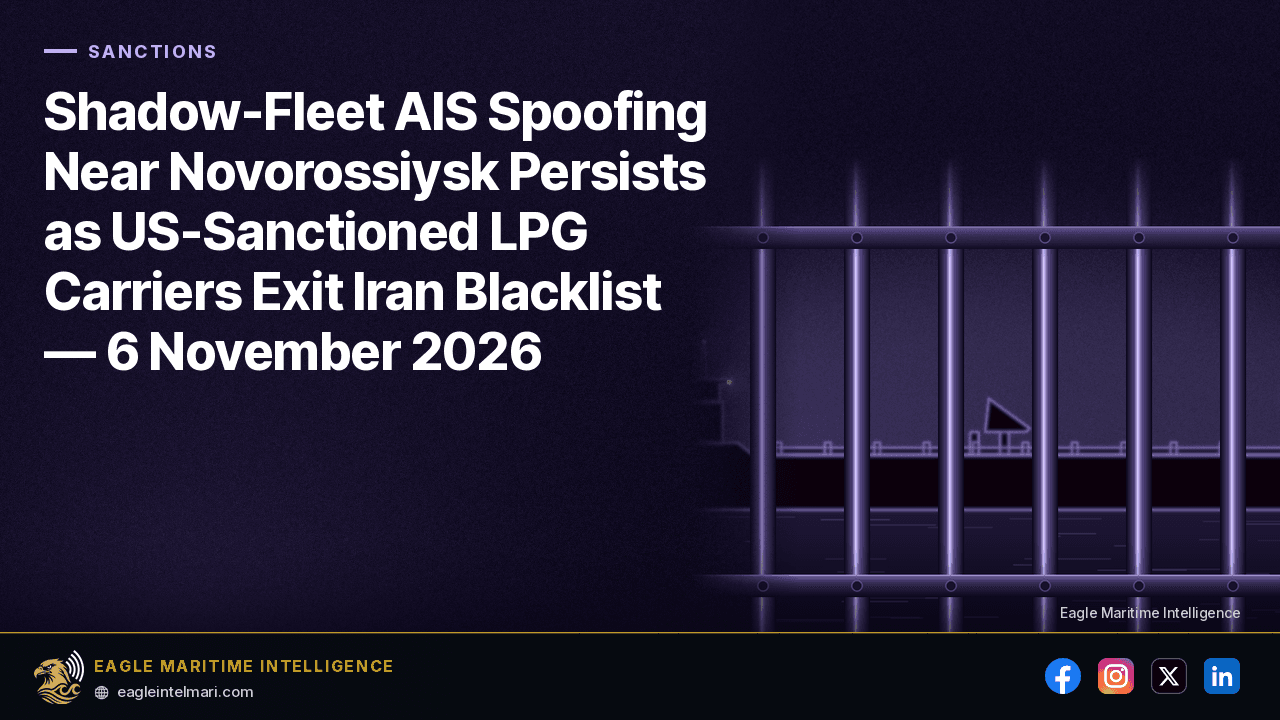
Seven sanctioned Russian tankers have been spoofing AIS signals for 90 days to mask voyages from Novorossiysk while US-sanctioned LPG carriers were removed from Iran’s PGSA non-compliance list; the pattern shows enforcement announcements outpacing actual detentions and leaves charterers, agents and crews exposed to unpaid claims and port refusals.
Eagle Intelligence · Read full article →

Shipowners and charterers must now decide whether to resume Hormuz transits or maintain longer routings after the IMO unveiled its evacuation plan following the Iran-US memorandum.

Energy traders and tanker charterers face immediate decisions on cargo timing as traffic through the Strait of Hormuz recovers and Brent crude futures drop 2 percent to $75.52.

Tanker owners and charterers now face the concrete choice of whether to resume central Strait of Hormuz passages or keep paying for longer diversions after the first reported returns since the war began.

For owners and charterers with vessels transiting the Gulf, the Strait of Hormuz blockade has lifted MGO prices enough to flip the economics of alternative-fuel newbuildings and retrofits within a single quarter.

Charterers and P&I clubs holding Russian shadow-fleet exposures must decide within days whether to drop cover on the 20 newly sanctioned tankers or risk breach-of-sanctions claims after the UK’s 16 June G7 announcement.

A new Magaya-Adelante study of freight forwarders and customs brokers identifies five priorities that will dictate contract structures, clearance speeds and technology spend through 2030, directly affecting owners and charterers locking in tonnage now.

PT Wintermar Offshore Marine gains full control of Fast Offshore Supply and its pipeline of ten fast aluminium DP crew transfer vessels, forcing offshore wind operators and OSV charterers to reassess 2027-2028 capacity availability.

Tanker owners and charterers must now decide whether to commit vessels to rising Iranian volumes or protect against sudden policy reversal, after Brent fell 3.3% on confirmed higher flows through the Strait of Hormuz.

A training flight gone wrong has sidelined one Jayhawk and placed four crew in hospital, forcing USCG District 17 to weigh temporary gaps in southeast Alaska search-and-rescue coverage that commercial operators and fishing fleets rely on.

Owners and charterers still routing tonnage through the Strait of Hormuz must recalibrate risk models after the 2026 crisis altered the profile of vessels willing to transit, leaving existing compliance checks misaligned with actual exposure.
Showing 331–340 of 921 articles