A training flight gone wrong has sidelined one Jayhawk and placed four crew in hospital, forcing USCG District 17 to weigh temporary gaps in southeast Alaska search-and-rescue coverage that commercial operators and fishing fleets rely on.
Advertisement
Advertisement
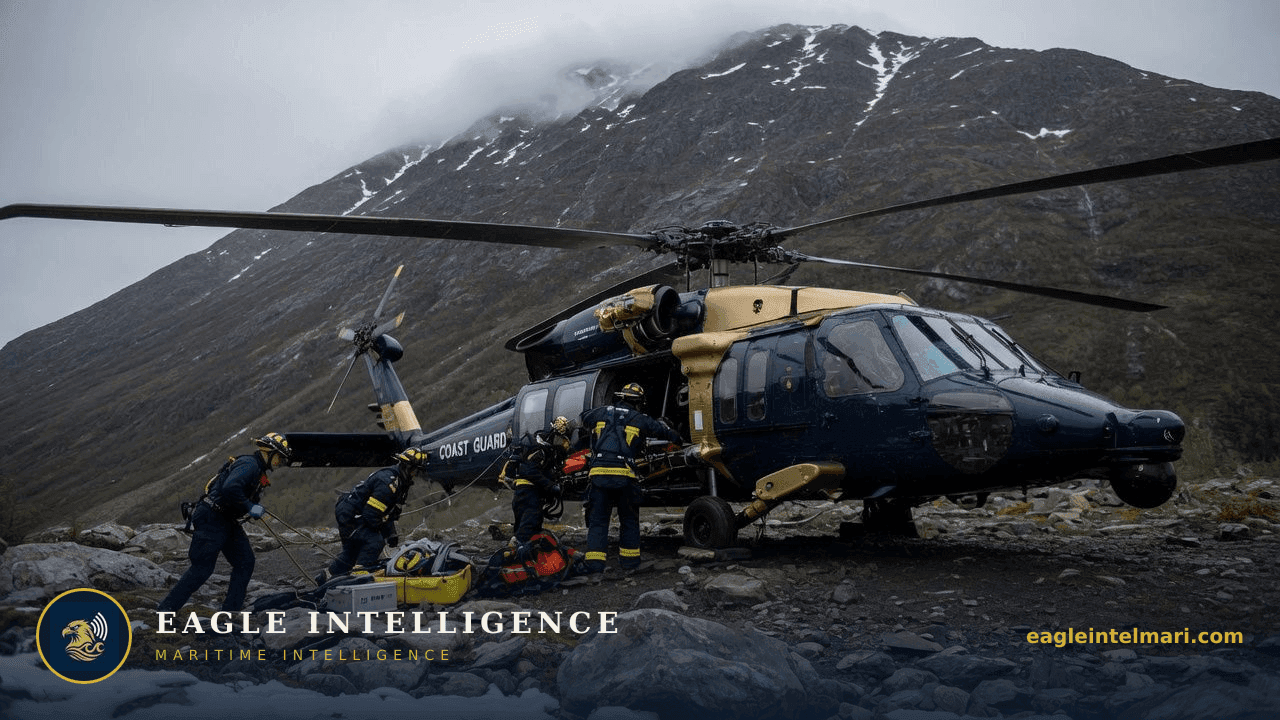
US Coast Guard Air Station Sitka is now managing reduced rotary-wing availability after its MH-60 Jayhawk went down on a routine training sortie near Harbor Mountain at 10:07 a.m. local time on 22 June, leaving four crew members under care at Mt. Edgecumbe Medical Center.
Southeast Alaska’s convoluted coastline and frequent fog banks make helicopter response the primary asset for mariners in distress between Ketchikan and Yakutat. With only a handful of Jayhawks assigned to the air station, the loss of even one airframe for an indeterminate period directly shrinks the window for reaching vessels that lose power or take on water in the inside passage. Owners running weekly reefer or bulk carriers through the region will notice longer estimated times for Coast Guard arrival on scene.
The aircraft departed Sitka on a standard proficiency flight that did not involve any vessel or mariner in distress. The fact that the helicopter remained over land when it impacted near Harbor Mountain limited immediate marine pollution risk, yet the same terrain that provides practice for mountain rescue also complicates wreckage recovery and data retrieval. Local fire crews reached the site within an hour, underscoring the value of inter-agency coordination that the Coast Guard will now audit.
All four personnel survived and were transported by 11:00 a.m., a positive outcome that still removes trained aircrew from the roster during the investigation window. District 17 manning agencies will have to decide whether to accelerate cross-station swaps from Kodiak or Juneau or accept a temporary drop in sortie generation rate. For the families of the injured, the priority remains medical updates rather than operational tempo.
Tanker and fishing-vessel operators that file float plans with Sitka can expect slightly extended SAR response radii until the air station confirms full aircraft availability. Charterers fixing voyages through Chatham Strait or Peril Strait may insert additional language requiring commercial tug stand-by during the affected period. Hull underwriters tracking the incident will price the incremental exposure into renewals for vessels trading the same waters.
Past USCG rotary-wing mishaps have triggered both internal safety stand-downs and congressional scrutiny of airframe sustainment budgets. If the ongoing investigation points to maintenance or component issues common to the MH-60 fleet, Alaska operators could see knock-on effects at other district air stations. Flag states and classification societies that rely on USCG SAR statistics for route-risk modeling will incorporate any revised coverage data into their next guidance circulars.
Monitor District 17 public affairs releases for the first formal statement on aircraft availability and any temporary operating restrictions; a follow-up update is likely within 72 hours once initial wreckage documentation concludes.
Advertisement
Advertisement
⚠️ Intelligence Disclaimer: This analysis is produced by Eagle Intelligence's AI-assisted automated analysis system and is provided for informational purposes only. See our editorial standards. It is not a substitute for official maritime safety advisories from UKMTO, MSCHOA, IMO, or flag state authorities. Operational decisions should always be based on official guidance and professional judgment. Eagle Intelligence accepts no liability for any loss arising from reliance on this content.
Live chokepoint status, war-risk shifts, and the daily maritime wire, straight to your inbox. Free.
Leave a comment
All comments moderated for quality
