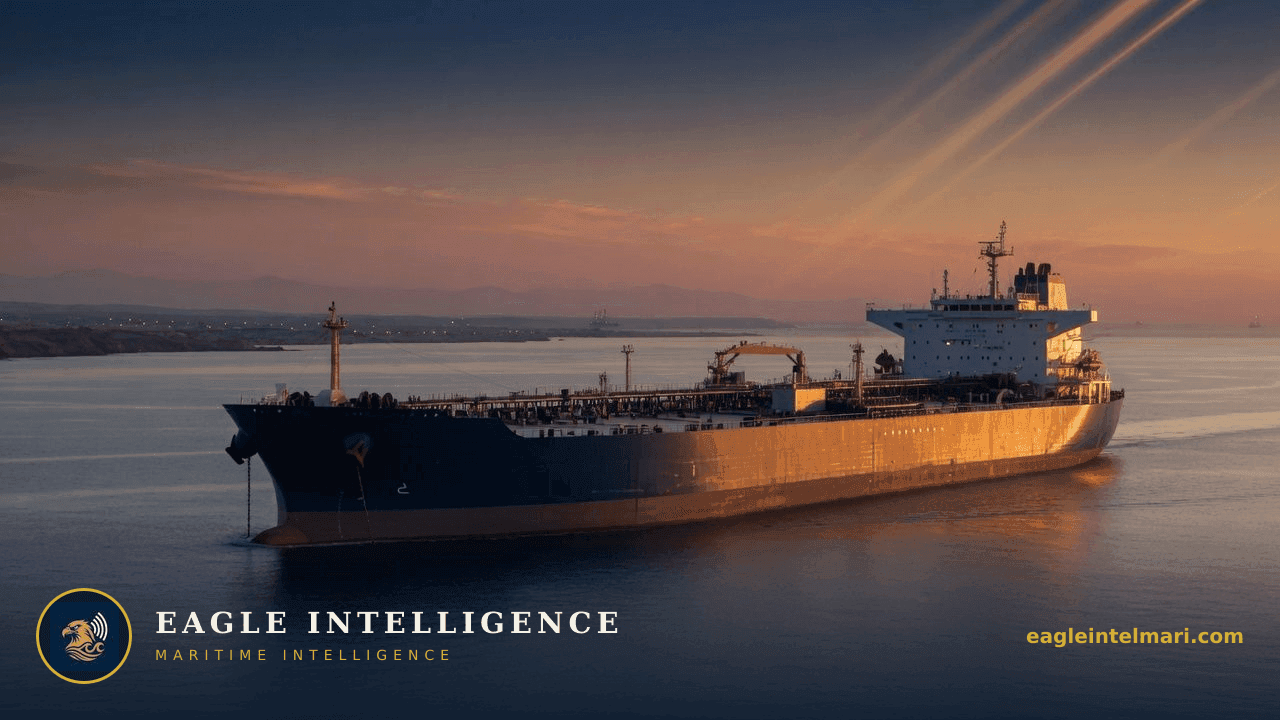
After multi-week turbulence lifted VLCC earnings to conflict-driven highs, the market is settling into a narrower range as freight levels retrace toward pre-war benchmarks without the sharp structural collapse some had feared.
Advertisement
Advertisement
The VLCC sector is moving from acute volatility into a more measured equilibrium, with daily earnings retreating from the war-spike levels that briefly transformed route economics. Owners who locked in peak fixtures now face a softer forward curve, while charterers sense an opportunity to cover longer periods at reduced cost.
Shipbroker Gibson’s weekly assessment describes a global VLCC market entering “cautious stabilisation,” with rates drifting back toward established pre-conflict benchmarks. The absence of the severe freefall once predicted points to underlying support from steady crude demand and limited vessel availability on key loading windows.
With spot volatility subsiding, several Asian and European refiners are reportedly stepping back into the period market for third-quarter coverage. This shift reduces their exposure to sudden spikes while allowing owners to secure revenue visibility before rates test lower levels. The move echoes patterns seen after the 2019 Strait of Hormuz tension, when a brief war premium gave way to extended time-charter activity.
VLCC operators who benefited from the recent surge now confront decisions on lay-up versus continued trading. At current retraced levels, many modern units still clear operating costs on Middle East–Asia and West Africa–China runs, yet older tonnage faces pressure to accept shorter voyages or risk idle time. Cash-rich owners are using the breathing space to accelerate scrubber retrofits or schedule dry-dockings previously deferred during the high-rate window.
Hull and P&I underwriters are beginning to adjust war-risk loadings downward on non-excluded routes as claims data shows fewer incidents. Banks that financed recent second-hand purchases at elevated earnings multiples are monitoring fixture reports closely; any sustained slide below $40,000 per day could trigger covenant discussions on leveraged fleets.
Lower VLCC rates ease landed costs for Asian buyers of Middle Eastern and West African grades, potentially supporting refinery margins ahead of the summer maintenance season. Conversely, US Gulf exporters may see slightly reduced competitiveness on long-haul parcels as the rate advantage narrows. The net effect is a modest rebalancing of arbitrage windows rather than a wholesale redirection of barrels.
If OPEC+ supply discipline holds and no new chokepoint incidents occur, rates could consolidate in a $35,000–45,000 per day band through August. A sudden flare-up in the Strait of Hormuz or fresh sanctions on Russian crude would re-inflate the war premium within days. Prolonged demand weakness in China combined with accelerated fleet deliveries would push the market toward the lower end of historical ranges, testing older tonnage first.
Advertisement
Advertisement
⚠️ Intelligence Disclaimer: This analysis is produced by Eagle Intelligence's AI-assisted automated analysis system and is provided for informational purposes only. See our editorial standards. It is not a substitute for official maritime safety advisories from UKMTO, MSCHOA, IMO, or flag state authorities. Operational decisions should always be based on official guidance and professional judgment. Eagle Intelligence accepts no liability for any loss arising from reliance on this content.
Live chokepoint status, war-risk shifts, and the daily maritime wire, straight to your inbox. Free.
Leave a comment
All comments moderated for quality
