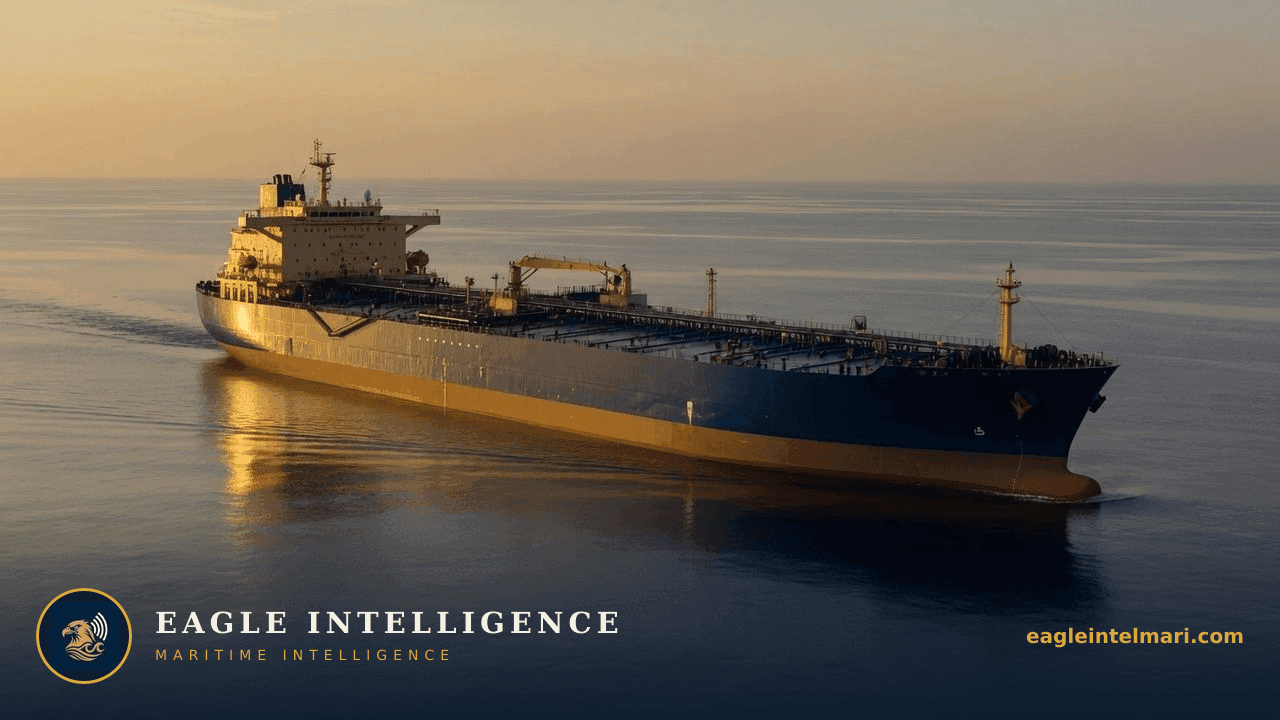
Gibson Shipbrokers notes the global VLCC market entering a phase of cautious stabilisation, with freight rates showing resilience that could ease pressure on owners while tempering upside for charterers.
Advertisement
Advertisement
The VLCC market is settling into a narrower band of rate movement after earlier volatility, offering owners breathing room without delivering the sharp recovery some had hoped for.
VLCC owners have absorbed multiple quarters of soft earnings driven by OPEC production cuts and shifting Asian crude demand patterns. The reported stabilisation suggests tonnage oversupply is no longer forcing rates sharply lower on every fixture. Daily earnings remain below the levels needed for comfortable debt service on newer units, yet the absence of further erosion reduces immediate distress-sale pressure on older vessels. Second-hand prices for 15-year-old units may find a floor sooner than expected, particularly for scrubber-fitted ships that retain a modest fuel-economy edge.
With rates no longer in free fall, oil traders and refiners are beginning to weigh period charters more seriously. A stable VLCC market lowers the risk that a six-month time-charter concluded today will look expensive in three months. This dynamic could pull some enquiry out of the spot market, tightening availability for prompt loaders and providing owners with greater forward visibility. Major Middle East and West African exporters are likely to test the water first, given their regular large-parcel requirements.
P&I clubs and hull underwriters track utilisation closely because idle tonnage often correlates with deferred maintenance and higher claims frequency. A stabilisation that prevents widespread cold lay-up should ease near-term loss ratios for VLCC fleets. However, if earnings remain only marginally above operating costs, owners may still choose warm lay-up in low-cost locations such as the Arabian Gulf or Southeast Asia, keeping vessels technically trading but reducing actual sailed days and altering war-risk exposure profiles.
Stabilised yet modest earnings limit owners’ ability to absorb rising crew costs or to switch flags for regulatory advantage. Seafarers on VLCCs may face longer contracts or slower rotation as operators seek to control wage inflation. Flag states that have recently tightened enforcement on living-condition standards could see marginal owners delay re-flagging decisions until clearer rate signals emerge.
Crude traders reliant on long-haul arbitrage between the Atlantic Basin and Asia will recalculate margins with less volatile freight. Narrower rate ranges reduce the chance that a sudden spike wipes out contango profits, but they also compress the window in which a well-timed VLCC fixture can generate outsized returns. This may encourage greater use of floating storage when regional spreads justify it, adding another layer of demand elasticity to the VLCC sector.
If Asian refinery runs rebound faster than expected and OPEC+ extends production cuts only modestly, prompt VLCC availability could tighten quickly and push rates toward the upper end of the recent range within two quarters. Conversely, a sharper slowdown in Chinese industrial activity combined with newbuilding deliveries still hitting the water would likely keep rates pinned near operating-cost levels through year-end. A middle path sees rates oscillating in a $20–30k per day corridor, sufficient to support selective period-charter activity but insufficient to trigger large-scale reactivation of laid-up tonnage. The trigger points will be visible in weekly fixture reports and in the speed at which charterers move from spot to three-to-six-month contracts.
Advertisement
Advertisement
⚠️ Intelligence Disclaimer: This analysis is produced by Eagle Intelligence's AI-assisted automated analysis system and is provided for informational purposes only. See our editorial standards. It is not a substitute for official maritime safety advisories from UKMTO, MSCHOA, IMO, or flag state authorities. Operational decisions should always be based on official guidance and professional judgment. Eagle Intelligence accepts no liability for any loss arising from reliance on this content.
Live chokepoint status, war-risk shifts, and the daily maritime wire, straight to your inbox. Free.
Leave a comment
All comments moderated for quality
