US retailers are advancing China orders by four to six weeks to beat expected tariff hikes before Black Friday and Christmas, forcing container lines and West Coast terminals to decide how much extra capacity to commit before the surge hits.
Advertisement
Advertisement
Container operators serving the transpacific and charterers fixing vessels for Q4 now confront a compressed decision window: whether to lock in additional slots or risk under-utilised sailings as US retailers move China-sourced holiday inventories forward by four to six weeks.
Retail buyers have compressed their normal procurement cycle to protect margins ahead of duties that could take effect later this year. The shift is already visible in booking patterns reported by multiple carriers, with cargo that would normally sail in late September now appearing on August vessels out of Shanghai and Ningbo. For owners with tonnage on the Shanghai-Los Angeles string, that means an earlier ramp-up in utilisation but also earlier exposure to fuel and crew costs if the early wave proves short-lived.
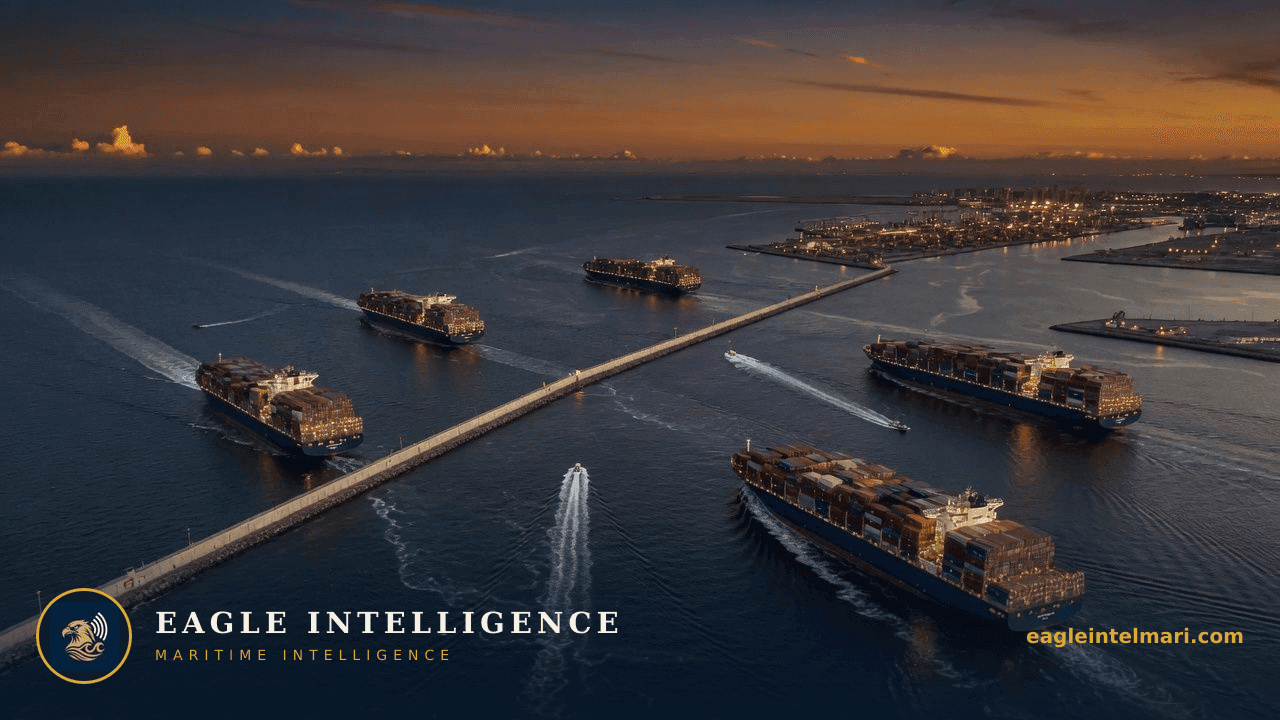
Los Angeles and Long Beach, which normally absorb the holiday peak in September-October, now confront an August arrival bulge. Yard density will climb sooner, raising the chance of truck queue delays measured in hours rather than the usual minutes. Terminal operators who have already published their autumn labour schedules face the choice of accelerating overtime agreements or absorbing demurrage complaints when containers sit longer than planned.
Period rates for 4,500-TEU and larger units trading the transpacific have firmed on the back of the front-loading news. Charterers willing to take prompt August-September positions are paying modest uplifts, while owners of older tonnage see little extra interest because lines prefer modern fuel-efficient ships for the longer round voyages that early cargo now requires. The net effect is a bifurcated market: premium tonnage clears quickly, surplus units remain idle.
Insurers are already modelling an earlier claims spike. An August surge raises the probability of weather-related incidents on the northern transpacific route and increases the chance of container stack collapses if vessels sail closer to stability limits to accommodate the volume. Underwriters have begun quoting slightly wider deductibles for box damage on voyages commencing before mid-September, a direct translation of the four-to-six-week pull-forward into premium dollars.
Crew agencies supplying officers and ratings for transpacific services must now accelerate relief planning. Seafarers who expected to sign off in late October may instead rotate in September, compressing rest periods and raising the risk of fatigue-related incidents if relief schedules slip. For manning agencies rotating crew through West Coast ports, the earlier peak also means tighter coordination with immigration and health authorities already stretched by summer traffic.
Energy and agricultural traders are monitoring the same order data for clues on downstream demand. Early holiday inventory build-out implies stronger containerised imports of consumer goods but potentially softer spot demand later in the fourth quarter if retailers have over-committed. Forward curves for bunker fuel delivered in Los Angeles already reflect the expectation of heavier August-September lifting.
Watch for the first carrier to announce a dedicated mid-August extra loader from Shanghai; that single sailing decision will reveal how seriously the lines are treating the front-loaded volumes.
Advertisement
Advertisement
⚠️ Intelligence Disclaimer: This analysis is produced by Eagle Intelligence's AI-assisted automated analysis system and is provided for informational purposes only. See our editorial standards. It is not a substitute for official maritime safety advisories from UKMTO, MSCHOA, IMO, or flag state authorities. Operational decisions should always be based on official guidance and professional judgment. Eagle Intelligence accepts no liability for any loss arising from reliance on this content.
Live chokepoint status, war-risk shifts, and the daily maritime wire, straight to your inbox. Free.
Leave a comment
All comments moderated for quality
