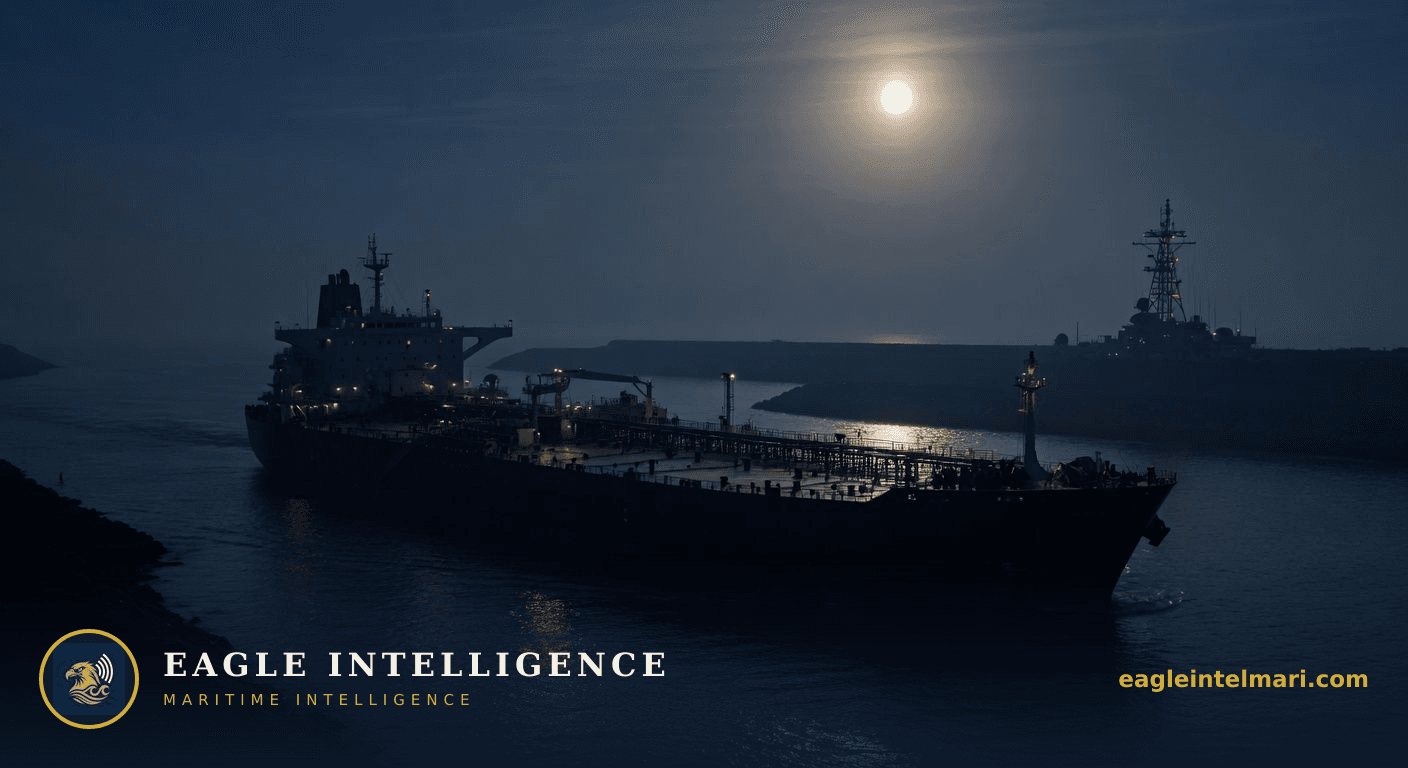
One month after President Trump publicly floated and then dropped a formal escort operation, the US military has pivoted to quieter methods of shielding commercial traffic through the Strait of Hormuz, the chokepoint handling roughly one-fifth of global oil trade.
Advertisement
Advertisement
A month after the White House walked back a high-visibility escort scheme, US forces are now testing discreet presence and coordination measures to keep tankers and bulkers moving through the Strait of Hormuz without triggering fresh Iranian reactions.
The strait remains the sole maritime exit for roughly 21 million barrels per day of crude and condensate plus millions of tonnes of LNG and chemicals. Even brief closures or speed restrictions have historically lifted VLCC and Suezmax spot rates by 30-50 percent within days, with war-risk premiums on hull policies jumping from 0.05 percent to over 1 percent of hull value for passages east of the 51st meridian.
Trump’s initial announcement created immediate diplomatic friction with Gulf states and visible Iranian naval posturing. Abandoning the plan avoided an early escalation cycle, but left charterers and owners exposed to the same asymmetric threats—fast boats, mines, and anti-ship missiles—that prompted the original idea.
Rather than advertised convoy sailings, current efforts center on increased surface and air surveillance, real-time sharing of threat data with selected commercial operators, and selective close support by vessels already on routine patrol. The lower signature reduces the chance that Tehran frames the activity as a new provocation while still providing masters with actionable windows for transit.
Hull and war-risk underwriters at Lloyd’s syndicates and Scandinavian clubs are already repricing June and July declarations. Early indications show modest softening from the post-announcement peak, yet any visible incident will reset rates sharply upward. Charterers are inserting new “Hormuz deviation” clauses that allow rerouting around the Cape at owner expense if premiums exceed preset caps.
Masters and officers on flagged and open-registry tonnage face the same fatigue and decision-load issues seen during the 2019 tanker attacks. Companies are accelerating rotation schedules and offering hazard bonuses, yet recruitment pools for Hormuz-qualified senior officers remain thin.
Continued low-profile coordination could stabilize flows if Iranian forces also choose restraint. A single successful mine strike or drone attack would likely force a return to overt escorts and spike freight derivatives. Sustained quiet success might embolden other nations to request similar tacit protection, gradually normalizing a hybrid naval-commercial arrangement in the waterway.
Energy desks are widening their contango assumptions for prompt-month Brent while monitoring flag-state willingness to accept Hormuz calls. Several traditional registries have already signaled higher fees or enhanced security documentation, shifting marginal tonnage toward flags perceived as closer to US protection networks.
Advertisement
Advertisement
Indicative Additional War Risk Premium (AWRP) ranges — not a binding insurance quote.
Live Hormuz transit status and war-risk band.
Live 1–5 shipping war-risk level across monitored chokepoints.
⚠️ Intelligence Disclaimer: This analysis is produced by Eagle Intelligence's AI-assisted automated analysis system and is provided for informational purposes only. See our editorial standards. It is not a substitute for official maritime safety advisories from UKMTO, MSCHOA, IMO, or flag state authorities. Operational decisions should always be based on official guidance and professional judgment. Eagle Intelligence accepts no liability for any loss arising from reliance on this content.
Live chokepoint status, war-risk shifts, and the daily maritime wire, straight to your inbox. Free.
Leave a comment
All comments moderated for quality
