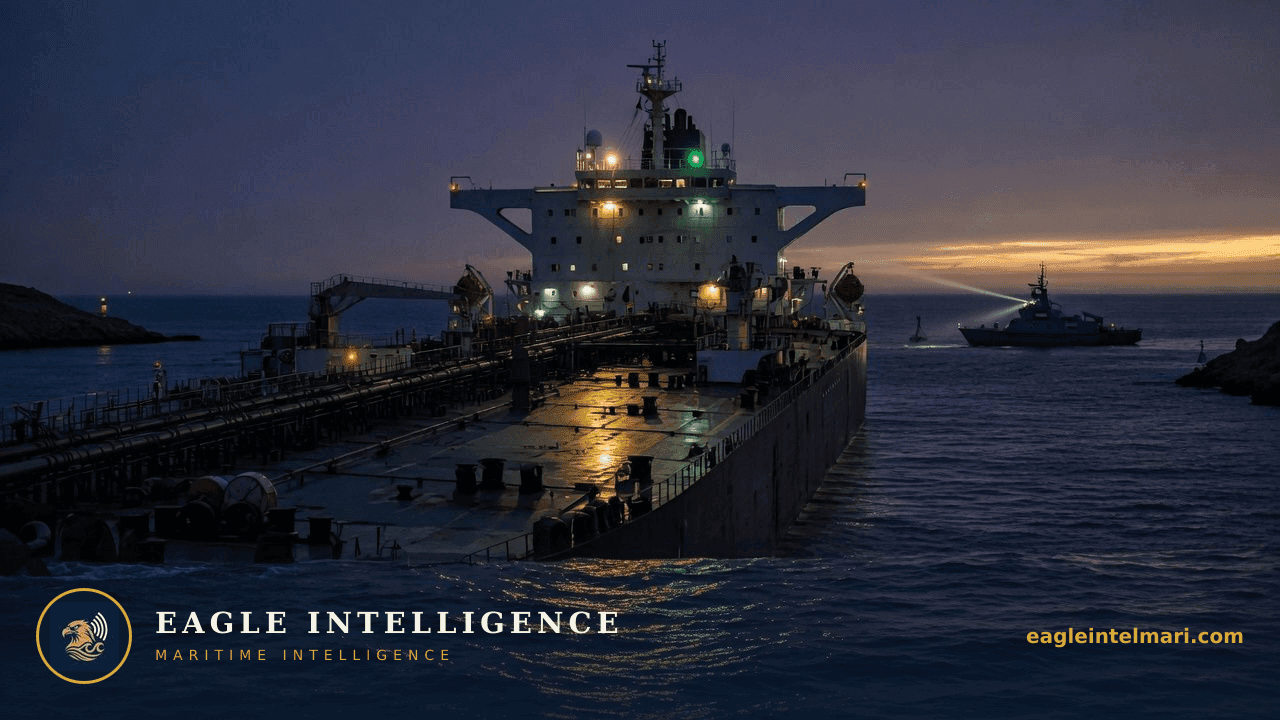
Shipowners and charterers routing tankers through the Strait of Hormuz must now decide whether to follow Iran’s designated corridor or risk an armed forces response that could trigger delays, claims and premium spikes.
Advertisement
Advertisement
Shipowners and charterers routing tankers through the Strait of Hormuz must now decide whether to follow Iran’s designated corridor or risk an armed forces response that could trigger delays, claims and premium spikes. The warning applies to any vessel deviating from the route Tehran has marked, with the threat of immediate and decisive action from Iranian forces.
Iran has drawn a specific transit line through the strait and told vessels to stay on it. Compliance means accepting routing instructions issued from Tehran rather than standard traffic separation schemes. Non-compliance carries the explicit prospect of force. For operators, the practical choice is between accepting Iranian direction or absorbing the operational and legal consequences of refusal.
Hull and P&I markets price exposure quickly when a state actor issues an armed warning inside a chokepoint. Expect immediate upward adjustments to additional war risk premiums for Hormuz transits, particularly for laden tankers. Underwriters will also revisit policy wordings around deviation and force majeure. A single incident involving a non-compliant vessel would accelerate those moves and could produce broad market notices within days.
Charterers lifting crude or products from Gulf terminals now weigh the cost of longer voyages around the Cape or through alternative regional routes against the risk of confrontation. Even modest schedule slippage at the strait adds days to discharge windows and can shift cargo values in volatile energy markets. Those holding spot or short-term fixtures face the sharpest exposure because they cannot easily absorb extra steaming time without renegotiating rates.
Masters and officers on vessels that routinely pass the strait will receive fresh routing instructions and updated threat assessments. Manning agencies rotating crews through Gulf ports must decide whether to adjust rotation lengths or offer hazard pay. A single boarding or warning shot would turn abstract risk into concrete crew welfare and retention issues for owners and managers.
Flags with significant tanker registries will face questions from owners about continued compliance with Iranian instructions versus international traffic rules. Ports in the region may also see carriers adjust call patterns if masters report heightened boarding risk. The ripple reaches second-tier flags that have historically accepted Hormuz traffic without additional scrutiny.
Track the first reported case of a vessel challenged for deviating from the Iranian line; that single event will reveal the practical threshold for enforcement and set the tone for premium and routing decisions across the summer schedule.
Advertisement
Advertisement
Indicative Additional War Risk Premium (AWRP) ranges — not a binding insurance quote.
Live Hormuz transit status and war-risk band.
Live 1–5 shipping war-risk level across monitored chokepoints.
⚠️ Intelligence Disclaimer: This analysis is produced by Eagle Intelligence's AI-assisted automated analysis system and is provided for informational purposes only. See our editorial standards. It is not a substitute for official maritime safety advisories from UKMTO, MSCHOA, IMO, or flag state authorities. Operational decisions should always be based on official guidance and professional judgment. Eagle Intelligence accepts no liability for any loss arising from reliance on this content.
Live chokepoint status, war-risk shifts, and the daily maritime wire, straight to your inbox. Free.
Leave a comment
All comments moderated for quality
