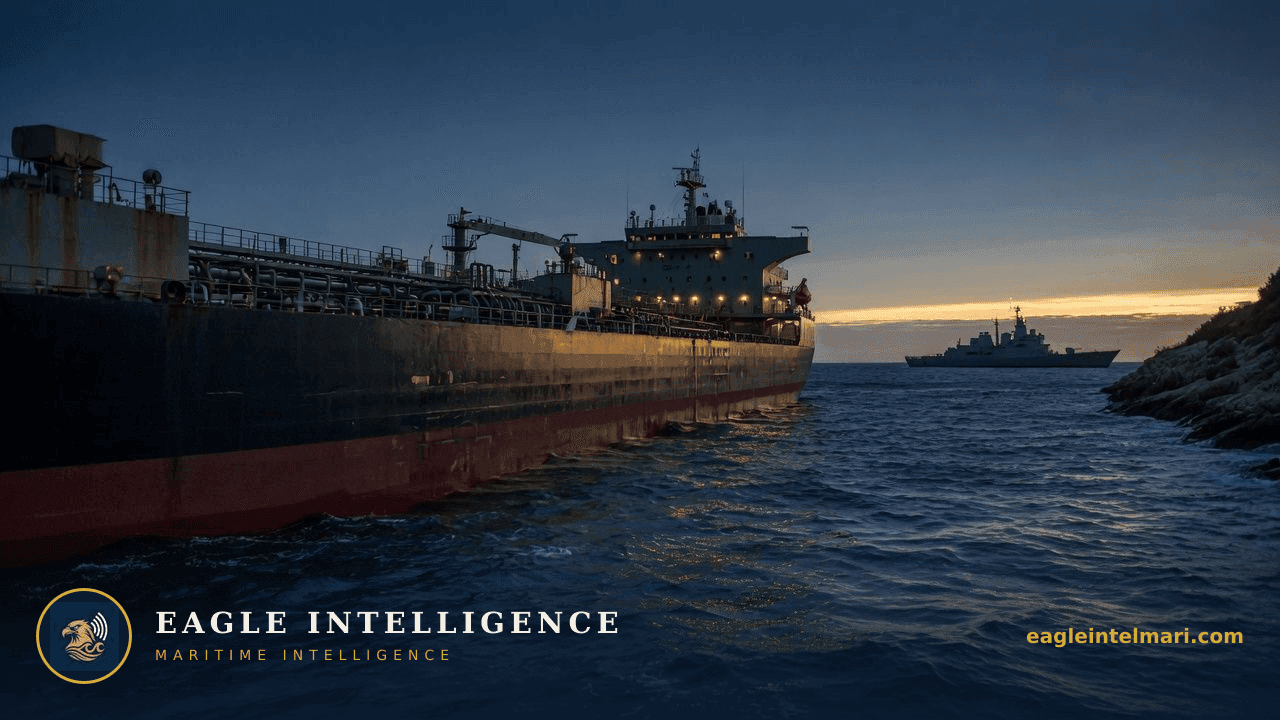
A commercial vessel hit in the Strait of Hormuz has reversed yesterday’s oil sell-off and reminded every operator that the ceasefire remains paper-thin. Shipowners, charterers and war-risk underwriters now face immediate decisions on whether to maintain or divert tonnage through the chokepoint.
Advertisement
Advertisement
A commercial vessel struck in the Strait of Hormuz yesterday abruptly ended the oil market’s downward move and placed fresh pressure on every participant routing crude or products through the Persian Gulf.
The incident underscores how quickly the current truce can fracture. Even limited kinetic action near the narrowest section of the strait—where traffic lanes shrink to just two nautical miles—can trigger immediate market repricing and operational hesitation. Tanker schedules already tightened by seasonal weather and regional naval presence now face an added layer of uncertainty that will not dissipate quickly.
For charterers lifting Iraqi or Kuwaiti barrels, the choice is stark: accept sharply higher war-risk quotes or accept potential multi-day delays via longer routing around the Cape or through the Red Sea. Yesterday’s price bounce already signals that physical traders expect some cargoes to be held back until clarity emerges on whether further incidents are isolated or the start of a pattern. Those holding period contracts will now test force-majeure clauses earlier than planned.
Hull and P&I syndicates in London and Oslo typically adjust posted rates within 48 hours of confirmed strikes. With the Hormuz lane already carrying elevated baseline premiums, any fresh advisory from EUNAVFOR or national navies will push additional tonnage into negotiated or refused cover. Owners with modern double-hull VLCCs may still secure placements, but older single-hull units face outright market withdrawal.
Separately, Baghdad’s renewed warning to the cartel about production discipline intersects directly with the maritime event. Any OPEC+ compliance slippage would increase the volume of Iraqi crude seeking export slots through the same vulnerable strait, raising both physical and reputational exposure for charterers who have already absorbed one disruption this week.
The episode recalls the 2019 attacks on tankers near Fujairah and in the strait itself, when a handful of limpet-mine strikes prompted a rapid spike in fixtures via the Cape and a 15-20 day average delay for affected cargoes. While the current ceasefire framework differs, the same geography and traffic density mean that even modest escalation can replicate those scheduling shocks within a fortnight.
Monitor whether the next 72 hours produce additional AIS anomalies or official statements from Tehran or Washington that either contain or widen the incident. A single further strike above 26°N will likely trigger formal convoy recommendations; absence of follow-on events may allow rates to stabilise by early July.
Advertisement
Advertisement
Indicative Additional War Risk Premium (AWRP) ranges — not a binding insurance quote.
Live Hormuz transit status and war-risk band.
Live 1–5 shipping war-risk level across monitored chokepoints.
⚠️ Intelligence Disclaimer: This analysis is produced by Eagle Intelligence's AI-assisted automated analysis system and is provided for informational purposes only. See our editorial standards. It is not a substitute for official maritime safety advisories from UKMTO, MSCHOA, IMO, or flag state authorities. Operational decisions should always be based on official guidance and professional judgment. Eagle Intelligence accepts no liability for any loss arising from reliance on this content.
Live chokepoint status, war-risk shifts, and the daily maritime wire, straight to your inbox. Free.
Leave a comment
All comments moderated for quality
