Shipowners are offering six months extra pay to induce crews through the Strait of Hormuz after two Dynacom tankers were struck and a third abandoned following an unknown projectile hit; the central question is whether commercial traffic can be sustained without unacceptable seafarer risk and what this means for oil logistics.
Advertisement
Advertisement
One shipowner has offered seafarers six months’ additional pay to transit the Strait of Hormuz. The move follows fresh attacks on at least three tankers near the strait on 20 July 2026, including two managed by Dynacom Tankers and one vessel abandoned after catching fire. These incidents concentrate operational and human risk on the narrow chokepoint that carries roughly one-fifth of global oil trade.
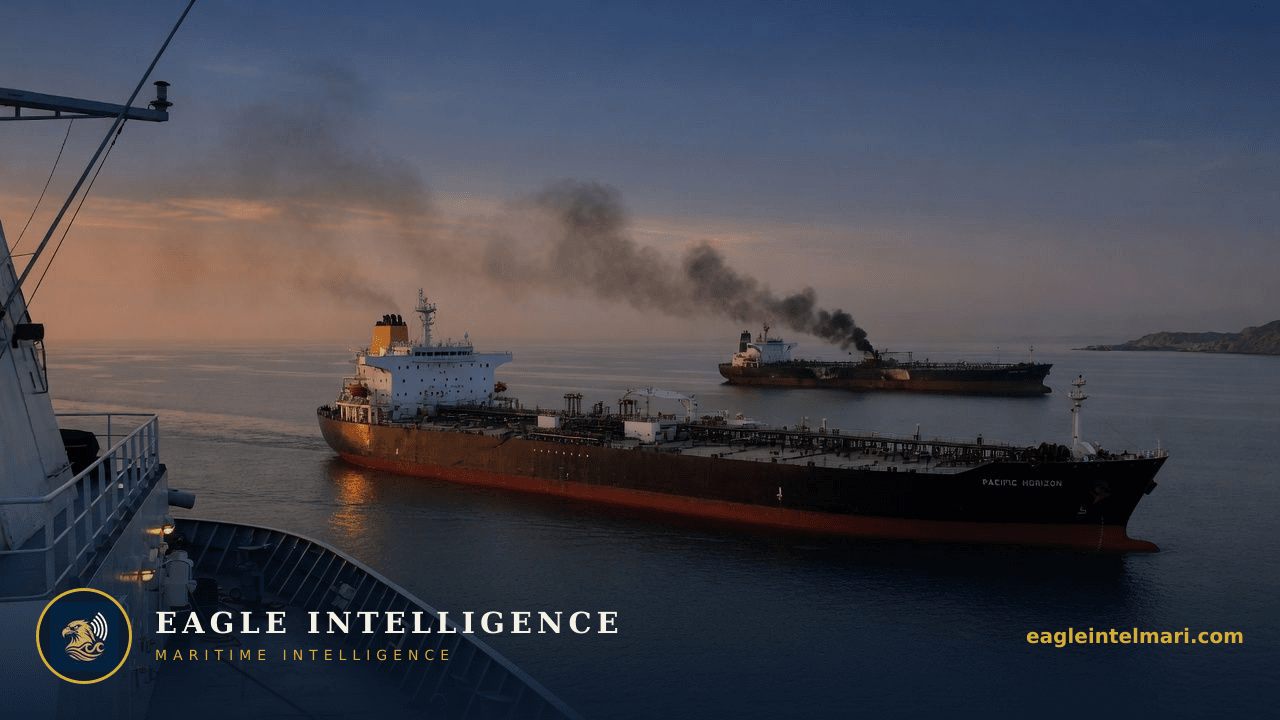
UKMTO reported a merchant tanker struck by an unknown projectile near the Strait of Hormuz, after which the crew abandoned the burning vessel. Reuters confirmed Dynacom managed two tankers hit by projectiles of unknown origin while sailing off Oman. Iranian statements claimed traffic through the strait had already fallen to zero and would remain restricted. AXSMarine data showed 728 tankers positioned on both sides of the strait, with 179 crude carriers including 123 VLCCs.
Vessels already inside the Arabian Gulf face limited exit options while those outside confront a narrowing window for safe passage. Routing alternatives around the Cape add roughly 12–15 days and substantial bunker costs for VLCCs. Port constraints at Omani and UAE facilities are likely to intensify as vessels queue or seek refuge. Crew changes become logistically harder when relief crews refuse Hormuz transits.
Hull war-risk premiums for Hormuz transits are expected to rise immediately. Contracts of carriage and charter parties may trigger frustration or deviation clauses if owners decline the strait. Flag states and coastal authorities retain duties to protect merchant shipping, yet enforcement in contested waters remains patchy. Seafarers retain rights under the Maritime Labour Convention to refuse voyages they reasonably believe place them in danger, creating potential abandonment or refusal scenarios.
Known: three confirmed attacks on 20 July, one crew abandonment, explicit six-month pay offer from at least one owner, 728 tankers already in the region, Iranian assertion of zero traffic. Unknown: origin of the projectiles, whether the attacks form a coordinated campaign, exact number of vessels that have turned back, and the identity of the owner offering the pay premium. Assessment: the pay incentive is a direct market signal that standard war-risk bonuses are no longer sufficient; owners are pricing crew consent at roughly double normal monthly wages, indicating they view refusal risk as material. Confidence in this reading is high.
VLCC earnings on the route will climb if any traffic continues, yet the larger effect is on insurance capacity and trader willingness to lift Gulf crude. Refiners in Asia may accelerate draws from alternative sources or floating storage. Second-order consequences include pressure on shadow-fleet operators already sanctioned and flying Russian flags, potential re-routing of product tankers, and knock-on delays at European and Indian discharge ports. Third-order effects reach grain and container operators that share the same approaches to Fujairah and Khor Fakkan.
Iran’s IRGC-linked statement frames restrictions as retaliation for continued U.S. actions, while Houthi threats to Saudi shipping broaden the risk envelope. Israel’s reported readiness to resume fighting adds another variable. Each actor benefits from raising the perceived cost of Hormuz transit without necessarily closing it outright; the resulting uncertainty itself functions as leverage.
The strongest alternative reading holds that the 20 July incidents are isolated and that commercial traffic will resume within days once additional naval escorts or private security arrangements are stood up. Under this view, the pay offer is a short-term recruitment tool rather than evidence of systemic refusal. Evidence that would support this scenario includes rapid clearance of the 728-tankers backlog and published fixture reports showing VLCCs again transiting the strait within seven days.
Most large operators will first attempt to secure naval coordination before matching the premium; those without scale may withdraw from the trade.
Revised terms are likely within 72 hours; absence of new quotes would itself indicate capacity withdrawal.
Traders holding firm cargoes will face the sharpest pressure to declare force majeure or accept higher freight.
Crew rotation via Oman or UAE airports may become the binding constraint even if vessels continue to move.
Guidance is expected within a week; silence would leave owners and masters to interpret MLC obligations alone.
Next 24 hours: any confirmed additional attacks or UKMTO advisories widening the exclusion zone. Next seven days: publication of new war-risk premium schedules and first published VLCC fixtures through the strait. Next thirty days: sustained reduction in tanker count below 400 vessels or Iranian clarification on whether the claimed closure remains in force.
Advertisement
Advertisement
Indicative Additional War Risk Premium (AWRP) ranges — not a binding insurance quote.
Live Hormuz transit status and war-risk band.
Live 1–5 shipping war-risk level across monitored chokepoints.
⚠️ Intelligence Disclaimer: This analysis is produced by Eagle Intelligence's AI-assisted automated analysis system and is provided for informational purposes only. See our editorial standards. It is not a substitute for official maritime safety advisories from UKMTO, MSCHOA, IMO, or flag state authorities. Operational decisions should always be based on official guidance and professional judgment. Eagle Intelligence accepts no liability for any loss arising from reliance on this content.
Live chokepoint status, war-risk shifts, and the daily maritime wire, straight to your inbox. Free.
Leave a comment
All comments moderated for quality
