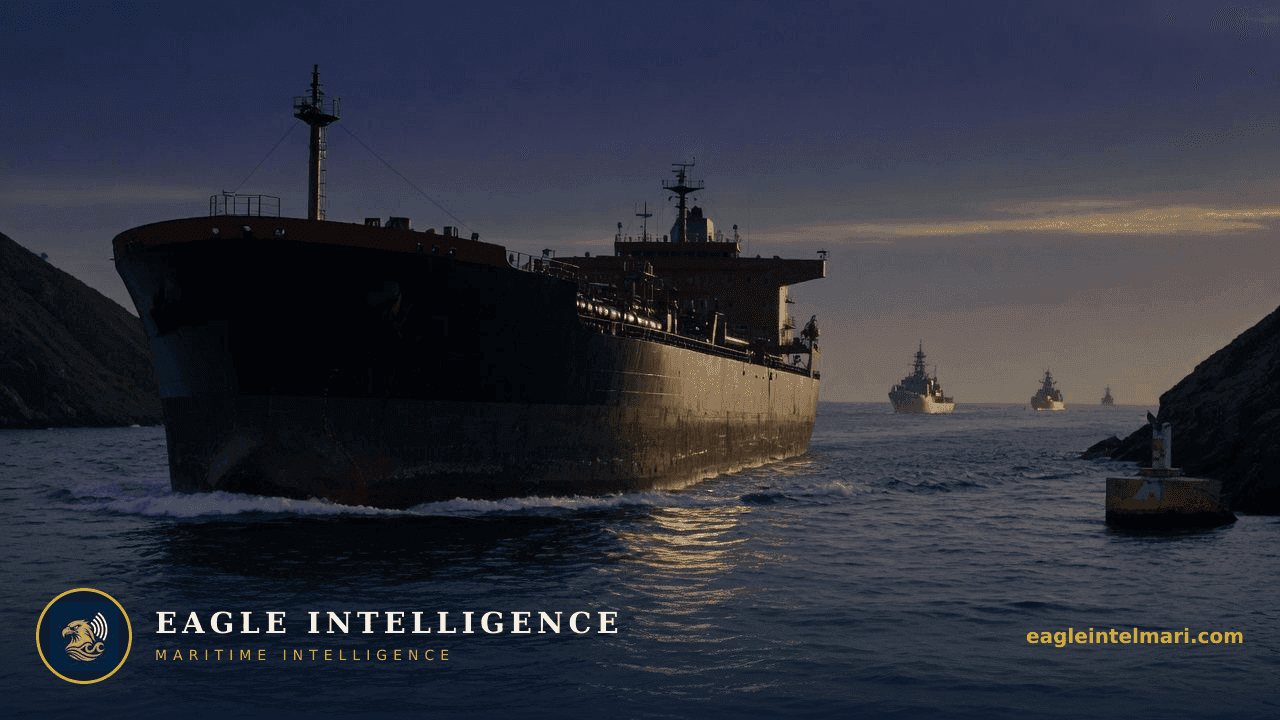
Tanker owners and hull insurers must now decide whether to accept sharply higher premiums or reroute tonnage around the Cape after a direct attack inside the Strait of Hormuz on 27 June and the rapid elevation of naval threat levels.
Advertisement
Advertisement
Tanker owners and hull insurers must now decide whether to accept sharply higher premiums or reroute tonnage around the Cape after a direct attack inside the Strait of Hormuz on 27 June and the rapid elevation of naval threat levels.
Navies operating in the region lifted the formal threat level for merchant shipping within hours of the strike. The move is not symbolic. It directly widens the zone where masters are expected to maintain darkened-ship conditions, restrict AIS transmissions, and report positions hourly to coalition coordination centers. For vessels already committed to a Hormuz transit, the change translates into altered watch rotations and potential delays at the entrance while naval escorts are assigned.
War-risk markets price the Hormuz corridor in real time. A single successful attack inside the strait typically lifts quoted rates for VLCCs and Suezmaxes by several hundred thousand dollars per voyage within the first trading session. Charterers who fixed vessels on subjects are already pressing owners to absorb the increase or declare force majeure. Hull syndicates in London and Singapore are circulating updated guidance that treats any transit between 48°E and 56°E as requiring prior notification and armed-guard presence.
Energy traders who had cargoes scheduled for July lifting now confront a narrowing window before the next round of sanctions reporting deadlines. A prolonged closure or even a temporary slowdown at the strait adds roughly two weeks to voyages destined for Europe or the US Gulf when routed via the Cape. That delay forces traders to decide whether to pay the war-risk surcharge, accept later delivery dates, or divert barrels to Asian buyers willing to tolerate the uncertainty.
Crew managers rotating Filipino, Indian, and Eastern European officers through Gulf ports are fielding questions about hazard pay and repatriation guarantees. Several operators have already instructed masters to shorten shore leave in Fujairah and Khor Fakkan. The practical effect is longer on-board periods and higher overtime costs that eventually appear in daily running expenses passed to charterers.
Marshall Islands and Liberian administrations, which together flag a large share of the global tanker fleet, are expected to issue fresh circulars reminding owners of their obligation to comply with updated naval advisories. Non-compliance can affect class status and insurance coverage. Smaller flags with limited naval liaison capacity may see their tonnage avoided by charterers seeking the safest possible documentation.
Fujairah and Jebel Ali are likely to experience queue lengthening as vessels wait for daylight transits or naval clearance. Storage capacity at the anchorage is finite; any sustained increase in dwell time pushes demurrage claims higher and reduces effective throughput for clean-product exports. Port authorities in Oman have already begun coordinating with naval forces on revised pilotage windows.
Track whether the next 72-hour naval advisory extends the high-threat zone westward toward the approaches to the Strait of Hormuz or simply maintains the current alert posture. That single document will determine whether owners begin diverting tonnage in volume or continue to absorb the elevated premium.
Advertisement
Advertisement
Indicative Additional War Risk Premium (AWRP) ranges — not a binding insurance quote.
Live Hormuz transit status and war-risk band.
Live 1–5 shipping war-risk level across monitored chokepoints.
⚠️ Intelligence Disclaimer: This analysis is produced by Eagle Intelligence's AI-assisted automated analysis system and is provided for informational purposes only. See our editorial standards. It is not a substitute for official maritime safety advisories from UKMTO, MSCHOA, IMO, or flag state authorities. Operational decisions should always be based on official guidance and professional judgment. Eagle Intelligence accepts no liability for any loss arising from reliance on this content.
Live chokepoint status, war-risk shifts, and the daily maritime wire, straight to your inbox. Free.
Leave a comment
All comments moderated for quality
