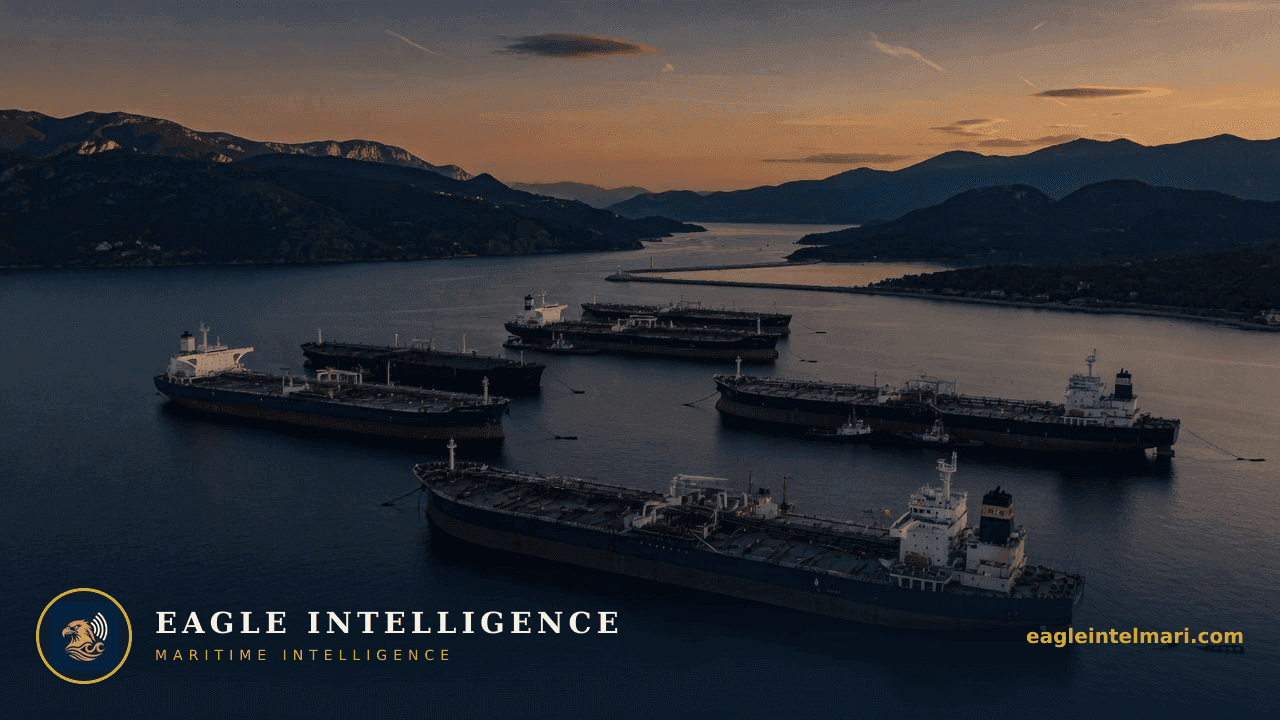
Disruptions at the Strait of Hormuz are reshaping oil trade lanes in ways that threaten sustained cuts to global tanker requirements, with oil-on-water inventories already reflecting weaker floating storage needs despite longer-haul offsets.
Advertisement
Advertisement
Disruptions at the Strait of Hormuz are forcing a lasting reconfiguration of crude and product flows that could suppress overall tanker demand well beyond the immediate spike in ton-miles created by alternative routes.
Longer voyages around the Cape or via the Red Sea partially cushion earnings for very large crude carriers on select routes, yet the net effect is fewer barrels moving by sea as buyers accelerate shifts to pipeline, rail or shorter-haul suppliers. Industry experts note that these adjustments reduce the total seaborne oil trade rather than merely stretching existing voyages, setting up a multi-quarter drag on fleet utilisation.
Floating storage levels, a direct proxy for tanker employment, have declined noticeably, with April readings marking the clearest drop in months. Lower inventories on water translate directly into reduced spot and period demand for both crude and product carriers, removing the buffer that has supported earnings during previous supply shocks.
Major importers in Asia are locking in nearer-term contracts with Middle Eastern or West African producers that avoid the Hormuz chokepoint altogether, while European buyers lean more heavily on Atlantic basin and domestic refining. These decisions compress the average haul length for many cargoes and reduce the number of fixtures required to meet the same consumption levels.
Shipowners operating older tonnage now face the prospect of prolonged idle periods or forced slow-steaming to preserve fuel economics, measures that erode cash flow and accelerate scrapping decisions. The risk is particularly acute for vessels without fuel-efficiency upgrades, as charterers prioritise modern, lower-consumption units on the fewer available long-haul stems.
P&I clubs and hull underwriters are reassessing exposure on Hormuz transits, with the prospect of sustained lower trading volumes prompting tighter conditions on laid-up fleets and reduced trading warranties. This environment favours owners who can demonstrate alternative employment patterns outside the Gulf, while increasing costs for those still reliant on the route.
If tensions ease and Hormuz traffic normalises quickly, ton-mile demand could rebound within two quarters as traditional flows resume. Should rerouting become semi-permanent, a structural 8-12 percent contraction in required tanker capacity appears likely by late 2026. A middle path of intermittent closures would produce volatile fixture rates and accelerated demolition of older vessels, with the outcome hinging on whether Asian refiners complete their shift to non-Gulf crudes.
Advertisement
Advertisement
Live Hormuz transit status and war-risk band.
⚠️ Intelligence Disclaimer: This analysis is produced by Eagle Intelligence's AI-assisted automated analysis system and is provided for informational purposes only. See our editorial standards. It is not a substitute for official maritime safety advisories from UKMTO, MSCHOA, IMO, or flag state authorities. Operational decisions should always be based on official guidance and professional judgment. Eagle Intelligence accepts no liability for any loss arising from reliance on this content.
Live chokepoint status, war-risk shifts, and the daily maritime wire, straight to your inbox. Free.
Leave a comment
All comments moderated for quality
