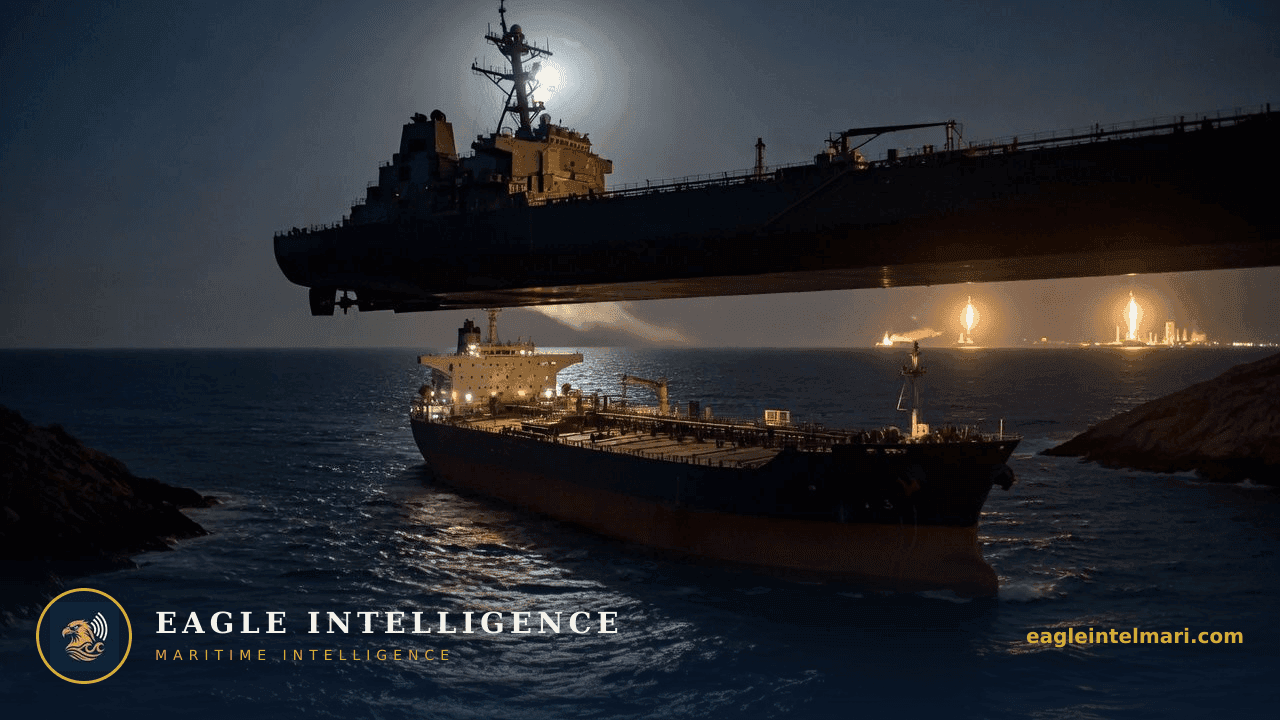
Washington’s aggressive blockade tactics in the Strait of Hormuz have now claimed Indian lives, forcing Rubio to defend operations that risk fracturing crew supply lines and widening war-risk premiums across the Gulf trade.
Advertisement
Advertisement
U.S. enforcement actions inside the Strait of Hormuz have produced the first confirmed Indian fatalities, prompting New Delhi to lodge a formal diplomatic protest and exposing the human cost of sustained naval interdiction.
Marco Rubio framed the deaths as an unavoidable consequence of intercepting vessels suspected of sanctions evasion. His remarks signal that Washington intends to maintain kinetic pressure even when neutral-flag crews are caught in the line of fire, a stance that prioritizes disruption of illicit oil flows over crew protection.
India supplies roughly 12 percent of global seafarers and an even higher share of ratings on tankers transiting Hormuz. The loss of three mariners in a single incident is already triggering union demands for hazard pay and route avoidance, which could shrink the available pool for VLCC and Suezmax voyages by several hundred qualified officers within weeks.
Hull and P&I underwriters are expected to widen Hormuz transit loadings by at least 150–200 basis points for vessels carrying Indian nationals. Clubs that had previously offered discretionary waivers for flagged ships will now face claims pressure, forcing a rapid reassessment of additional premium structures that could reach $150,000 per transit for a laden VLCC.
Charterers reliant on Indian officers are already exploring crew-change workarounds at Fujairah or Salalah to avoid Hormuz altogether. This rerouting adds 4–6 days to typical Ras Tanura–China voyages and tightens an already strained Aframax segment, pushing freight differentials higher even before any formal closure of the strait.
India’s protest raises the prospect of retaliatory port-state controls on U.S.-linked vessels or, conversely, accelerated delisting of Indian-flagged tankers from Western insurance markets. Either outcome would complicate tonnage availability for Middle East exports and accelerate the drift toward alternative registries less willing to accept Hormuz risk.
If enforcement remains episodic and India secures written U.S. assurances on crew safety, war-risk surcharges may stabilize by late summer. A second escalation path opens if another mixed-nationality boarding results in fatalities, prompting New Delhi to restrict seafarer deployment and forcing owners to offer 40–50 percent hazard bonuses. The most disruptive scenario sees coordinated diplomatic action by India and other labor-supply nations, effectively narrowing the pool of willing crews and lifting benchmark TC rates for Gulf loadings by double digits within a single quarter.
Advertisement
Advertisement
Indicative Additional War Risk Premium (AWRP) ranges — not a binding insurance quote.
Live Hormuz transit status and war-risk band.
Live 1–5 shipping war-risk level across monitored chokepoints.
⚠️ Intelligence Disclaimer: This analysis is produced by Eagle Intelligence's AI-assisted automated analysis system and is provided for informational purposes only. See our editorial standards. It is not a substitute for official maritime safety advisories from UKMTO, MSCHOA, IMO, or flag state authorities. Operational decisions should always be based on official guidance and professional judgment. Eagle Intelligence accepts no liability for any loss arising from reliance on this content.
Live chokepoint status, war-risk shifts, and the daily maritime wire, straight to your inbox. Free.
Leave a comment
All comments moderated for quality
