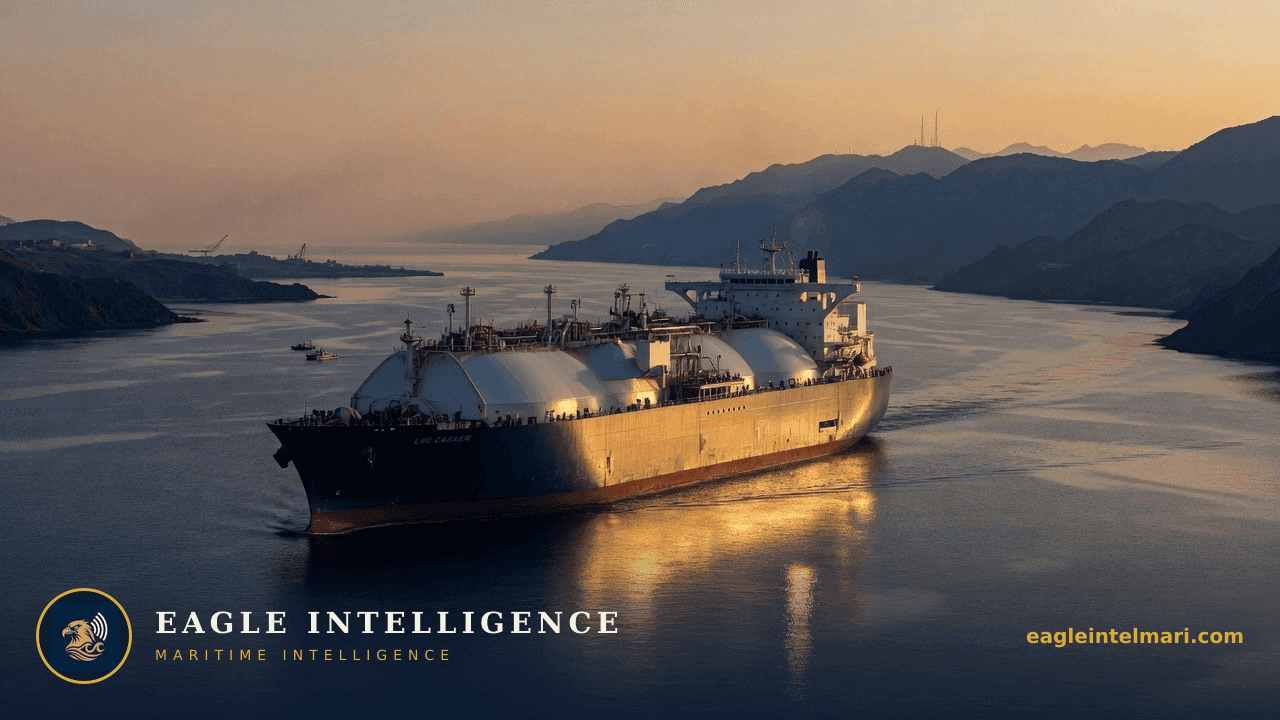
An empty Qatari LNG tanker has re-entered the Persian Gulf via the Strait of Hormuz for the first time since the Iran conflict began, indicating Doha is positioning to resume and scale exports.
Advertisement
Advertisement
The movement of an empty LNG carrier back into the Persian Gulf marks the clearest operational signal yet that Qatar intends to restore normal export rhythms despite ongoing hostilities in Iran.
Empty tankers returning through the strait are not routine traffic; they represent deliberate positioning ahead of loading cycles. Qatar’s decision to send one vessel back now, rather than wait for a fuller lull in tensions, suggests the state-owned fleet operator has assessed that the immediate risk window has narrowed enough to justify the transit. The choice of an unladen ship keeps exposure minimal while testing both navigation conditions and any Iranian reactions to renewed traffic.
European and Asian buyers that had shifted to spot cargoes from the United States and Australia are already adjusting term-contract expectations. With Qatar preparing to load again, traders anticipate a rapid rebalancing of June and July delivery schedules. This could ease some of the recent pressure on Atlantic-basin LNG prices, though any sustained increase in Qatari volumes will depend on how many additional empty units Doha routes through the strait in the coming fortnight.
Underwriters have held war-risk premiums for Hormuz transits at elevated levels since the conflict began. The empty-tanker movement will prompt immediate requests for updated risk assessments from both hull and P&I clubs. A single successful transit does not reset pricing, but repeated empty returns without incident could produce modest reductions within 10–14 days. Conversely, any Iranian naval activity or new mine warnings would lock premiums higher and accelerate the shift of tonnage toward longer but safer routes around the Cape.
Masters and officers on Qatari and chartered LNG vessels have operated under heightened fatigue-management rules since the war started. The return transit reintroduces the question of whether crews will accept repeated Hormuz passages without additional hazard pay or rotation guarantees. Several flag states have already advised their nationals to avoid the strait; any acceleration of Qatari loadings will force operators to resolve crewing shortfalls quickly or face delays at Ras Laffan.
Tehran has so far refrained from directly targeting commercial shipping in the strait. The Qatari move tests whether that restraint holds when empty tankers begin arriving on a more regular cadence. Iranian authorities may choose to monitor rather than interfere, calculating that limited LNG flows reduce pressure on global energy markets and therefore on sanctions enforcement. Any escalation short of closure—such as boarding inspections or radio challenges—would still raise effective freight rates and force charterers to factor in new delays.
If additional empty units follow without interference, Qatar could restore roughly 60 percent of pre-conflict export volumes by mid-August, stabilizing European storage injections. Should Iran impose selective inspections or issue new navigation warnings, loadings would remain sporadic and spot prices would stay elevated through the summer. A third, lower-probability path involves a broader Hormuz closure triggered by miscalculation on either side, forcing Qatar to divert tonnage and pushing Atlantic LNG cargoes toward record premiums. The next two weeks of empty-tanker movements will reveal which trajectory is taking shape.
Advertisement
Advertisement
Live Hormuz transit status and war-risk band.
Live 1–5 shipping war-risk level across monitored chokepoints.
⚠️ Intelligence Disclaimer: This analysis is produced by Eagle Intelligence's AI-assisted automated analysis system and is provided for informational purposes only. See our editorial standards. It is not a substitute for official maritime safety advisories from UKMTO, MSCHOA, IMO, or flag state authorities. Operational decisions should always be based on official guidance and professional judgment. Eagle Intelligence accepts no liability for any loss arising from reliance on this content.
Live chokepoint status, war-risk shifts, and the daily maritime wire, straight to your inbox. Free.
Leave a comment
All comments moderated for quality
