Stealth tanker movements out of the Gulf are easing some trapped inventories but confirm that the Iran conflict has replaced orderly flows with opaque, high-risk routing that will define energy markets for years.
Advertisement
Advertisement
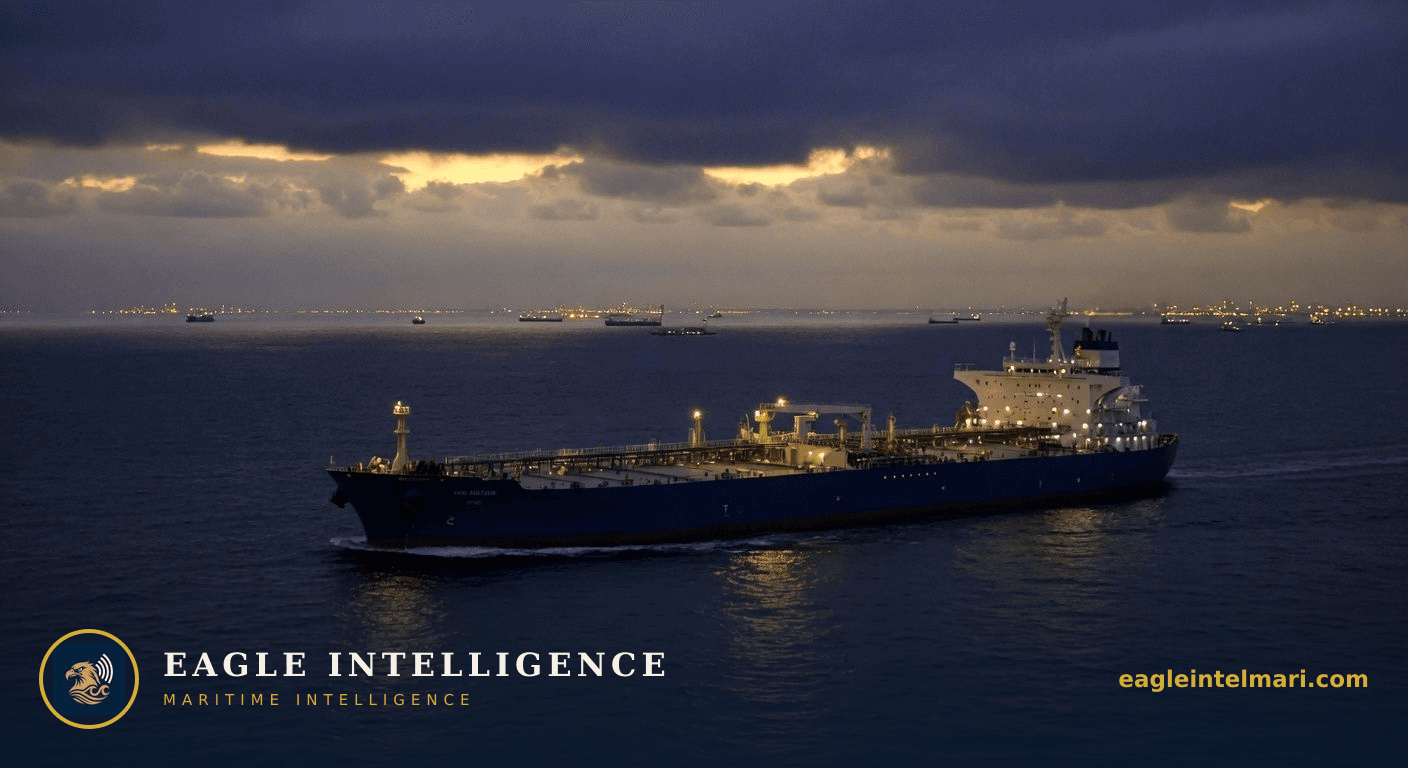
A slow but accelerating stream of tankers is now slipping through the Strait of Hormuz under stealth protocols, releasing modest volumes of crude that had been bottled up inside the Gulf. The movement does not mark any return toward normal trade; it instead exposes the durable fragmentation the conflict has imposed on global oil logistics.
Owners and operators have shifted to darkened AIS, staggered departures, and opportunistic routing that exploits gaps in surveillance. These tactics allow individual VLCCs and Suezmaxes to exit, yet they also lengthen voyages and raise collision and grounding risks inside the narrow waterway. Charterers willing to accept such uncertainty are paying premium day rates that reflect both war-risk premiums and the operational friction of constant course changes.
The inventories accumulated over recent months represent weeks of normal export capacity now partially unlocked. Because the releases remain sporadic and unadvertised, they have not produced the price relief traders normally associate with renewed supply. Instead, the barrels are moving into shadow storage or onto vessels that continue to loiter outside the Strait, preserving optionality rather than flooding the market.
Hull and P&I underwriters are the first to register the change. Policies written for Hormuz transits now carry higher deductibles and tighter notification windows, prompting some owners to explore flags historically tolerant of obscured ownership chains. Flag states that once competed on cost now confront reputational and regulatory exposure if vessels under their register become associated with repeated dark-transit incidents.
The pattern recalls the 1984–1988 Tanker War, when both Iran and Iraq targeted shipping yet a reduced but persistent volume of oil still moved. In that earlier conflict, the market adapted by concentrating risk in a smaller pool of vessels and charters; today’s stealth tactics achieve a similar concentration but at far higher unit cost and with greater dispersion of information. The result then, as now, was a durable two-tier market separating participants willing to absorb elevated physical and legal risk from those that withdrew entirely.
If Iranian forces intensify interdiction attempts, transits could drop back to near-zero within weeks, trapping remaining inventories and driving spikes in delivered prices east of Suez. Should de-escalation occur through back-channel understandings, a modest but more transparent convoy system might emerge, lowering war-risk premiums while still leaving volumes well below pre-conflict averages. The most probable middle course is continued low-volume, high-opacity movement that sustains elevated freight rates and forces traders to maintain larger regional storage buffers through at least the fourth quarter.
Advertisement
Advertisement
Live Hormuz transit status and war-risk band.
Live 1–5 shipping war-risk level across monitored chokepoints.
⚠️ Intelligence Disclaimer: This analysis is produced by Eagle Intelligence's AI-assisted automated analysis system and is provided for informational purposes only. See our editorial standards. It is not a substitute for official maritime safety advisories from UKMTO, MSCHOA, IMO, or flag state authorities. Operational decisions should always be based on official guidance and professional judgment. Eagle Intelligence accepts no liability for any loss arising from reliance on this content.
Live chokepoint status, war-risk shifts, and the daily maritime wire, straight to your inbox. Free.
Leave a comment
All comments moderated for quality
