Tanker owners and Gulf crude charterers must now decide whether to lock in six-month Cape routings or wait for mine-clearance progress that a major tanker association says could stretch to year-end.
Advertisement
Advertisement
For VLCC owners and crude traders with June loadings still open in the Gulf, the immediate decision is whether to accept Cape of Good Hope diversions that add 12–18 days and roughly $1.8 million in extra fuel and time-charter costs per voyage.
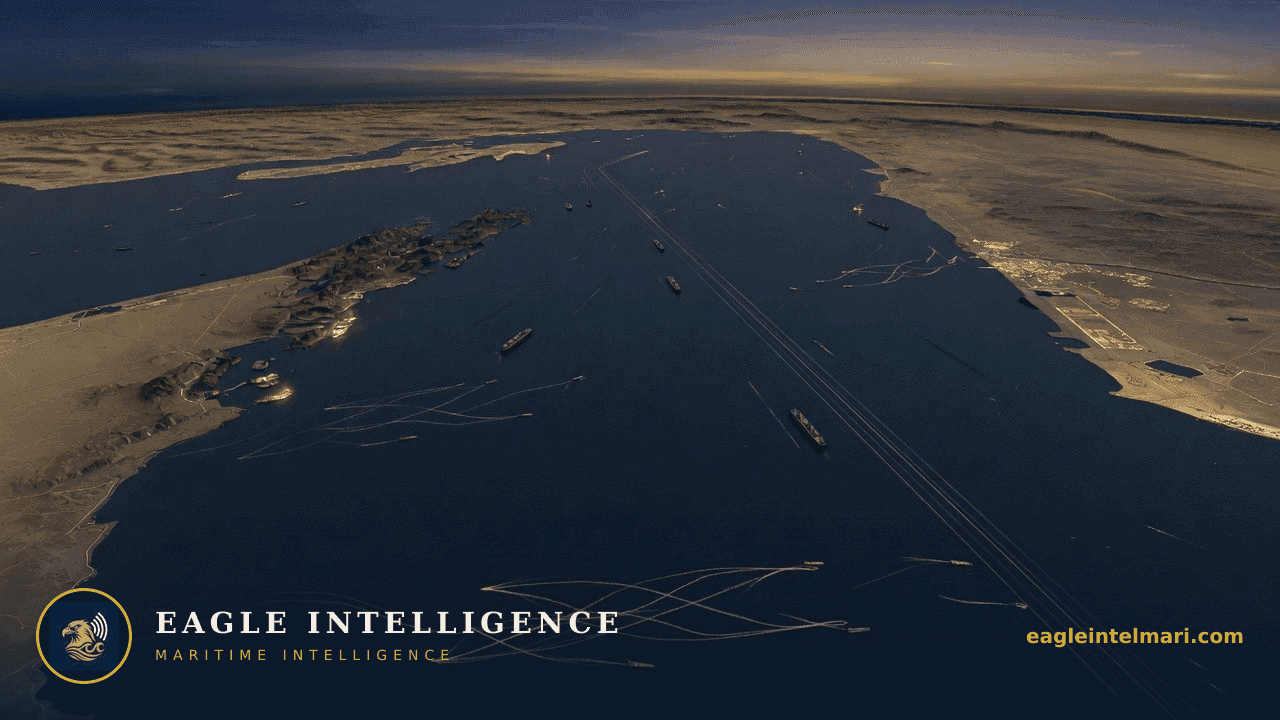
The reported requirement to sweep 80 mines from the Strait of Hormuz places the operation in a different category from routine channel maintenance. Historical parallels with post-conflict mine clearance in the northern Gulf after 1991 and 2003 show that even with NATO-standard assets, daily progress rarely exceeds six to eight mines when operating under threat of re-seeding. At that rate, a continuous 80-mine task could consume 10–13 weeks once vessels and crews are on station, pushing any realistic reopening past late October.
Several large Greek and Japanese owners have already instructed brokers to quote only Cape routing for August and September loadings from Ras Tanura and Kharg Island. Charterers unwilling to pay the $3.50–4.00 per barrel freight differential are shifting cargoes onto older tonnage that can absorb longer voyages without breaching charter-party speed and consumption warranties. The move is accelerating the retirement curve for 15-year-old VLCCs that cannot economically burn extra fuel.
Hull war-risk underwriters are quoting additional premiums of 0.35–0.45 percent of insured value for any transit that passes within 50 nautical miles of the Strait’s western entrance. For a $110 million VLCC, that equates to roughly $385,000–495,000 per voyage—an amount that must be recovered either through higher freight or by forcing the charterer to accept a new war-risk clause. P&I clubs have begun circulating guidance reminding members that crew contracts signed before the mine-laying incident may allow individual seafarers to refuse the voyage without breaching their agreements.
Filipino and Indian crewing agencies that supply 60 percent of VLCC officers are reporting rising refusal rates for Gulf rotations. Two flag states have already advised their registries that any vessel declaring a Hormuz transit after 1 July must obtain explicit seafarer consent documented ashore. This administrative step adds 48–72 hours to each fixture and creates a new documentation risk for owners who previously relied on blanket letters of indemnity.
A quick-clearance outcome would require the mine count to prove lower than reported and clearance assets to arrive within two weeks; that scenario now carries low probability. A medium-duration closure lasting into October would keep Cape routing dominant and lift TD3C rates above $120,000 per day. A prolonged closure past year-end would force widespread re-contracting of Aframax and Suezmax tonnage into longer-haul trades and trigger a second wave of newbuilding orders for dual-fuel vessels able to absorb Cape economics.
Watch for the first confirmed mine-countermeasure vessel arriving on station and any public statement from the tanker association that revises the 80-mine figure downward. That single data point will reset the probability weighting between the medium and prolonged scenarios.
Advertisement
Advertisement
Indicative Additional War Risk Premium (AWRP) ranges — not a binding insurance quote.
Live Hormuz transit status and war-risk band.
Live 1–5 shipping war-risk level across monitored chokepoints.
⚠️ Intelligence Disclaimer: This analysis is produced by Eagle Intelligence's AI-assisted automated analysis system and is provided for informational purposes only. See our editorial standards. It is not a substitute for official maritime safety advisories from UKMTO, MSCHOA, IMO, or flag state authorities. Operational decisions should always be based on official guidance and professional judgment. Eagle Intelligence accepts no liability for any loss arising from reliance on this content.
Live chokepoint status, war-risk shifts, and the daily maritime wire, straight to your inbox. Free.
Leave a comment
All comments moderated for quality
