Less than 48 hours after the US-Iran memorandum reopened the Strait, Tehran has begun asserting operational oversight, forcing carriers and insurers to reassess transits already resuming after the two-month blockade.
Advertisement
Advertisement
Iran’s rapid assertion of operational control over the Strait of Hormuz has already begun eroding the practical effect of the memorandum signed only two days earlier, with commercial traffic now facing new Iranian demands despite the formal end of the US naval presence.
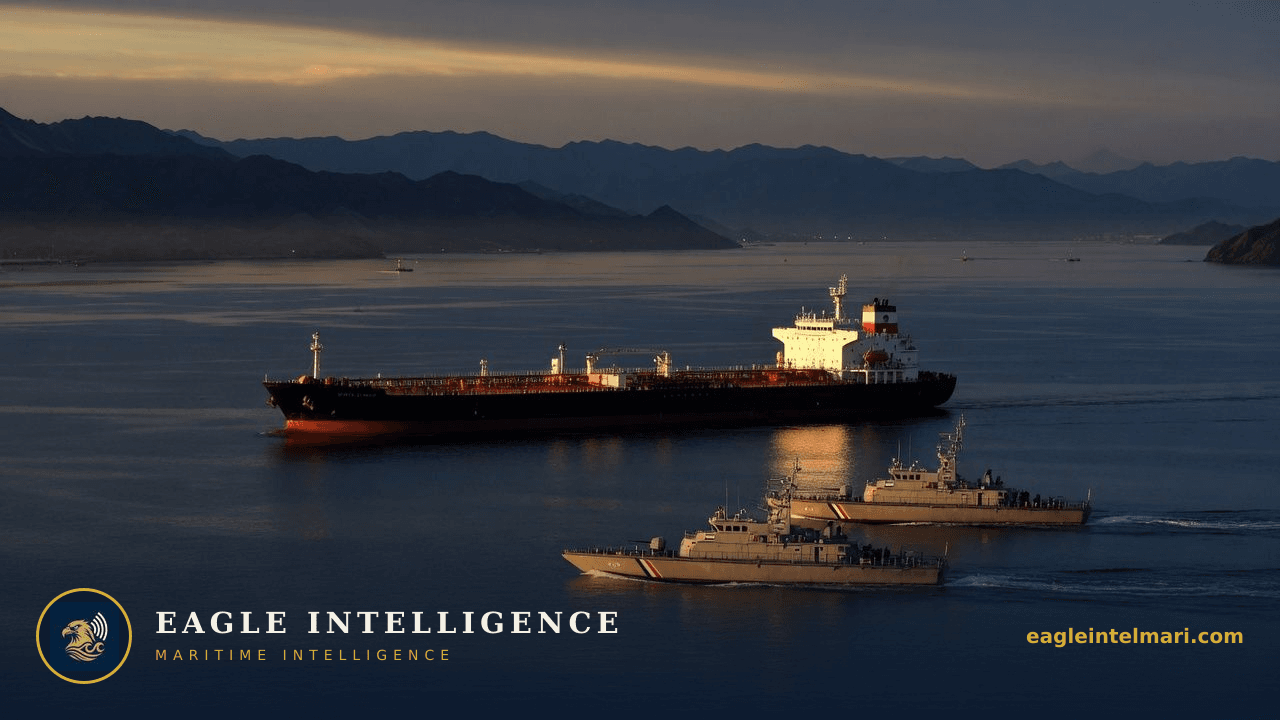
Since the memorandum took effect, Iranian naval units have resumed boarding selected tankers and bulk carriers for “safety inspections” at the Strait’s eastern entrance. These checks, conducted outside the formal traffic separation scheme, have delayed at least four very large crude carriers (VLCCs) bound for Asian refineries by 12–18 hours each. The inspections appear calibrated to avoid outright closure while re-establishing Iranian authority over who transits and when.
Owners who had diverted tonnage around the Cape of Good Hope during the blockade are now weighing whether to resume Hormuz passages. Several Greek and Japanese operators have instructed masters to slow-stem until Iranian boarding patterns clarify. Charterers holding period charters into the Gulf face a sudden dilemma: absorb longer voyages or accept higher war-risk premiums that have already ticked up 15–20 basis points on the London market since the Iranian moves became public.
Hull and P&I clubs are treating the Iranian assertions as a material change in risk profile. One leading London syndicate has circulated guidance that any vessel accepting Iranian inspection without prior flag-state clearance may void coverage for detention or seizure. War-risk rates for Hormuz transits, which had eased to roughly 0.35 percent of hull value immediately after the memorandum, are now being quoted at 0.55–0.65 percent for the next 30-day period, reflecting the speed with which Tehran has reasserted physical presence.
Brent crude added $1.80 per barrel on the day the Iranian boarding reports surfaced, with the largest gains in the prompt month reflecting fears of selective delays rather than outright closure. LNG carriers scheduled to load at Ras Laffan have seen their laycan windows widened by two to three days as charterers build buffer for potential inspections. Traders are already modeling a 300,000–500,000 barrel per day effective reduction in Gulf exports if Iranian checks remain at current intensity through July.
The first path sees Iranian inspections taper after initial demonstrations of authority, allowing traffic to normalize by early July under quiet bilateral understandings. The second involves sustained low-level interference that gradually raises the cost of Hormuz transits until owners demand contractual war-risk clauses or rerouting surcharges. The third, and least probable but highest-impact, path is triggered by a single high-profile detention or collision during an inspection, prompting the US Navy to reinsert assets and collapsing the memorandum within weeks. Markets will watch Iranian statements on “sovereign rights” and the next round of VLCC fixtures for the clearest signals of which trajectory is taking hold.
Advertisement
Advertisement
Indicative Additional War Risk Premium (AWRP) ranges — not a binding insurance quote.
Live Hormuz transit status and war-risk band.
Live 1–5 shipping war-risk level across monitored chokepoints.
⚠️ Intelligence Disclaimer: This analysis is produced by Eagle Intelligence's AI-assisted automated analysis system and is provided for informational purposes only. See our editorial standards. It is not a substitute for official maritime safety advisories from UKMTO, MSCHOA, IMO, or flag state authorities. Operational decisions should always be based on official guidance and professional judgment. Eagle Intelligence accepts no liability for any loss arising from reliance on this content.
Live chokepoint status, war-risk shifts, and the daily maritime wire, straight to your inbox. Free.
Leave a comment
All comments moderated for quality
