A post-conflict limbo over Strait of Hormuz traffic could keep VLCC and LNG flows depressed for months or years, forcing charterers and insurers to price persistent risk.
Advertisement
Advertisement
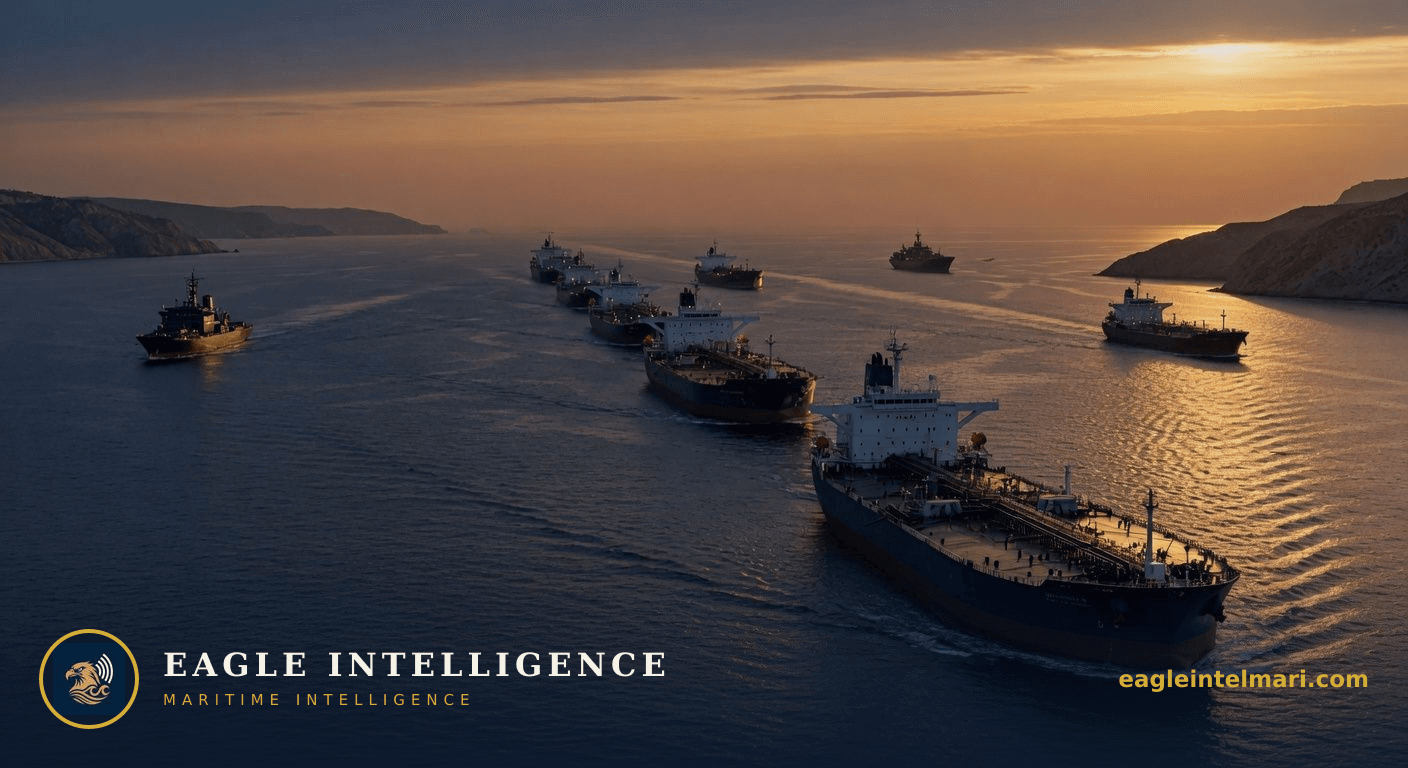
Even if hostilities in Iran wind down, control over the Strait of Hormuz may settle into an ambiguous middle state that prevents a clean return to pre-conflict traffic levels, according to energy expert Daniel Yergin.
A decisive victory or negotiated settlement rarely produces immediate clarity over narrow chokepoints. The Strait’s 21-mile width and the requirement for continuous naval or coast-guard oversight mean that whichever faction retains de-facto influence can throttle passage without a formal declaration of closure. Historical precedent shows the 1980-88 Tanker War left shipping in a similar half-open condition for nearly two years after the ceasefire, with convoys still subject to arbitrary inspection.
Owners of very-large crude carriers and LNG carriers face the most direct exposure. Routing around the Cape adds 12–15 days and roughly $1.2 million in fuel and canal fees per VLCC round voyage from the Gulf to Europe. With fewer than 120 VLCCs currently available for spot charter in the Middle East, any sustained diversion quickly tightens supply and lifts time-charter rates by 25–40 percent. Long-term charters already signed at $55,000–65,000 per day will face force-majeure claims if Hormuz throughput remains throttled.
War-risk underwriters have already widened Hormuz exclusion zones on renewal. A gray-zone environment removes the binary trigger that normally ends additional premiums once open conflict ceases. Clubs are expected to maintain a 0.25–0.40 percent of hull-value monthly surcharge until traffic statistics demonstrate at least 85 percent of pre-crisis daily transits for three consecutive months. Hull markets will likely price war-risk extensions at 1.8–2.2 times normal rates for vessels still electing the passage, pushing some owners toward Cape routing despite the extra cost.
Crude traders will continue embedding a Hormuz risk premium of $3–5 per barrel into delivered prices to Europe and Asia until flows stabilize. LNG spot cargoes from Qatar face even sharper volatility because the emirate has limited spare pipeline capacity. Refiners in the Mediterranean and Northwest Europe may accelerate purchases of West African and Brazilian grades, shifting 400,000–600,000 barrels per day of incremental demand and tightening Aframax availability in the Atlantic basin.
Scenario one sees a de-facto understanding between residual Iranian authorities and Gulf neighbors that restores escorted transit within 60–90 days; rates ease but never fully normalize. Scenario two produces intermittent harassment of non-allied tonnage, keeping daily transits 30–40 percent below baseline and sustaining elevated insurance for at least six months. Scenario three involves third-party naval powers establishing a permanent corridor, effectively internationalizing part of the Strait and removing the gray zone through sustained presence. Each path hinges on whether any single actor can credibly guarantee safe passage for all flagged vessels.
Seafarers transiting the Strait already receive war-risk bonuses of $200–300 per day. Prolonged ambiguity extends these payments and complicates crew-change logistics because several flag states have advised masters to avoid the area. Panama and Liberia, which together flag roughly 35 percent of Hormuz tonnage, may impose additional documentation requirements that add days to scheduling.
Advertisement
Advertisement
Indicative Additional War Risk Premium (AWRP) ranges — not a binding insurance quote.
Live Hormuz transit status and war-risk band.
Live 1–5 shipping war-risk level across monitored chokepoints.
⚠️ Intelligence Disclaimer: This analysis is produced by Eagle Intelligence's AI-assisted automated analysis system and is provided for informational purposes only. See our editorial standards. It is not a substitute for official maritime safety advisories from UKMTO, MSCHOA, IMO, or flag state authorities. Operational decisions should always be based on official guidance and professional judgment. Eagle Intelligence accepts no liability for any loss arising from reliance on this content.
Live chokepoint status, war-risk shifts, and the daily maritime wire, straight to your inbox. Free.
Leave a comment
All comments moderated for quality
