Owners are flooding yards with VLCC and Suezmax contracts even as the Strait of Hormuz remains closed since February, betting that the energy crisis will keep earnings elevated long enough to justify fresh tonnage.
Advertisement
Advertisement
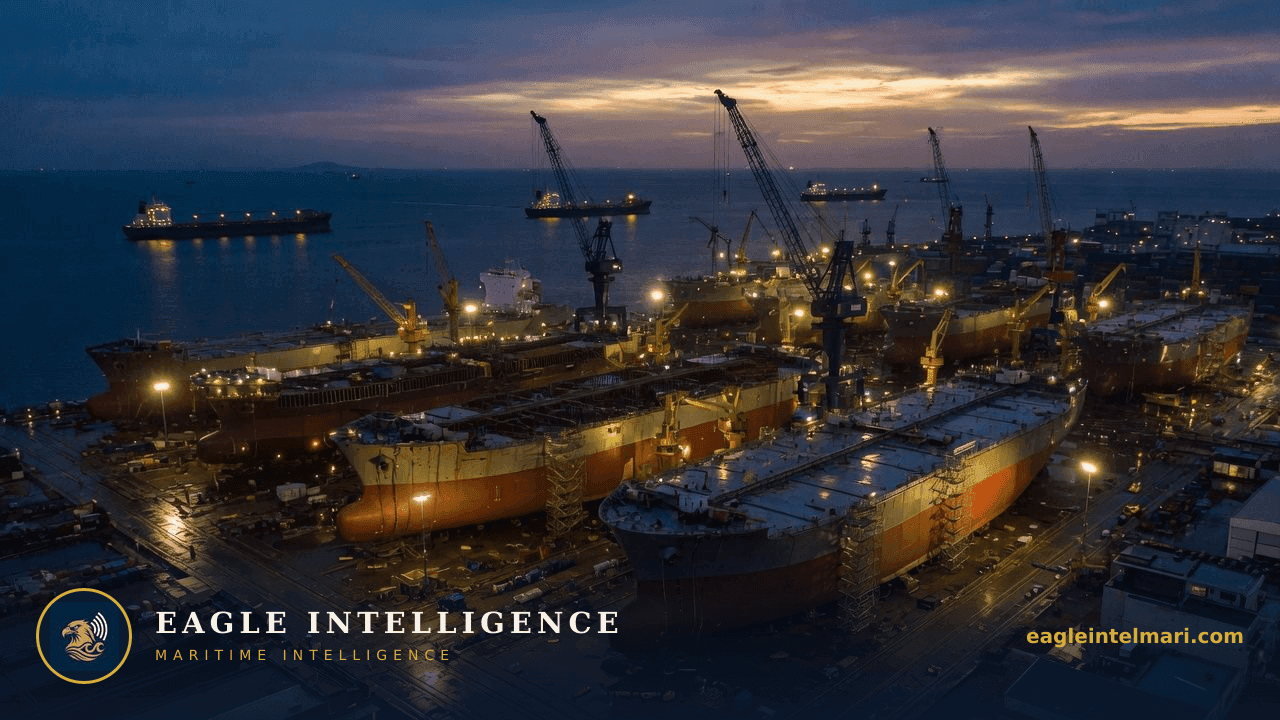
Shipowners have placed a wave of newbuilding contracts for large tankers in the first half of 2026, undeterred by the closure of the Strait of Hormuz and the resulting global energy shock. The activity signals a market conviction that disruption will outlast the current fleet’s ability to absorb it.
South Korean and Chinese builders have seen their 2027 delivery positions largely spoken for within weeks, with multiple VLCC orders reported at prices 12-15 percent above early-2025 levels. The rush reflects both fear of inflation in steel and equipment and the desire to secure yard capacity before military or insurance constraints tighten further.
Energy traders and national oil companies have moved aggressively to secure period tonnage at rates that were unthinkable six months ago. This pre-emptive chartering reduces available prompt tonnage, pushing spot earnings higher and reinforcing the rationale for new orders even while the Hormuz chokepoint stays shut.
Hull and P&I underwriters have begun quoting elevated war-risk rates for vessels ordered after the February closure, citing both the geographic concentration of new tonnage and the uncertain flag availability once deliveries begin. Owners who place orders now are effectively locking in both construction cost and future insurance exposure.
Modern tonnage built before 2024 has seen modest price erosion as operators weigh the risk of rapid obsolescence once the Hormuz route reopens. In contrast, the forward orderbook for 2028-2029 delivery commands a premium, illustrating a bifurcated market in which timing of delivery determines residual value more than age alone.
If Hormuz reopens before Q4 2026, excess newbuilding supply could trigger a sharp earnings collapse and widespread cancellations. Should the closure persist into 2027, the fresh fleet will be absorbed quickly and older single-hull or high-risk vessels will face accelerated scrapping. A partial reopening with persistent insurance restrictions would create a two-tier market in which only certain flags and ownership structures remain viable for Hormuz transits.
Several open registries have already indicated they will scrutinise new VLCC applications more rigorously, raising the possibility that a portion of the orderbook may struggle to find acceptable flags. This development would further concentrate ownership among established Greek, Chinese and Middle Eastern groups that retain access to compliant tonnage.
Advertisement
Advertisement
Live Hormuz transit status and war-risk band.
⚠️ Intelligence Disclaimer: This analysis is produced by Eagle Intelligence's AI-assisted automated analysis system and is provided for informational purposes only. See our editorial standards. It is not a substitute for official maritime safety advisories from UKMTO, MSCHOA, IMO, or flag state authorities. Operational decisions should always be based on official guidance and professional judgment. Eagle Intelligence accepts no liability for any loss arising from reliance on this content.
Live chokepoint status, war-risk shifts, and the daily maritime wire, straight to your inbox. Free.
Leave a comment
All comments moderated for quality
