The return of open conflict has cut Strait of Hormuz crossings by 70 percent, pushing remaining tankers onto the Iranian route and exposing crews, hulls and energy supply chains to concentrated legal and physical hazards that markets have not yet priced.
Advertisement
Advertisement
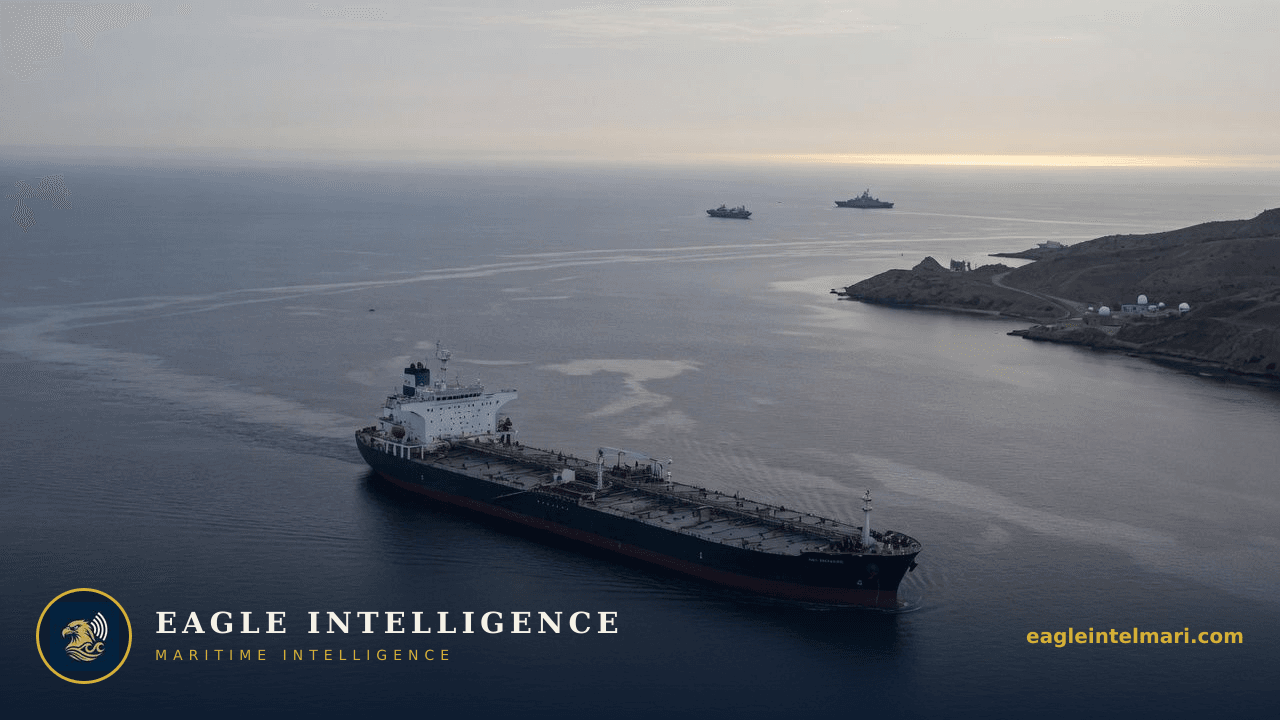
The single most consequential development on 27 July 2026 is the documented 70 percent collapse in daily Strait of Hormuz crossings from roughly 45 vessels to 13, with almost all remaining traffic now routed along the unrecognised Iranian corridor rather than the Omani alternative. This shift, drawn from Kpler risk and compliance data, directly links the end-February resumption of hostilities between Iran and the United States to immediate operational rerouting, higher bunker costs and crew exposure in Iranian territorial waters. It outranks other items because it simultaneously compresses physical chokepoint capacity, alters insurance exposure for every tanker operator, and threatens Middle East oil supply recovery for the remainder of the year.
The attack on an LPG tanker carrying 28 Indian crew members inside Iranian waters on 25 July supplies the human and legal anchor. India’s embassy in Tehran confirmed contact with authorities, but no flag state, charterer or insurer has yet released the vessel’s identity or the precise circumstances of the incident. This single event crystallises the new reality: vessels that once transited the recognised Omani lane now face Iranian coastal-state jurisdiction even when attempting to avoid the main strait.
Kpler data shows the daily crossing count fell from approximately 45 to 13 after the conflict resumed. Between 7 and 27 July the proportion of traffic using the Iranian route rose from negligible levels to nearly 100 percent of the reduced total. The LPG tanker incident occurred on Friday 25 July inside Iranian territorial waters. No public confirmation exists on whether the vessel was struck by missile, drone or boarding party. Indian authorities have stated the crew is safe but have released no further details.
Separately, Houthi attacks on Saudi oil facilities have reduced Bab el-Mandeb crossings by another 50 percent according to Clarksons, compounding the squeeze on westbound flows. Black Sea activity continues independently with the general cargo ship Golden Leo sinking after a Russian missile strike sustained a week earlier, but that theatre does not intersect the Hormuz routing decision.
Vessels still attempting Hormuz now sail closer to Iranian shore-based sensors and patrol craft. The shift lengthens effective transit times because masters must maintain higher speeds or adopt evasive zig-zag patterns when radar illumination is detected. Bunker consumption rises accordingly, which Sea Cargo Charter Chair James Lewis has already linked to accelerated decarbonisation pressure as owners seek efficiency gains to offset the cost spike.
Port constraints downstream are tightening. Saudi terminals on the Red Sea side, including Yanbu, have seen at least one supertanker reverse course before entering the Bab el-Mandeb Strait. The 11 commodity vessels recorded transiting Bab el-Mandeb on Sunday represent the lowest daily figure in months. Charterers are therefore forced either to accept Iranian-route bills of lading or to book longer Cape or Northern Sea Route alternatives that add 12 to 18 days to Europe-bound voyages.
Crew welfare implications are immediate. The 28 Indian seafarers aboard the attacked LPG tanker remain in Iranian custody or under Iranian protection, depending on whose account prevails. Manning agencies face pressure to offer war-risk bonuses or refuse Iranian-route voyages, yet no collective bargaining agreement has yet been updated to reflect the new geography of risk.
Sanctions exposure now bifurcates along route choice. Tankers using the Iranian corridor risk secondary sanctions if any cargo has US nexus, while those attempting the Omani lane risk physical interdiction. Insurance clauses triggered by the 25 July attack remain untested; war-risk underwriters have not published revised additional-premium schedules for the new Iranian routing. Flag states, particularly India, must decide whether to issue guidance treating Iranian territorial waters as a high-risk zone equivalent to the Bab el-Mandeb.
The EU MRV regime and the forthcoming IMO MASS Code offer no immediate relief. Emissions reporting obligations continue regardless of routing, and the 2.1 percent rise in 2025 EU-linked GHG emissions already reflects longer voyages. Remote-control or autonomous solutions contemplated under the MASS Code cannot be deployed at scale before the next insurance renewal cycle, leaving conventional crews to absorb the exposure.
The Baltic Dry Index fell 1.7 percent to 2,696 on 27 July, with Capesize losing 2 percent to 4,200. While the index is bulk-driven, the tanker sector transmits price signals through time-charter equivalents and war-risk premiums that have not yet appeared in public fixtures. Ningbo Containerized Freight Index at 2,219.2 points shows container rates softening, yet the underlying driver is reduced Middle East feedstock rather than genuine demand destruction.
Energy traders face the clearest second-order effect: Kpler explicitly states Middle East oil supply will not return to pre-war levels this year. Any sustained Iranian-route monopoly raises the probability of cargo rejection at European or Asian discharge ports wary of sanctions contamination. Asset values for suezmax and VLCC tonnage ordered this year, including the two 157,000 dwt units placed at DH Shipbuilding for a European buyer, will be repriced once war-risk clauses are tested in arbitration.
Iran’s control of the strait since end-February is the central fact. By forcing traffic onto its own route, Tehran extracts both intelligence and potential boarding opportunities. The United States has responded with public AI-generated imagery of captured and exploding Iranian tankers posted by President Trump, a form of information warfare that does not yet translate into kinetic escort operations inside the strait. China’s parallel push for Northern Sea Route container services, building on the 2025 Istanbul Bridge trial, represents one structural workaround that simultaneously reduces Hormuz dependence and increases Arctic insurance exposure.
Houthi forces, operating with Iranian logistical support, have achieved a second chokepoint effect at Bab el-Mandeb. Their targeting of Saudi oil facilities directly links Red Sea and Hormuz dynamics, creating a de-facto pincer on westbound crude and product flows.
The 28 Indian crew members constitute the first publicly acknowledged casualty cohort since the routing change. Their continued presence in Iranian waters, even if unharmed, creates precedent for other nationalities. Manning agencies in Mumbai and Manila are already fielding queries from families. Fatigue risk rises because masters on the Iranian route maintain heightened watch rotations without additional complement. Abandonment cases could multiply if insurers decline to cover Iranian-route voyages and owners default on wages.
We know the crossing count, the route shift percentage, the LPG tanker attack date and crew nationality, and the Bab el-Mandeb traffic collapse. We do not know the identity of the attacked vessel, the precise weapon system used, the cargo destination, or whether any insurance claim has been filed. We also lack fresh war-risk premium quotes.
Eagle Assessment: the Iranian-route monopoly is structurally unstable and will produce either a negotiated de-escalation or a sharp further reduction in tonnage willing to transit. rises with each additional crew incident; market pricing has not yet caught up.
The strongest counter-argument holds that the 13 remaining daily crossings represent a new equilibrium that sophisticated operators can manage through speed, routing algorithms and selective chartering. Proponents point to the successful 2025 Northern Sea Route trial and the two suezmax orders placed this week as evidence that capital continues to flow. If Iranian authorities permit safe passage for non-sanctioned cargoes and no further attacks materialise, the 70 percent drop could stabilise without triggering broader supply collapse. Evidence that would validate this view includes publication of new insurance terms at modest additional premium and a rebound in Hormuz crossings above 20 vessels per day within 30 days.
Shipowners face immediate war-risk surcharge negotiations and potential hull-value depreciation. Charterers must decide whether to accept Iranian-route bills of lading or pay for Cape rerouting that adds roughly $1.2 million in fuel and time cost per VLCC round voyage. P&I clubs confront coverage gaps if Iranian authorities detain vessels for inspection. Energy traders in Europe and Asia must model scenarios in which Iranian-route cargoes are rejected at discharge, forcing floating storage or forced sales. Regulators in India and the Philippines must update seafarer guidance before the next rotation cycle. Port executives at Fujairah and Singapore see shifting storage patterns as tankers loiter outside the strait awaiting routing decisions.
How will hull underwriters adjust additional premiums once the first Iranian-route claim is filed, and will the adjustment apply retroactively to vessels already committed?
Which flag states will issue formal guidance treating the Iranian corridor as a war-risk zone equivalent to declared exclusion areas?
What volume of Middle East crude can realistically be diverted via the Northern Sea Route or Cape before northern hemisphere winter ice limits become binding?
Can the 28 Indian crew members be repatriated without creating a precedent that encourages further detentions?
Will the European buyer of the two new suezmax tankers insert specific Hormuz routing warranties into the building contract before steel cutting?
How quickly can Kpler or equivalent data streams be integrated into real-time charter-party clauses to trigger automatic rerouting or cancellation?
Next 24 hours: any public statement from the Indian embassy naming the LPG tanker or confirming release of the crew.
Next seven days: first published war-risk additional-premium schedule for Hormuz Iranian route from a major London underwriter.
Next thirty days: daily Hormuz crossing count either stabilising above 20 vessels or falling below 10, and any fresh Houthi strike on Saudi Red Sea infrastructure that further reduces Bab el-Mandeb traffic.
Advertisement
Advertisement
Live Hormuz transit status and war-risk band.
Live 1–5 shipping war-risk level across monitored chokepoints.
⚠️ Intelligence Disclaimer: This analysis is produced by Eagle Intelligence's AI-assisted automated analysis system and is provided for informational purposes only. See our editorial standards. It is not a substitute for official maritime safety advisories from UKMTO, MSCHOA, IMO, or flag state authorities. Operational decisions should always be based on official guidance and professional judgment. Eagle Intelligence accepts no liability for any loss arising from reliance on this content.
Live chokepoint status, war-risk shifts, and the daily maritime wire, straight to your inbox. Free.
Leave a comment
All comments moderated for quality
