BREAKINGChina-linked hackers step up attacks on European shipping
← Eagle Intelligence News
IntelligenceHIGH ALERT

Daily Eagle Brief — 2026-07-01: US-Iran talks on suspending Strait of Hormuz attacks drive charterers to reprice coal voyages as traffic rebounds.

Eagle Intelligence·Eagle Intelligence Analysis·July 1, 2026 · 16:06 UTC·3 min read
Why This Matters

Developments in the Strait of Hormuz dominated the past 24 hours, with US indications of a deal to suspend attacks and reports of rebounding traffic intersecting directly with thermal coal futures falling below $130 per ton. Dry-bulk charterers are reassessing Richards Bay and Newcastle loadings as war-risk premiums ease and effective haul times shorten. Parallel threads include finalization of the S-100 ECDIS transition timeline and slipping iron-ore prices at Dalian, while several port-terminal investments advance without direct linkage to Hormuz.
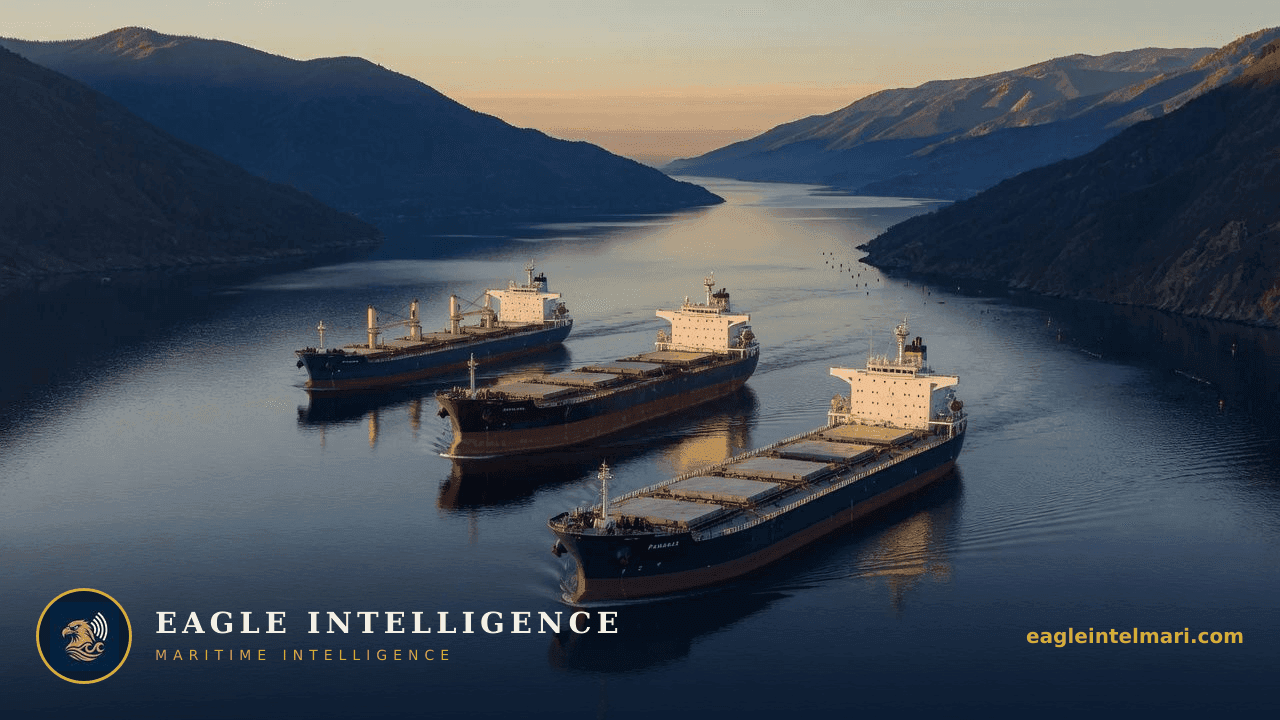
Daily Eagle Brief — 2026-07-01: US-Iran talks on suspending Strait of Hormuz attacks drive charterers to reprice coal voyages as traffic rebounds.

Advertisement

US-Iran talks on suspending Strait of Hormuz attacks drive charterers to reprice coal voyages as traffic rebounds.

Developments in the Strait of Hormuz dominated the past 24 hours, with US indications of a deal to suspend attacks and reports of rebounding traffic intersecting directly with thermal coal futures falling below $130 per ton. Dry-bulk charterers are reassessing Richards Bay and Newcastle loadings as war-risk premiums ease and effective haul times shorten. Parallel threads include finalization of the S-100 ECDIS transition timeline and slipping iron-ore prices at Dalian, while several port-terminal investments advance without direct linkage to Hormuz.

Eagle Intelligence maritime analysis

Key threads

Hormuz access and traffic recovery

The US indicated a deal to suspend attacks in the Strait but Iran has not confirmed; shipping traffic has rebounded after recent strikes; Oman has proposed a Hormuz fee plan; 40 Filipino seafarers reported safe after attacks on two commercial ships.

Why it matters: Any sustained reduction in Hormuz risk directly lowers war-risk premiums and shortens effective voyage times for vessels trading east of Suez.

The multi-stakeholder read: Flag states and owners welcome lower premiums; insurers seek clarity on any new fee mechanism; coastal states including Oman position themselves for revenue; charterers treat the change as provisional until Iran confirms.

Assessment (medium confidence): Reopening remains conditional on Iranian confirmation and sustained cessation of strikes.

Thermal coal and iron-ore price signals

Thermal coal futures traded below $130 per ton on US-Iran talks; Dalian iron-ore contract I2609 settled 1.68 percent lower at 733 yuan per ton with port spot prices also down 10-12 yuan.

Why it matters: Lower coal prices combined with shorter Hormuz routings prompt charterers to reprice July programs out of Richards Bay and Newcastle; iron-ore weakness tightens the window for prompt Capesize and Panamax fixtures to China.

The multi-stakeholder read: Charterers seek to lock in lower rates; owners face pressure to accept prompt fixtures or risk idle tonnage; traders monitor Dalian for further downside.

Assessment (high confidence): Repricing pressure is immediate for July cargoes but will reverse if Hormuz risk re-escalates.

S-100 ECDIS implementation locked in

IMO NCSR 13 finalized the S-100 transition scheme, requiring owners to lock capital plans for ECDIS hardware and software upgrades and the shift to analogue-to-digital communications.

Why it matters: Owners and navigation managers now face a fixed timeline for fleet-wide upgrades independent of Hormuz or commodity cycles.

The multi-stakeholder read: Owners must budget for multi-year capex; class societies and equipment makers see order-book visibility; seafarers require updated training pathways.

Assessment (high confidence): Timeline is now binding; deferral options are limited.

Cross-currents

Hormuz easing directly supports the coal-repricing thread while the S-100 mandate operates on a separate regulatory clock; port investments in Vizhinjam and Sohar continue without reference to either development, illustrating how terminal M&A and regulatory hardware upgrades proceed irrespective of short-term geopolitical signals.

Eagle Intelligence maritime analysis

What to watch

  • Iranian confirmation or rejection of any US-proposed Hormuz suspension within 7 days
  • Next Dalian iron-ore settlement and whether it falls below 720 yuan
  • First published IMO S-100 transition schedule with mandatory compliance dates
  • Any official announcement of an Oman-led Hormuz transit fee

So what, and for whom

  • owners operators: Must model both lower Hormuz premiums and binding ECDIS capex in 2026-2027 budgets.
  • insurers pandi: War-risk rates for Hormuz transits likely to soften pending Iranian confirmation; ECDIS compliance gaps may affect future coverage.
  • charterers traders: July coal and iron-ore fixtures should be stress-tested against both lower freight and potential re-tightening of Hormuz access.
  • ports policymakers: Vizhinjam and Sohar terminal deals advance regardless of Hormuz volatility, preserving long-term capacity plans.

This is an Eagle Intelligence daily synthesis, drawn from the day's reporting and wire signals. Items marked "Assessment" are analytical judgments, not statements of fact.

Advertisement

Related Eagle hubs

⚠️ Intelligence Disclaimer: This analysis is produced by Eagle Intelligence's AI-assisted automated analysis system and is provided for informational purposes only. See our editorial standards. It is not a substitute for official maritime safety advisories from UKMTO, MSCHOA, IMO, or flag state authorities. Operational decisions should always be based on official guidance and professional judgment. Eagle Intelligence accepts no liability for any loss arising from reliance on this content.

Get Eagle maritime risk alerts by email

Live chokepoint status, war-risk shifts, and the daily maritime wire, straight to your inbox. Free.

📰 Related Analysis

Intel

Daily Brief: Hormuz Tanker Attacks Escalate as Diesel Hits Records and Crews Face… — Sep 22

Two additional tankers were struck by unknown projectiles in the Strait of Hormuz in the last 24 hours, injuring at least two crew members and adding to a mounting pattern of attacks. The incidents coincide with wars already curtailing exports from Russia, Saudi Arabia and the UAE, pushing diesel prices to record levels and lifting tanker rates. US forces have redirected 109 commercial vessels to enforce a naval blockade while shielding other traffic from Iranian missiles. Owners, operators and charterers must now decide whether to reroute, accept higher war-risk premiums or delay cargoes through the chokepoint. The immediate operational question is how many more transits will proceed before crew refusal or insurance withdrawal forces a broader pause.

Sep 22, 2026
Intel

Daily Brief: Hormuz tanker attacks resume as Iran downs US drone and warns of closure — Sep 21

Two additional tankers were struck in the Strait of Hormuz in the past 24 hours amid mounting attacks, while Iranian forces downed a US Orbiter reconnaissance drone. Saudi Aramco halted crude deliveries to European customers and the Yanbu pipeline incident continued to ripple through freight and gas markets. Oil flows through Hormuz reached a six-month high even as Iran stated the strait would remain closed for now. Owners, charterers and insurers must reassess routing, war-risk premiums and crew safety protocols with immediate effect. The central decision now is whether to maintain transits or divert cargoes before the next reported incident.

Sep 21, 2026
Intel

Daily Brief: Hormuz Attacks Persist as CENTCOM Reports Six-Month-High Volumes — Sep 20

Three tanker attacks and an oil spill in the Strait of Hormuz over the past 24 hours have kept routing and crew-risk questions live, even as CENTCOM states that 1 billion barrels moved through the strait in the last six months. Iranian statements asserting control and US military reaffirmations of joint patrols have not yet produced measurable rerouting or premium spikes in the supplied reporting. Italy’s decision to escort a container ship in the Red Sea adds a second chokepoint response layer. The central operational decision now facing owners and charterers is whether to accept elevated war-risk exposure or absorb longer-haul costs while volumes remain high.

Sep 20, 2026
Intel

Daily Eagle Brief — 2026-07-11: US-Iran clashes collapse Hormuz ceasefire, reopen war-risk pricing and force southern tanker reroutes.

The day's reporting is dominated by renewed attacks on shipping in the Strait of Hormuz after the ceasefire ended, accompanied by new US sanctions and Iranian statements admitting error while seeking continued talks. Multiple sources confirm that non-Iranian tonnage still handled 70 percent of June transits, yet southern-route usage has fallen sharply. Secondary items on port upgrades, crew abandonment cases and exercises in other regions remain disconnected from the Hormuz developments.

Jul 11, 2026

Comments & Corrections

0Spot an error? Flag it below ↓

Leave a comment

All comments moderated for quality

Be the first to comment on this story
Corrections policy: Flag inaccuracies using the ⚠️ Correction type. Eagle Intelligence will review flagged corrections. Verified corrections result in an article update with a notice appended. Comments are stored locally in your browser and are not shared with other readers.