The dominant development over the past 24 hours centers on the Strait of Hormuz, where recent US-Iran exchanges have produced both fresh attacks on vessels and an announced pause in strikes coupled with scheduled talks. Tanker operators are testing resumed transits against ongoing risk, while some lines accelerate diversions such as CMA CGM's pivot to Sohar. Secondary items on Capesize fixtures and global port projects remain disconnected from the Hormuz volatility.
Advertisement
Advertisement
US and Iran agree to pause Gulf strikes and open talks on Strait of Hormuz management while tanker traffic shows mixed recovery signals.
The dominant development over the past 24 hours centers on the Strait of Hormuz, where recent US-Iran exchanges have produced both fresh attacks on vessels and an announced pause in strikes coupled with scheduled talks. Tanker operators are testing resumed transits against ongoing risk, while some lines accelerate diversions such as CMA CGM's pivot to Sohar. Secondary items on Capesize fixtures and global port projects remain disconnected from the Hormuz volatility.

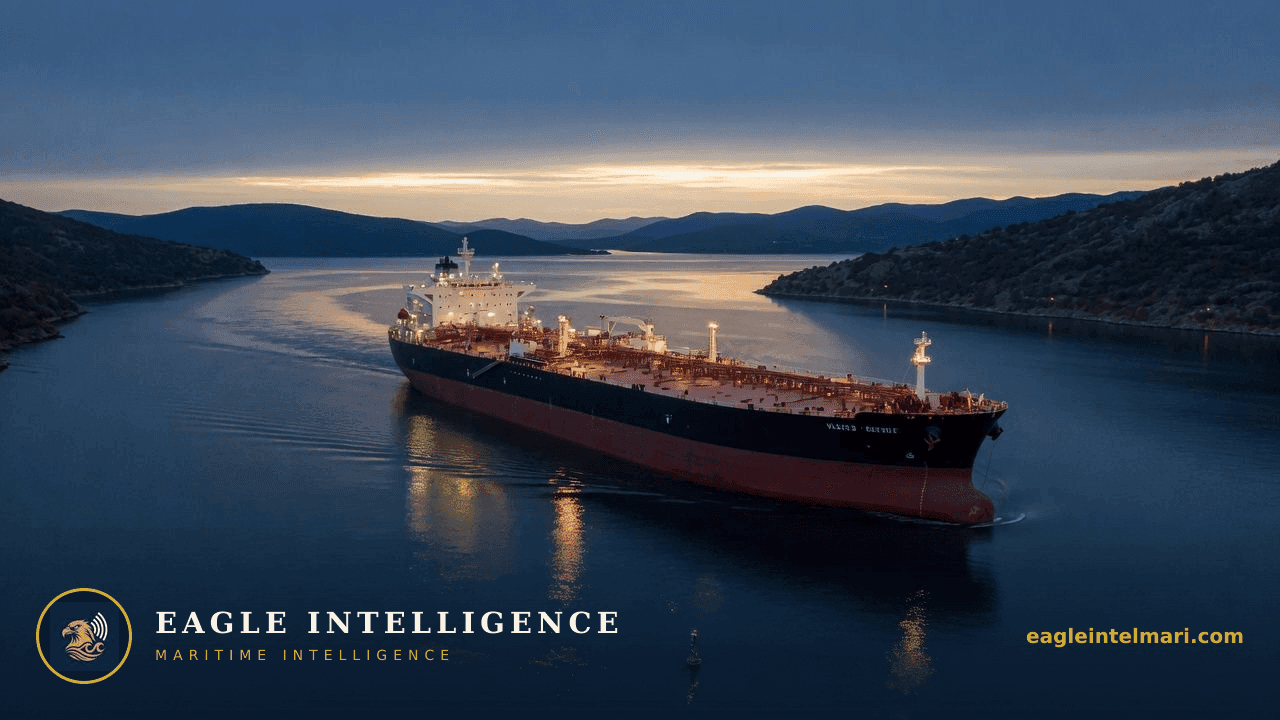
Multiple reports document reduced tanker transits after fresh strikes, including an unidentified projectile hitting a Panama-flagged tanker and a US response; traffic had already dipped sharply following earlier exchanges, though some VLCCs are now re-entering the strait.
Why it matters: Volume through the strait directly affects global crude supply routes and freight rates, with Brent noted at $72.69 and fixtures facing narrow windows for June-July loadings.
The multi-stakeholder read: Owners weigh volume-as-deterrent against attack risk; coastal states and Oman discuss management; insurers face elevated claims exposure.
Assessment (medium confidence): Traffic is likely to remain below pre-strike norms until diplomatic signals clarify, with owners continuing selective transits only.
US and Iran have agreed to cease strikes and discuss the strait this week; India lifted its shipping restrictions while urging seafarers to remain alert; CMA CGM signed a $400m deal with Asyad to use Sohar as a wartime bypass.
Why it matters: A diplomatic channel could reduce immediate kinetic risk but leaves the underlying Hormuz dispute unresolved, prompting some operators to lock in alternative routings.
The multi-stakeholder read: Charterers gain short-term clarity on fixture timing; seafarers receive mixed signals on risk levels; regional ports such as Sohar see accelerated investment interest.
Assessment (medium confidence): Talks may produce a temporary de-escalation but are unlikely to alter long-term routing patterns without concrete guarantees.
Dalian futures rose 0.61 % to 747 yuan, tightening forward-fix decisions for Australia-China iron-ore Capesize tonnage amid steel-mill restocking uncertainty.
Why it matters: Provides a modest positive signal for dry-bulk owners independent of Hormuz events.
The multi-stakeholder read: Owners and charterers must decide whether to commit now or wait for clearer demand signals.
Assessment (low confidence): The small price move is unlikely to trigger widespread fixture rushes without further steel-sector confirmation.
Operators simultaneously test resumed Hormuz passages as a deterrent while accelerating bypass investments such as Sohar, creating a contradiction between short-term volume recovery and structural route diversification that insurers must price and that coastal states must manage.

This is an Eagle Intelligence daily synthesis, drawn from the day's reporting and wire signals. Items marked "Assessment" are analytical judgments, not statements of fact.
Advertisement
Advertisement
Live Hormuz transit status and war-risk band.
⚠️ Intelligence Disclaimer: This analysis is produced by Eagle Intelligence's AI-assisted automated analysis system and is provided for informational purposes only. See our editorial standards. It is not a substitute for official maritime safety advisories from UKMTO, MSCHOA, IMO, or flag state authorities. Operational decisions should always be based on official guidance and professional judgment. Eagle Intelligence accepts no liability for any loss arising from reliance on this content.
Live chokepoint status, war-risk shifts, and the daily maritime wire, straight to your inbox. Free.
Leave a comment
All comments moderated for quality
