A Texas border summit is weighing autonomous truck lanes and visa workarounds that could redraw US-Mexico freight flows and alter how cargo reaches Gulf ports.
Advertisement
Advertisement
The Laredo gathering has crystallized a high-stakes choice between technology and labor rules that will decide whether cross-border trucking accelerates or stalls.
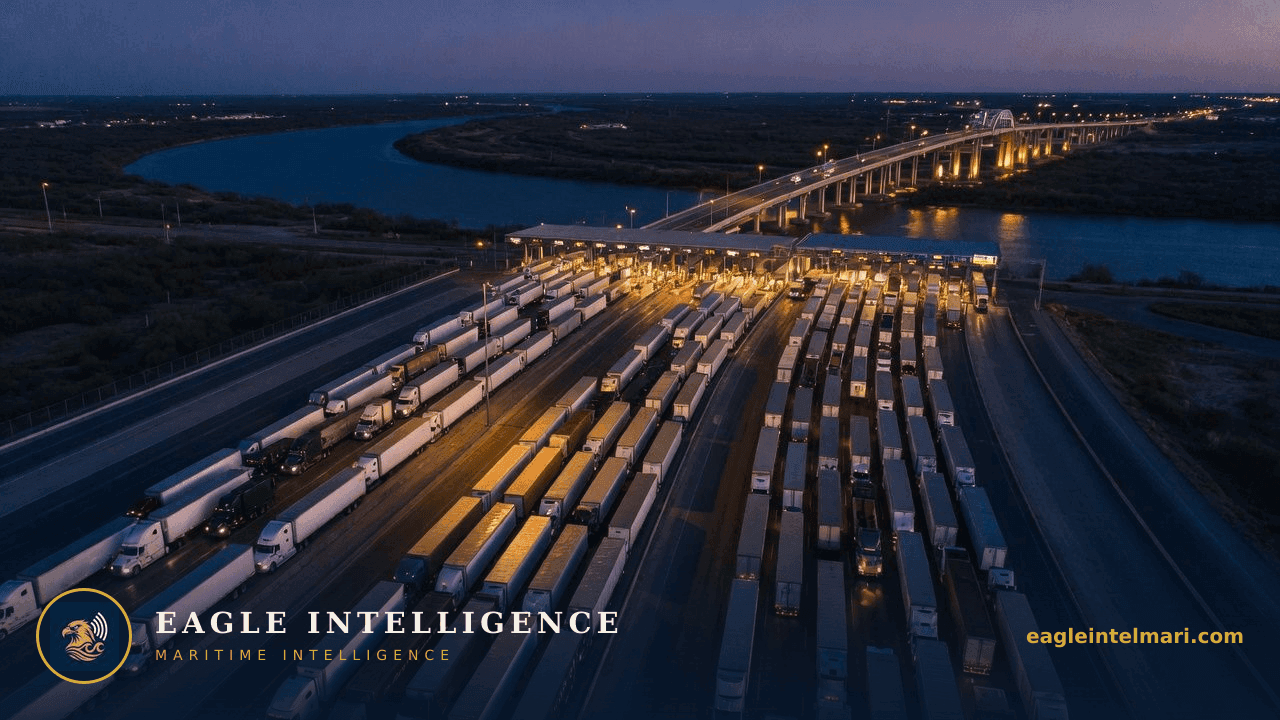
Participants at the summit reviewed pilot concepts that would let driverless rigs run dedicated corridors between Mexican manufacturing hubs and Laredo railheads. Proponents argue the technology removes hours lost at the bridge and cuts labor costs that have risen sharply since 2023. Skeptics counter that current sensor performance degrades in heavy rain and dust common along the Rio Grande, raising questions about insurance liability when a unit crosses without a human operator.
With traditional B-1 visas under tighter review, carriers are testing alternate staffing models that pair US-licensed drivers with Mexican drayage fleets. The debate centers on whether these arrangements comply with cabotage rules while still moving containers and trailers efficiently to inland rail ramps. Any tightening would immediately lengthen dwell times at the border and push more volume onto already congested intermodal yards.
Toyo’s planned $357 million manufacturing facility in Houston will generate steady southbound demand for project cargo and bulk materials. Port of Houston terminals already handling wind-turbine components will see additional roll-on traffic, yet the same facilities rely on northbound truck capacity from Mexico for empty repositioning. A slowdown in driver availability would therefore create equipment imbalances that raise ocean carrier repositioning costs.
Longer truck queues translate directly into missed vessel cut-offs at Altamira and Veracruz. Shipowners serving the US Gulf may face blank sailings or schedule slippage if Mexican exporters shift volumes to rail or air to meet deadlines. Flag states that register large containerships will watch detention statistics closely, because chronic delays at Laredo can push total transit times beyond charter-party allowances.
If regulators fast-track limited autonomous corridors by late 2026, freight velocity could improve 15-20 percent on qualifying lanes, easing pressure on Gulf terminal gates. A second path sees incremental B-1 restrictions without automation approval, producing chronic shortages and pushing rates up 8-12 percent within twelve months. The third, less likely outcome involves joint US-Mexico safety certification that allows mixed manned and unmanned operations, requiring new cross-border insurance products and data-sharing protocols between P&I clubs and Mexican authorities.
Advertisement
Advertisement
⚠️ Intelligence Disclaimer: This analysis is produced by Eagle Intelligence's AI-assisted automated analysis system and is provided for informational purposes only. See our editorial standards. It is not a substitute for official maritime safety advisories from UKMTO, MSCHOA, IMO, or flag state authorities. Operational decisions should always be based on official guidance and professional judgment. Eagle Intelligence accepts no liability for any loss arising from reliance on this content.
Live chokepoint status, war-risk shifts, and the daily maritime wire, straight to your inbox. Free.
Leave a comment
All comments moderated for quality
