Container rates from Asia to the US West Coast have climbed to their highest levels since July 2025 amid persistent Middle East transit threats, while liquid chemical tanker rates out of the US Gulf continue to ease under separate supply dynamics.
Advertisement
Advertisement
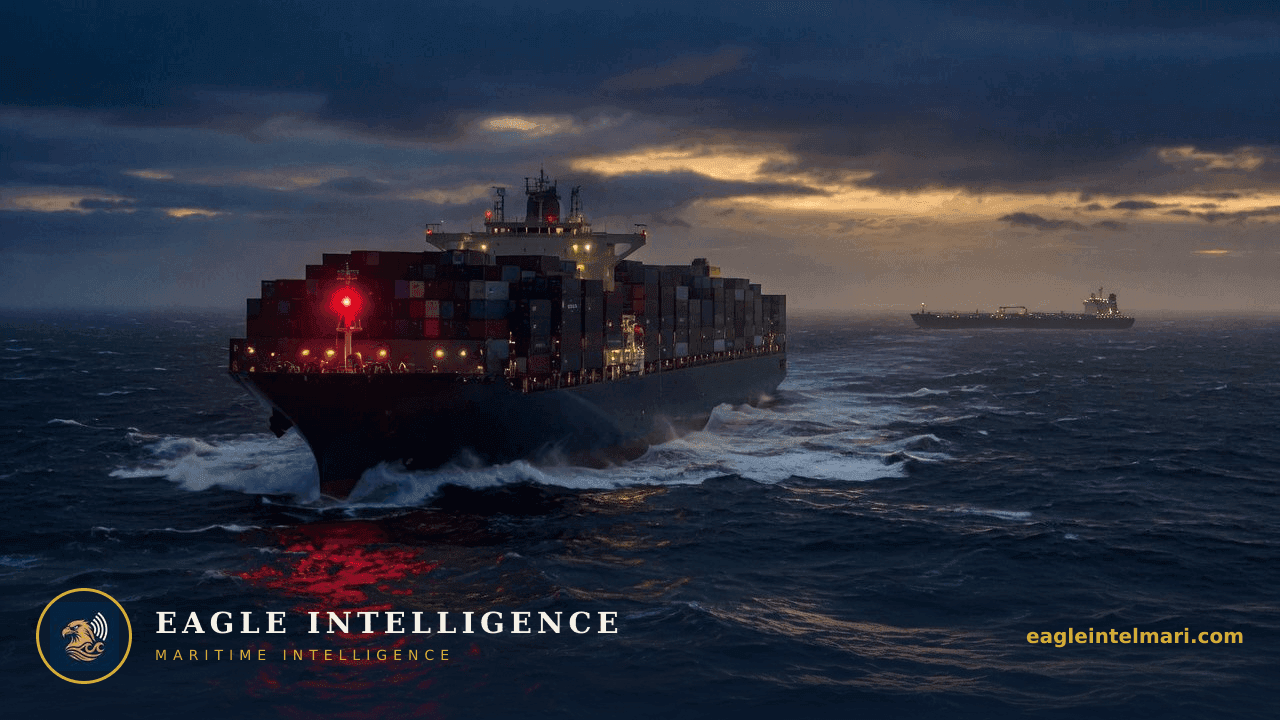
Container spot rates from Asia to the US West Coast have surged back into the $4,000–4,850 per FEU band, the strongest reading since July 2025, as shippers price in renewed uncertainty over Middle East routing.
Carriers that had partially resumed Suez transits earlier in the year are once again routing large volumes around the Cape. The extra 10–14 days of sailing time tightens effective supply on the transpacific lane just as peak-season cargo from Southeast Asia accelerates. Each avoided Suez transit adds roughly $800–1,200 in bunker and time-charter costs per FEU, a figure now fully reflected in the latest indices.
Liquid chemical tanker earnings from the US Gulf have softened even as container rates firm. A wave of newbuilding deliveries in the 10–25k dwt segment has outpaced demand growth for speciality chemicals and vegetable oils. With clean-product arbitrage windows to Europe narrowed by weak European demand, owners are accepting shorter-haul fixtures at lower rates, illustrating how segment-specific tonnage balances can override broader geopolitical sentiment.
Forwarders and beneficial cargo owners are compressing shipment windows and accelerating bookings for August–September loadings to lock in capacity before any further escalation. Several major retailers have quietly increased safety-stock targets for high-value consumer electronics, adding an estimated 3–5 days of extra inventory cover that will support rates through the third quarter even if physical disruptions remain limited.
Hull and P&I underwriters have begun quoting higher additional premiums for vessels still electing Suez routing. The move is modest so far—typically 0.15–0.25 percent of hull value—but the direction of travel is clear. Any confirmed Houthi attack or Iranian naval incident would likely trigger immediate repricing and force more owners onto the Cape route, amplifying the container rate spike.
If no major incident occurs and seasonal cargo volumes moderate, rates could ease 10–15 percent by late August as extra Cape tonnage normalises. A single high-profile attack on commercial tonnage would likely push West Coast rates above $5,500 within two weeks and widen the gap with chemical tanker earnings. Sustained low-level harassment without escalation would keep the market in a $4,200–4,700 range, rewarding owners with modern, fuel-efficient tonnage while punishing older vessels through higher bunker costs.
Owners and charterers alike are now watching both the insurance tape and real-time AIS routing data for early signals of which path materialises.
Advertisement
Advertisement
⚠️ Intelligence Disclaimer: This analysis is produced by Eagle Intelligence's AI-assisted automated analysis system and is provided for informational purposes only. See our editorial standards. It is not a substitute for official maritime safety advisories from UKMTO, MSCHOA, IMO, or flag state authorities. Operational decisions should always be based on official guidance and professional judgment. Eagle Intelligence accepts no liability for any loss arising from reliance on this content.
Live chokepoint status, war-risk shifts, and the daily maritime wire, straight to your inbox. Free.
Leave a comment
All comments moderated for quality
