Britain has conducted its inaugural direct boarding of a sanctioned Russian shadow-fleet tanker, signalling a sharper Western enforcement posture that will ripple through operators, insurers and crude-trade logistics.
Advertisement
Advertisement
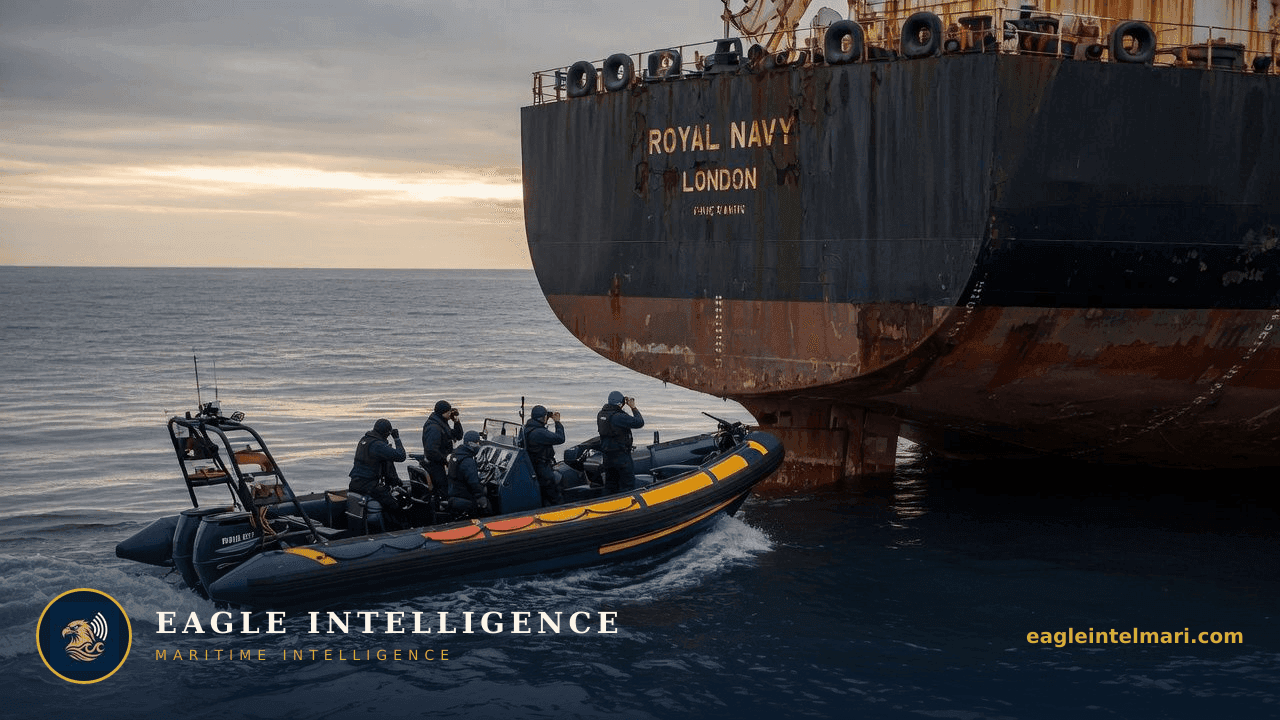
The United Kingdom has conducted its first direct boarding of a sanctioned Russian shadow-fleet tanker, an operation that crosses a new threshold in Western efforts to choke Moscow’s seaborne oil revenues.
Royal Navy and Border Force personnel executed the boarding under existing sanctions authorities rather than a new legal instrument. The vessel, already designated on UK and EU lists, was intercepted in international waters where the UK could assert jurisdiction over its flagged status or insurance status. Officials stressed the action was intelligence-led and executed without kinetic force, yet it still required a full team of armed personnel to secure the deck and review documentation.
Owners and managers who have relied on opaque ownership chains and flag-hopping now face a concrete demonstration that physical interdiction is possible. Previously, enforcement largely consisted of designation lists and secondary-sanction threats; a boarding converts those lists into an operational risk that can halt a voyage mid-ocean. Charterers who have accepted discounted Russian barrels will recalculate the probability that their nominated tonnage could be diverted for inspection, raising the hidden cost of each fixture.
Hull and P&I underwriters have already tightened wording around sanctioned cargoes, but this incident supplies the first real-world test of policy exclusions triggered by state boarding. Clubs may now require enhanced due-diligence affidavits before renewing cover for older tonnage, while reinsurers will price higher loadings for any vessel that has traded above the G7 price cap in the preceding twelve months. The result is likely to be a further bifurcation between compliant mainstream fleets and the residual shadow market.
States that have served as convenient flags for shadow tonnage are now on notice that UK enforcement teams can reach vessels regardless of registry. Expect a quiet acceleration of de-flagging for older tankers, particularly those built before 2005 that lack electronic cargo-monitoring systems. Ports in third countries that have tolerated shadow-fleet calls may impose new pre-arrival questionnaires or simply decline berths to avoid secondary-sanction risk.
Any sustained increase in interdiction risk will widen the spread between Russian Urals delivered to Asia and the same barrels offered to European buyers. Freight rates for non-sanctioned Aframaxes and Suezmaxes serving legitimate trades should firm as charterers pay a premium for transparent ownership and Western insurance. Conversely, shadow tonnage will either demand even steeper discounts or simply exit certain routes, tightening tonnage supply in the dirty sector.
First, copy-cat operations by other European navies could normalise mid-ocean inspections within six months if intelligence sharing improves. Second, Moscow may accelerate the use of ship-to-ship transfers inside territorial waters of friendly states, pushing more volume through riskier lightering zones. Third, a single high-profile seizure of cargo or arrest of officers would trigger an exodus of remaining reputable crews, forcing shadow operators to rely on lower-standard seafarers and thereby raising the likelihood of accidents or further detentions.
Advertisement
Advertisement
⚠️ Intelligence Disclaimer: This analysis is produced by Eagle Intelligence's AI-assisted automated analysis system and is provided for informational purposes only. See our editorial standards. It is not a substitute for official maritime safety advisories from UKMTO, MSCHOA, IMO, or flag state authorities. Operational decisions should always be based on official guidance and professional judgment. Eagle Intelligence accepts no liability for any loss arising from reliance on this content.
Live chokepoint status, war-risk shifts, and the daily maritime wire, straight to your inbox. Free.
Leave a comment
All comments moderated for quality
