Bunkering operators and tanker owners trading in European waters must now decide whether to cut fuel and service links to Russia's shadow fleet before the EU's 21st sanctions package is adopted by 15 July 2026.
Advertisement
Advertisement
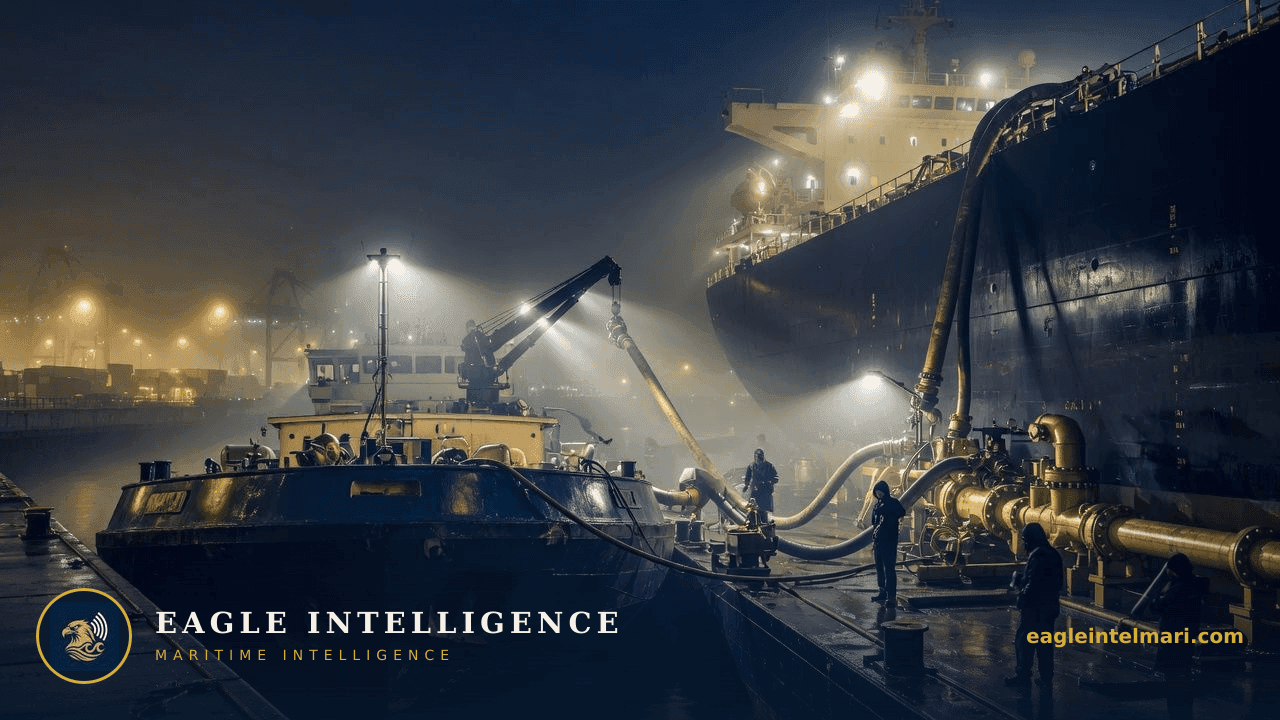
Bunkering operators and tanker owners trading in European waters must now decide whether to cut fuel and service links to Russia's shadow fleet before the EU's 21st sanctions package is adopted by 15 July 2026. The 9 June proposal introduces the first explicit sanctions on vessels that supply or service the parallel fleet, shifting compliance risk from charterers to the fuel suppliers themselves.
The new measures target any vessel providing bunkers, repairs, insurance or port services that enable Russian crude or product shipments outside the G7 price cap. Where earlier packages focused on buyers and transporters, this package reaches the support layer that keeps the shadow fleet at sea. Operators who continue to top up tankers that have conducted ship-to-ship transfers with Russian-origin cargoes now face asset freezes and port bans.
Hull and P&I clubs will likely insert fresh exclusions for any voyage involving sanctioned service vessels once the text is finalised. A single bunkering call that later proves connected to a shadow-fleet tanker could trigger policy voidance rather than a simple premium adjustment. For owners already carrying war-risk cover in the Black Sea or Baltic, the added clause could push renewal costs up 15-25 % within a single quarter.
Time-charterers are already inserting "no shadow-fleet bunkering" warranties in new fixtures out of Rotterdam and Gibraltar. Owners who refuse the clause lose the business; those who accept it inherit the due-diligence burden. Spot operators face the sharper dilemma: a two-day delay while vetting the next bunker stem can erase the margin on a short-haul clean-product run.
Malta and Cyprus, both EU flags, will come under immediate pressure to delist any vessel found supplying the shadow fleet. Non-EU bunkering hubs such as Ceuta and Alexandria may see increased traffic as operators seek to avoid the new prohibitions, lengthening some Mediterranean voyages by 300-400 nautical miles. Port authorities in those locations will have to decide whether to mirror the EU restrictions or risk secondary sanctions themselves.
Operators should map every vessel in their bunker rotation against known shadow-fleet identifiers, including AIS gaps, STS locations off West Africa, and flag changes within the past twelve months. Contracts with third-party bunker barges require immediate review for sanctions-representation clauses. Those with tonnage on the water should also check whether any current voyage could be deemed "facilitating" under the forthcoming language.
Watch for the first club circulars that appear within 48 hours of formal adoption; the trigger to act will be the date those circulars land, not the headline adoption itself.
Advertisement
Advertisement
⚠️ Intelligence Disclaimer: This analysis is produced by Eagle Intelligence's AI-assisted automated analysis system and is provided for informational purposes only. See our editorial standards. It is not a substitute for official maritime safety advisories from UKMTO, MSCHOA, IMO, or flag state authorities. Operational decisions should always be based on official guidance and professional judgment. Eagle Intelligence accepts no liability for any loss arising from reliance on this content.
Live chokepoint status, war-risk shifts, and the daily maritime wire, straight to your inbox. Free.
Leave a comment
All comments moderated for quality