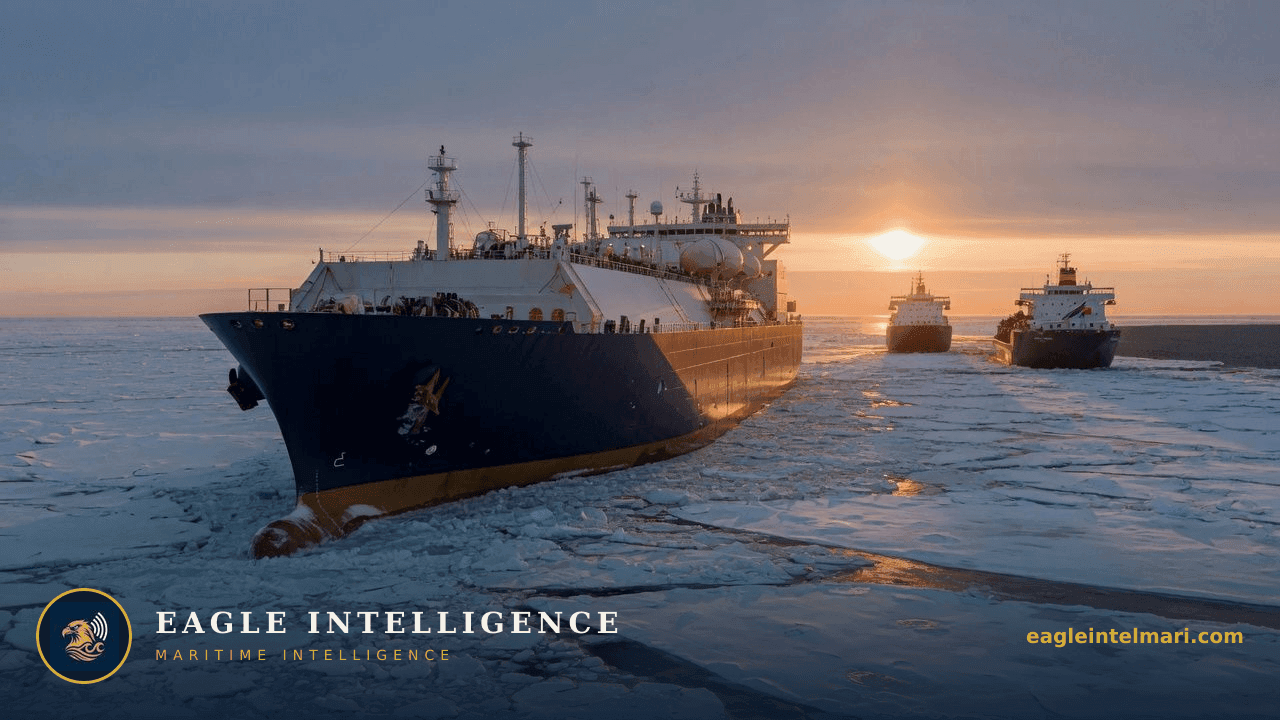
The EU has closed the last major loophole, extending its Russian LNG ban to any transport, trade or marketing activity by European owners and buyers worldwide, directly targeting Yamal project cargoes.
Advertisement
Advertisement
The clarification ends the fiction that European-flagged or controlled LNG carriers could still carry Yamal volumes on third-country routes while European buyers arranged onward sales through non-EU intermediaries.
Roughly 15 of the 20 Arc4 ice-class carriers serving the Yamal LNG terminal are owned or controlled by European entities, primarily Greek and Belgian companies. These vessels were purpose-built for the Northern Sea Route and cannot be switched to conventional trades without heavy modification. With the ban now explicit, owners must choose between reflagging to non-EU registries or selling into a narrow buyer pool dominated by Chinese and Indian interests. Historical precedent from the 2022 crude-oil shadow fleet shows that such forced sales typically occur at 25-35 percent discounts to last-done values.
European energy traders holding long-term Yamal offtake agreements must now unwind or novate those positions before the ban enters full force. The cost of breaking or reassigning contracts is likely to exceed $50 million per cargo on average, given the rigid delivery windows tied to Arctic ice-class scheduling. Charterers who attempt to keep vessels under time charters risk secondary sanctions exposure for EU-domiciled entities, pushing them toward early redelivery or sub-charter arrangements that further inflate effective freight rates.
P&I clubs and hull underwriters have already begun reviewing Yamal-related policies. European insurers, which still provide the majority of cover for Arc4 tonnage, face a compliance deadline that is effectively immediate once the regulation is published. Non-European insurers willing to step in are quoting premiums 40-60 percent higher than current levels, citing both the elevated sanctions risk and the concentration of hull values in a single, now-contested trade. This premium spike alone adds roughly $1.2 million per vessel per year in operating costs.
The Yamal project relies on precise seasonal transits through the Kara Sea and Bering Strait. European-controlled carriers that exit the trade will leave gaps in the 2026-2027 winter schedule that Russian operators cannot immediately fill with domestic tonnage. Novatek will therefore accelerate the transfer of vessels to Chinese and Indian owners, shortening effective vessel life through harsher operational profiles and reducing maintenance standards previously enforced by European technical managers.
First scenario: a rapid sale of 10-12 Arc4 carriers to Chinese state-linked entities, restoring Yamal throughput within nine months but at lower realized prices for Novatek. Second scenario: partial mothballing of the fleet and diversion of Yamal volumes to conventional LNG carriers via Murmansk transshipment, adding 12-18 days to voyage times and pushing delivered prices in Asia above spot JKM levels. Third scenario: emergence of a dedicated non-European shadow LNG fleet operating under flags of convenience, mirroring the crude-oil pattern and increasing collision and pollution risk in the high-latitude routes. The tipping variable in all three cases remains the speed at which European owners secure non-EU buyers versus the pace of secondary-sanctions enforcement by Brussels.
Advertisement
Advertisement
⚠️ Intelligence Disclaimer: This analysis is produced by Eagle Intelligence's AI-assisted automated analysis system and is provided for informational purposes only. See our editorial standards. It is not a substitute for official maritime safety advisories from UKMTO, MSCHOA, IMO, or flag state authorities. Operational decisions should always be based on official guidance and professional judgment. Eagle Intelligence accepts no liability for any loss arising from reliance on this content.
Live chokepoint status, war-risk shifts, and the daily maritime wire, straight to your inbox. Free.
Leave a comment
All comments moderated for quality
