Tanker owners and energy traders now face the decision of whether to commit more tonnage to the Gulf on the strength of US-backed flows above 10 million barrels a day.
Advertisement
Advertisement
Tanker owners and energy traders routing crude and products through the Gulf must now decide whether the sustained US military presence that has lifted Hormuz throughput above 10 million barrels per day justifies locking in longer charters or expanding exposure.
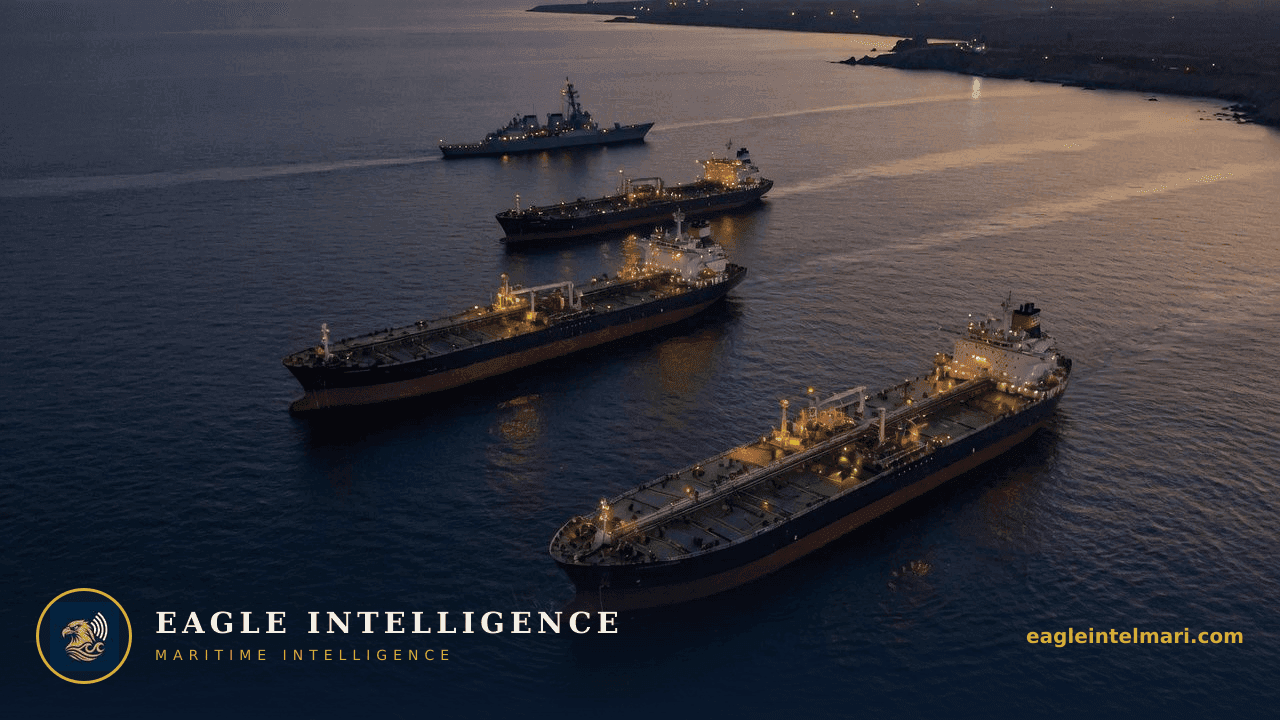
American naval assets have expanded de facto protection for commercial traffic over recent weeks, enabling a measurable increase in laden transits. The result is daily oil movement exceeding 10 million barrels, a level that directly undercuts Iranian threats to interdict the strait. For VLCC and Suezmax operators, this translates into shorter idle periods at anchorage and more predictable eastbound and westbound schedules.
Charterers handling Middle East crude now see reduced execution risk on fixtures that previously carried implicit war-risk premia. With flows holding at this elevated rate, some traders are shifting from short-term spot hires toward period contracts that capture the current throughput window. The change is most visible on routes from Basrah, Kharg and Fujairah, where fixture volumes have ticked higher since the surge began.
Hull and P&I underwriters are watching the same data feed. Sustained naval presence typically prompts a modest recalibration of additional war-risk premiums on Hormuz transits, though no broad rate cut has been announced. Owners with vessels already committed through the strait can expect renewal discussions to reference the new throughput benchmark rather than earlier, lower-volume assumptions.
Tehran’s ability to threaten closure or selective interdiction loses credibility when daily volumes remain elevated under external protection. The 10-million-barrel figure signals that alternative routing pressure and military reassurance have together blunted one of Iran’s primary economic levers. Flag states and classification societies serving Iranian-linked tonnage may therefore face continued avoidance by mainstream charterers.
Seafarers on vessels transiting the strait benefit from the lower kinetic risk profile, yet manning agencies continue to monitor Iranian statements for signs of renewed harassment tactics short of outright closure. Rotation schedules through ports such as Jebel Ali and Sohar remain stable for now, but any Iranian naval activity that prompts fresh advisories could reintroduce hazard pay or refusal clauses in crew contracts.
If US naval coverage remains constant and Iranian rhetoric stays below the threshold of direct threat, charter rates on Gulf loadings should hold firm through the summer. A sudden Iranian missile test or boarding incident near the traffic separation scheme would likely trigger an immediate spike in war-risk premiums and a partial reversal of recent fixture gains. Energy traders are therefore tracking both the next Pentagon statement on Hormuz patrols and any visible Iranian naval sortie as the decisive signals.
Advertisement
Advertisement
Live Hormuz transit status and war-risk band.
Live 1–5 shipping war-risk level across monitored chokepoints.
⚠️ Intelligence Disclaimer: This analysis is produced by Eagle Intelligence's AI-assisted automated analysis system and is provided for informational purposes only. See our editorial standards. It is not a substitute for official maritime safety advisories from UKMTO, MSCHOA, IMO, or flag state authorities. Operational decisions should always be based on official guidance and professional judgment. Eagle Intelligence accepts no liability for any loss arising from reliance on this content.
Live chokepoint status, war-risk shifts, and the daily maritime wire, straight to your inbox. Free.
Leave a comment
All comments moderated for quality
