Donald Trump’s assertion that a covert U.S. operation enabled 200 commercial transits through the Strait of Hormuz raises immediate questions about operational reality and the resulting exposure for owners, charterers and insurers.
Advertisement
Advertisement
Donald Trump’s assertion that a covert U.S. operation enabled 200 commercial transits through the Strait of Hormuz raises immediate questions about operational reality and the resulting exposure for owners, charterers and insurers.
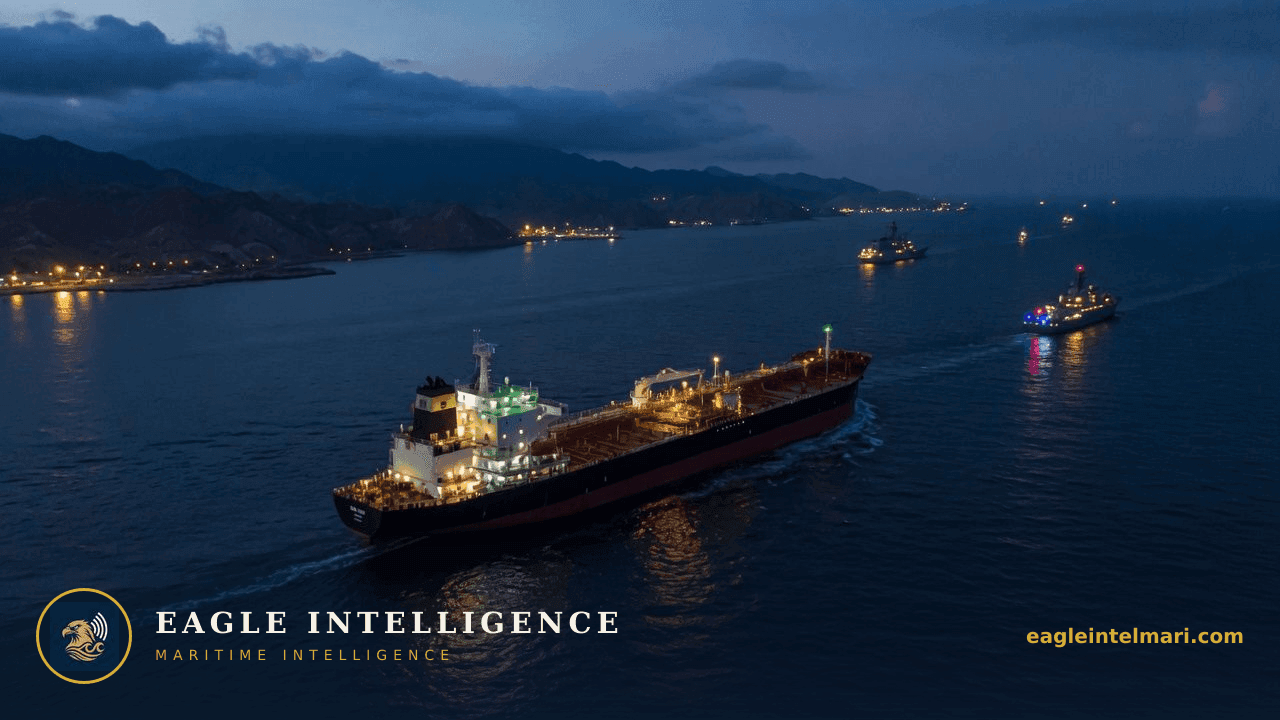
The number itself is large enough to represent roughly three weeks of typical laden tanker traffic through the strait yet small enough to have remained invisible to public tracking services. If accurate, it suggests a highly selective escort regime rather than blanket protection. Owners whose vessels moved through the waterway in recent weeks must now decide whether those transits carried an implicit U.S. security guarantee or simply benefited from coincidental naval presence. The absence of any corresponding incident reports from EUNAVFOR or regional navies adds weight to the view that the operation, if real, was deliberately low-signature.
Flag administrations that have tolerated Hormuz transits under standard war-risk endorsements now confront the possibility that an undeclared U.S. umbrella existed. Clubs writing those policies will examine whether the undisclosed protection constitutes a material change in risk profile that should have triggered notification. Several mutuals are already circulating internal guidance asking members to confirm whether any vessel received direct or indirect U.S. military coordination during the period in question. Failure to disclose could later be cited in coverage disputes should a claim arise.
Time-charterers who fixed vessels for multiple Hormuz voyages on the assumption of ordinary war-risk premiums are re-reading contracts for latent safe-port or safe-berth warranties. A single documented incident involving one of the 200 ships could retroactively validate claims that the waterway was effectively under special protection and therefore not the ordinary commercial risk priced into the fixture. Spot-market rates for VLCCs loading at Ras Tanura have already ticked upward on thin volume as charterers seek to lock in known tonnage before any formal clarification emerges.
Masters and chief officers whose vessels allegedly benefited from the operation remain unaware of the fact. If the U.S. Navy provided routing advice, electronic warfare support or close escort without the knowledge of the ship’s command team, seafarer unions are likely to demand contractual clarity on hazard pay and repatriation rights. Several ITF-affiliated contracts contain clauses that activate additional compensation once a vessel enters a designated high-risk area; an undeclared escort regime may trigger those clauses retroactively and expose owners to back-pay claims.
First, quiet continuation: the operation remains low-profile, traffic volumes hold steady, and no kinetic incident occurs. This path persists as long as Tehran refrains from testing the limits of the claimed protection. Second, public acknowledgment followed by formal convoy protocols: any Iranian statement naming specific U.S. assets or a single verified close-quarters incident would force Washington to either confirm or deny the program, likely converting it into overt escorted convoys with published waypoints. Third, abrupt termination: political or budgetary pressure inside the U.S. leads to sudden withdrawal of support; the resulting vacuum would produce an immediate spike in war-risk premiums and a rapid re-routing of cargoes around the Cape for any vessel without iron-clad protection.
Brent and Dubai futures have shown only muted reaction so far, reflecting market skepticism that the claim represents a durable change in security. Yet the forward curve for TD3C (VLCC MEG–China) already prices in a modest war-risk premium for August liftings. If the 200-ship figure is later corroborated by AIS gaps or port-state records, that premium is expected to compress; if the claim is walked back, the same curve will reprice sharply higher within a single trading session.
Advertisement
Advertisement
Indicative Additional War Risk Premium (AWRP) ranges — not a binding insurance quote.
Live Hormuz transit status and war-risk band.
Live 1–5 shipping war-risk level across monitored chokepoints.
⚠️ Intelligence Disclaimer: This analysis is produced by Eagle Intelligence's AI-assisted automated analysis system and is provided for informational purposes only. See our editorial standards. It is not a substitute for official maritime safety advisories from UKMTO, MSCHOA, IMO, or flag state authorities. Operational decisions should always be based on official guidance and professional judgment. Eagle Intelligence accepts no liability for any loss arising from reliance on this content.
Live chokepoint status, war-risk shifts, and the daily maritime wire, straight to your inbox. Free.
Leave a comment
All comments moderated for quality
