A maritime advisory has lent weight to claims of a U.S. military operation easing tanker passages through the Strait of Hormuz, raising questions about risk allocation across the energy supply chain.
Advertisement
Advertisement
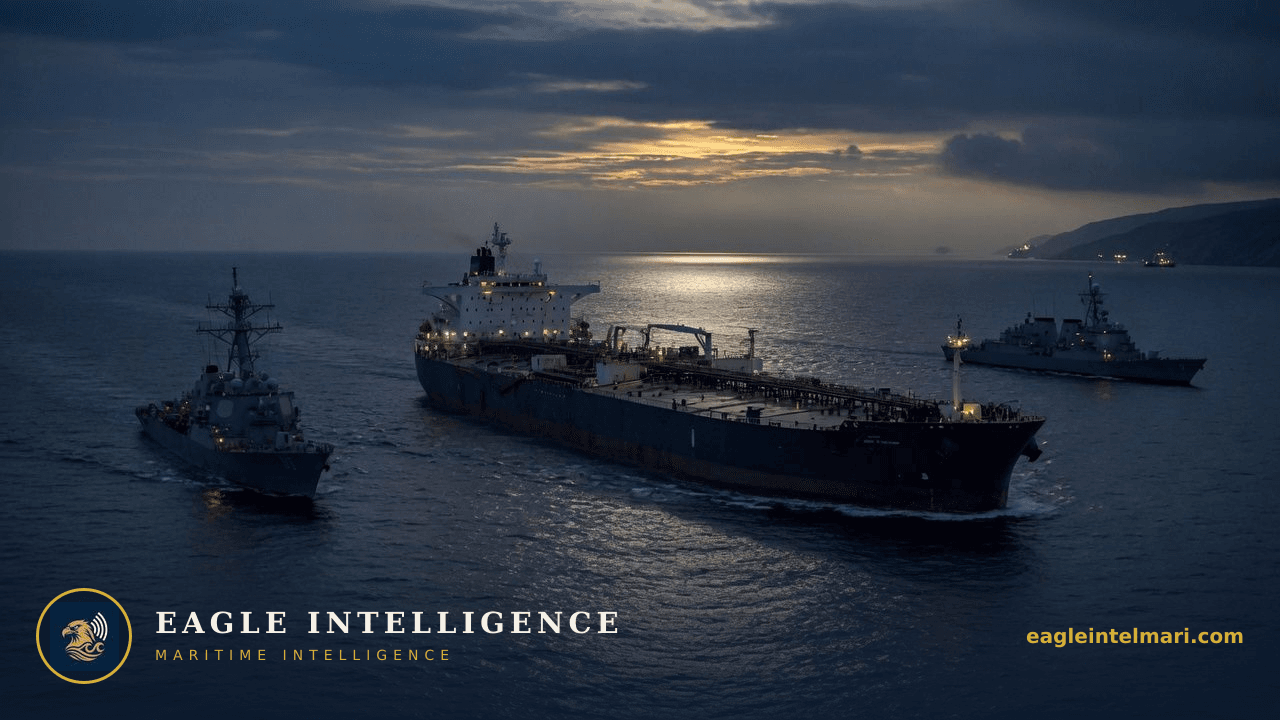
An industry advisory issued this week has quietly validated earlier assertions that U.S. forces conducted a discreet escort campaign through the Strait of Hormuz, allowing hundreds of laden tankers to complete transits that would otherwise have been disrupted.
The document, circulated among tanker operators and their protection-and-indemnity clubs, outlines specific routing adjustments and communication protocols that align with the timeline of the claimed operation. Rather than naming U.S. assets, it describes enhanced naval presence and rapid-response corridors that reduced reported approaches by small craft in the critical chokepoint. Owners who followed the guidance recorded zero incidents over a multi-week window, a departure from the pattern seen in preceding months.
Hull and war-risk underwriters are now recalibrating premiums for Hormuz transits. The advisory effectively converts what had been treated as a high-threat voyage into a lower, managed-risk category for those vessels that adhered to the routing. Charterers on voyage contracts are pressing owners to absorb any residual differential, while time-charter parties are triggering review clauses that allow rates to be adjusted downward once the perceived threat level drops. P&I clubs, meanwhile, have begun requiring proof of advisory compliance before renewing cover for Iran-adjacent calls.
Masters and chief officers report that the escorted transits involved compressed decision windows and constant VHF monitoring, increasing bridge-team workload during the 6-to-8-hour passage. Some companies have quietly added an extra deck officer for Hormuz legs, a cost that will surface in next-quarter crewing budgets. Seafarers’ unions are monitoring whether these rotations qualify for hazard pay under existing collective agreements.
Several open-registry flags have issued their own circulars echoing the advisory’s routing recommendations, effectively making compliance a de-facto condition for maintaining flag approval on tankers over 50,000 dwt. Ports in the Persian Gulf are reporting faster turnaround for vessels that arrive with the advisory’s recommended AIS settings, while vessels deviating from the corridor face extended inspections.
Freight derivatives for VLCCs loading from the Gulf have tightened by roughly 8 percent since the advisory surfaced, reflecting lower perceived war-risk exposure. The move has also narrowed the spread between Gulf loadings and alternative West African barrels, altering arbitrage calculations for Asian refiners. Energy traders are now watching whether the reduced friction encourages OPEC+ producers to lift export volumes or whether the window closes again once the underlying military posture shifts.
If the naval posture remains constant through the summer, charterers will likely lock in longer-period coverage at the new lower war-risk rates. Should Iranian asymmetric activity resume at previous intensity, the advisory will be withdrawn and premiums will spike within days. A third, more opaque outcome sees the operation migrate to an even lower profile, with commercial traffic continuing to benefit from unseen protection but without public acknowledgment that could invite political pushback.
Advertisement
Advertisement
Live Hormuz transit status and war-risk band.
Live 1–5 shipping war-risk level across monitored chokepoints.
⚠️ Intelligence Disclaimer: This analysis is produced by Eagle Intelligence's AI-assisted automated analysis system and is provided for informational purposes only. See our editorial standards. It is not a substitute for official maritime safety advisories from UKMTO, MSCHOA, IMO, or flag state authorities. Operational decisions should always be based on official guidance and professional judgment. Eagle Intelligence accepts no liability for any loss arising from reliance on this content.
Live chokepoint status, war-risk shifts, and the daily maritime wire, straight to your inbox. Free.
Leave a comment
All comments moderated for quality
