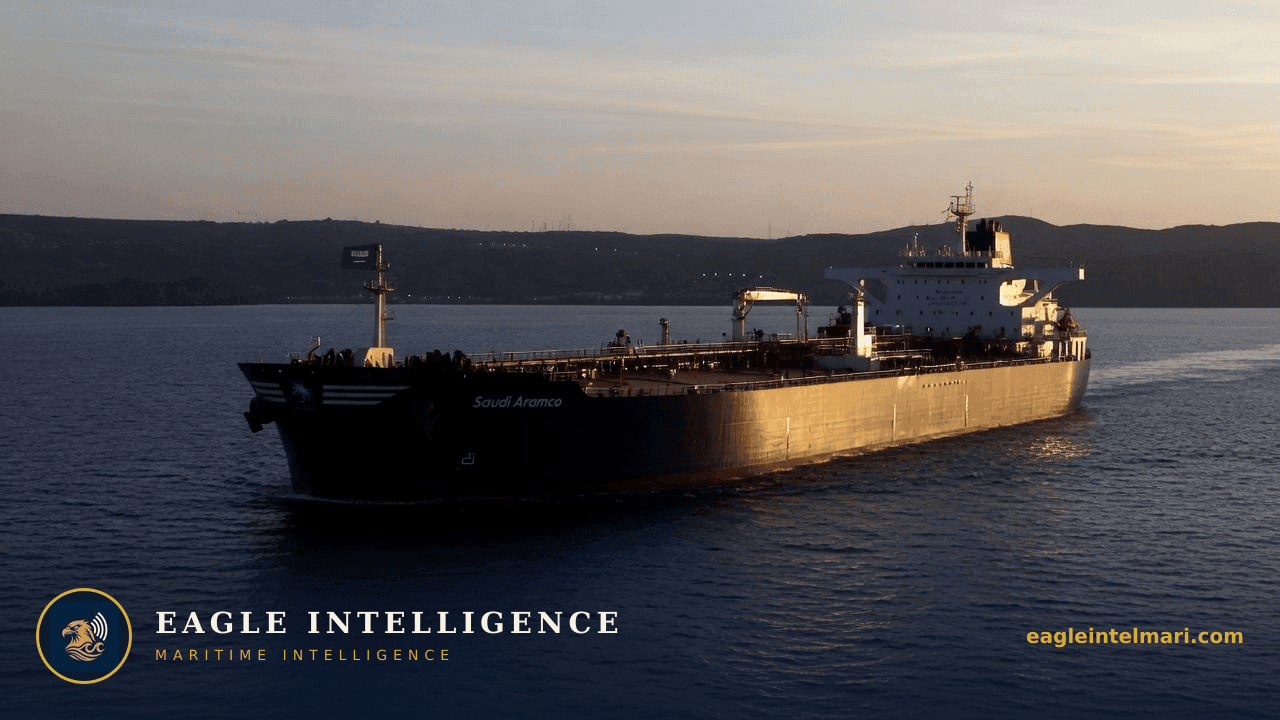
Three Saudi-flagged supertankers transited the Strait of Hormuz within hours of the agreement ending hostilities, carrying six million barrels and providing the first real-time test of whether the new political settlement translates into lower-risk tanker operations.
Advertisement
Advertisement
Three Saudi-flagged VLCCs carrying six million barrels of crude cleared the Strait of Hormuz in the early hours after the Trump administration signed the deal with Tehran, according to ship-tracking data. The timing suggests Riyadh moved vessels the moment political risk appeared to drop.
The three tankers represent roughly 2 percent of typical daily Saudi crude liftings. Their passage occurred while most other Gulf loaders remained at anchor, indicating a deliberate, high-level decision to test the corridor immediately rather than wait for formal declarations from either capital. No escort or special routing was reported, which itself signals that owners and masters judged the immediate military threat to have receded.
Riyadh has faced pressure to restore barrels after weeks of disrupted loadings. The six million barrels now heading east or west will land in refineries that had already begun drawing down inventories. A single additional VLCC sailing per day at this pace would restore roughly 15 percent of pre-conflict Saudi export volume within ten days, enough to ease some spot-market tightness in Asia but not enough to collapse differentials.
Underwriters that had quoted Hormuz additional premiums above 1.5 percent of hull value will now face pressure to cut rates within 48 to 72 hours once more transits are confirmed. London and Singapore syndicates typically move first on Gulf risk, and any visible decline in rates will quickly feed into charter-party negotiations. Hull markets are likely to follow more slowly because physical damage exposure remains until mines and missiles are verifiably removed from play.
Charterers holding contracts of affreightment that were suspended during the conflict are already circulating indications for prompt Gulf loadings. The sudden availability of three large Saudi units will likely pull some Eastbound cargoes forward, tightening tonnage supply in the Indian Ocean and supporting VLCC rates on the AG-Far East route by an estimated $5,000–8,000 per day in the near term. Westbound arbitrage to Europe or the US Gulf remains less attractive until Red Sea routing clarity emerges.
Saudi Arabia’s decision to keep vessels under its own flag rather than shifting to a more neutral registry during the crisis now looks like a calculated signal of confidence. Other owners with Iranian or Emirati-linked tonnage will watch closely; a stable Hormuz corridor could encourage reflagging back to higher-prestige flags that had been avoided while missiles were in flight.
If Iranian forces maintain radio silence and no incidents occur in the next ten days, premiums could fall below 0.5 percent and normal daylight transits resume, benefiting owners and charterers alike. A single unexplained drone sighting or mine report would freeze the rate decline and send several VLCCs back to anchorages. The most volatile scenario involves a political dispute over inspection regimes at the strait’s entrance, which would reintroduce delays without restoring full war-risk pricing.
Advertisement
Advertisement
Live Hormuz transit status and war-risk band.
Live 1–5 shipping war-risk level across monitored chokepoints.
⚠️ Intelligence Disclaimer: This analysis is produced by Eagle Intelligence's AI-assisted automated analysis system and is provided for informational purposes only. See our editorial standards. It is not a substitute for official maritime safety advisories from UKMTO, MSCHOA, IMO, or flag state authorities. Operational decisions should always be based on official guidance and professional judgment. Eagle Intelligence accepts no liability for any loss arising from reliance on this content.
Live chokepoint status, war-risk shifts, and the daily maritime wire, straight to your inbox. Free.
Leave a comment
All comments moderated for quality
