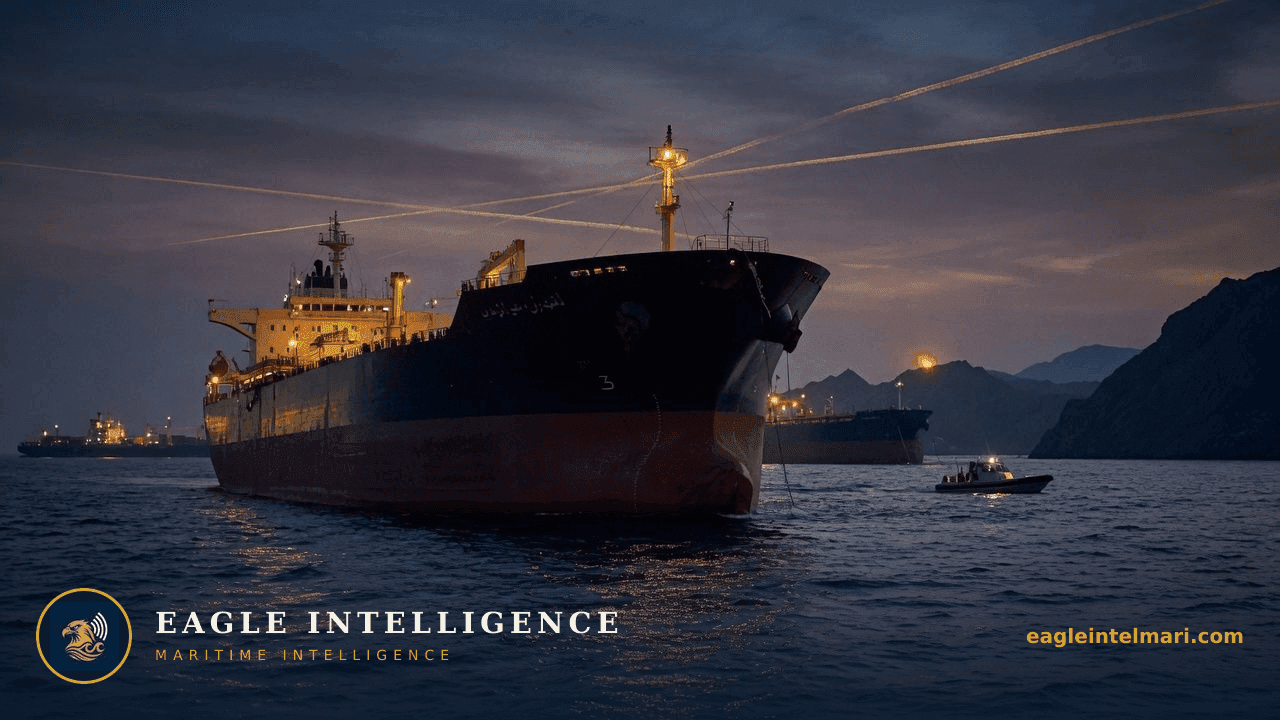
Tanker owners and charterers must decide within days whether to continue scheduled transits through the Strait of Hormuz or accept multi-week delays and sharply higher insurance after a second vessel was struck amid rising U.S.-Iran tensions.
Advertisement
Advertisement
For tanker owners and energy charterers with vessels already ballasted toward the Strait of Hormuz, the immediate decision is whether to press ahead with the next transits or divert south around the Cape of Good Hope, locking in weeks of delay and several hundred thousand dollars in extra bunker and war-risk costs.
The latest strike follows an earlier incident in the same chokepoint, confirming that commercial traffic is no longer operating under a temporary lull. With two vessels hit in quick succession, masters and company security officers are now treating every Hormuz passage as a high-threat evolution rather than a routine strait transit. For VLCCs and Suezmaxes lifting from the Gulf, that means tighter formation steaming where possible and fresh requests for any available naval presence.
Hull and P&I underwriters have already begun repricing voyages that touch Iranian or Omani waters on either side of the strait. Early indications point to additional premiums of 0.25 to 0.40 percent of hull value per transit, levels last seen during the 2019 tanker attacks. Charterers fixing on voyage charters are absorbing the first hits; time-charter operators are watching clauses that allow owners to refuse Hormuz calls without penalty once a second strike is officially logged.
Manning agents supplying officers and ratings for tankers on the AG–Asia or AG–Europe runs report growing numbers of seafarers declining Hormuz passages outright. Contracts that once carried a standard bonus now require hazard pay approaching 150 percent of base wages plus war-risk life cover. Companies that cannot meet these terms risk vessel delays while they source replacement crews willing to sail the route.
Owners weighing the Cape route for 280,000-tonne cargoes calculate an extra 18–22 days and roughly 1,200–1,400 tonnes of additional fuel at current prices. The added distance also pushes some vessels beyond their next scheduled dry-dock windows, creating a secondary maintenance bottleneck later in the year. For charterers, the reroute math only closes if Brent crude stays above roughly $78 for the remainder of the fixture.
Flags that have historically accepted Hormuz traffic are now demanding enhanced voyage security plans before issuing new clearances. Several Red-Ensign and European registries have quietly advised masters to file updated SSP amendments within 72 hours of any Hormuz approach. Ports in Fujairah and Khor Fakkan, already handling diverted traffic, are tightening slot allocations and raising berthing guarantees for vessels that elect to wait outside the strait until conditions stabilize.
Track the next three laden transits reported through the strait over the coming 96 hours; any further incident or a formal convoy request from a major owner will tip the market from elevated premium to outright avoidance.
Advertisement
Advertisement
Indicative Additional War Risk Premium (AWRP) ranges — not a binding insurance quote.
Live Hormuz transit status and war-risk band.
Live 1–5 shipping war-risk level across monitored chokepoints.
⚠️ Intelligence Disclaimer: This analysis is produced by Eagle Intelligence's AI-assisted automated analysis system and is provided for informational purposes only. See our editorial standards. It is not a substitute for official maritime safety advisories from UKMTO, MSCHOA, IMO, or flag state authorities. Operational decisions should always be based on official guidance and professional judgment. Eagle Intelligence accepts no liability for any loss arising from reliance on this content.
Live chokepoint status, war-risk shifts, and the daily maritime wire, straight to your inbox. Free.
Leave a comment
All comments moderated for quality
