Kyiv's intensified drone campaign against Russian refineries is pushing record volumes of crude onto the water, reshaping tanker deployment patterns and testing the limits of sanctions enforcement at sea.
Advertisement
Advertisement
Kyiv's record drone strikes on Russian refineries are forcing Moscow to export more crude than at any point since the 2022 invasion, sending additional barrels into already strained global trade lanes.
With domestic processing capacity under sustained attack, Russian producers have little choice but to load more unrefined barrels for foreign markets. This shift reverses earlier efforts to keep crude inside Russia for value-added refining and instead accelerates the movement of cargoes through the Baltic, Black Sea, and Far East terminals. The result is a sudden increase in laden tanker traffic at a time when Western monitoring of ship-to-ship transfers has already intensified.
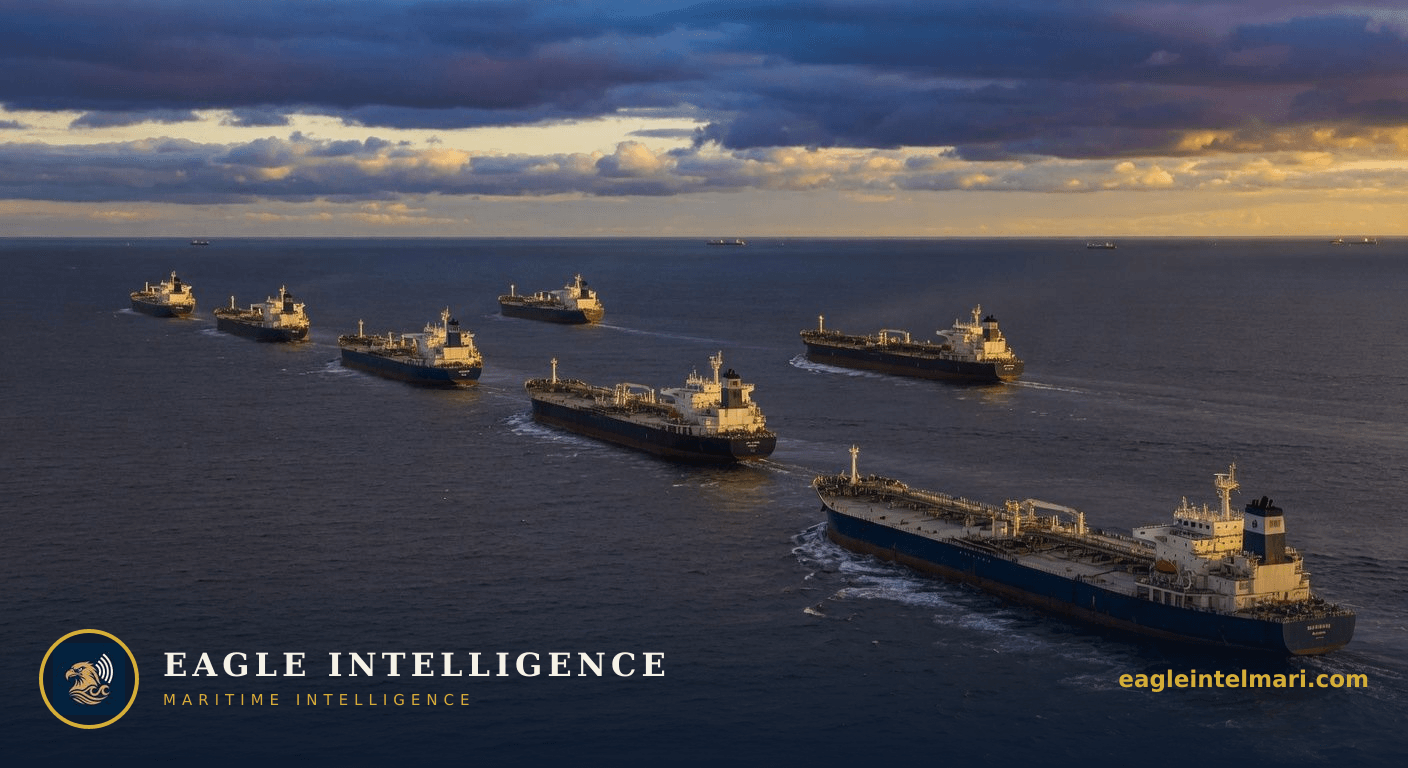
The vessels carrying this additional volume belong overwhelmingly to the shadow fleet that has grown since sanctions tightened in late 2022. Many of these tankers operate with opaque ownership structures, frequent flag changes, and minimal insurance coverage. Higher export volumes mean longer queues at Russian terminals and greater reliance on older, higher-risk tonnage that would otherwise sit idle. Insurers and flag registries are watching for signs that this surge will finally overwhelm the fleet's ability to rotate vessels without detection.
Charterers seeking clean tonnage for legitimate trades now face competition from operators willing to pay premium rates for any available ship that can load in Russian ports. Aframax and Suezmax segments serving the Baltic and Black Sea have seen prompt availability drop sharply. Owners who previously avoided Russian calls are reconsidering as day rates climb, while those already engaged in sanctioned trades extend voyages to avoid returning to the same high-risk loading zones too quickly.
Protection-and-indemnity clubs have so far maintained cover for most shadow-fleet operators through carefully worded exclusions, yet the sudden rise in Russian loadings increases the probability of a major spill or collision involving an uninsured or under-insured vessel. Hull underwriters are expected to raise war-risk premiums on routes out of Ust-Luga and Novorossiysk within weeks. Ports in India and China, the primary destinations for these cargoes, may soon face pressure to impose stricter documentation requirements to avoid secondary-sanction exposure.
Seafarers on shadow-fleet tankers already endure extended periods without shore leave and uncertain contract enforcement. The export surge means more vessels remain at anchor off Russian terminals or loitering for ship-to-ship transfers in the eastern Mediterranean and off West Africa. Fatigue and morale issues compound when masters must navigate increasingly crowded anchorages while avoiding naval patrols and drone surveillance.
The current pattern recalls the 2019-2020 period when Iranian and Venezuelan sanctions drove similar volumes onto aging tankers operating outside normal insurance markets. In that earlier episode, a single collision involving an uninsured vessel triggered rapid regulatory tightening and higher premiums across the entire dirty-tanker segment. Today's Russian shadow fleet is larger, yet its vessels are on average older and its ownership chains more fragmented, suggesting any incident could produce even faster market and regulatory reaction.
If Ukrainian strikes continue at current intensity, Russian crude exports could remain elevated through the third quarter, sustaining high shadow-fleet utilization and supporting firmer freight rates. Should Moscow succeed in restoring refinery throughput via rapid repairs, export volumes would ease and the fleet would return to more measured rotation patterns. A third possibility involves targeted Western sanctions on specific terminals or ship-to-ship locations, which would force operators to reroute cargoes through longer, costlier voyages and accelerate the retirement of the least compliant vessels.
Advertisement
Advertisement
Live 1–5 shipping war-risk level across monitored chokepoints.
⚠️ Intelligence Disclaimer: This analysis is produced by Eagle Intelligence's AI-assisted automated analysis system and is provided for informational purposes only. See our editorial standards. It is not a substitute for official maritime safety advisories from UKMTO, MSCHOA, IMO, or flag state authorities. Operational decisions should always be based on official guidance and professional judgment. Eagle Intelligence accepts no liability for any loss arising from reliance on this content.
Live chokepoint status, war-risk shifts, and the daily maritime wire, straight to your inbox. Free.
Leave a comment
All comments moderated for quality
