U.S. forces have now disabled a sixth sanctioned tanker heading for Iran, showing that the maritime blockade is moving from announcement to sustained operational reality with direct consequences for shadow-fleet owners and global crude flows.
Advertisement
Advertisement
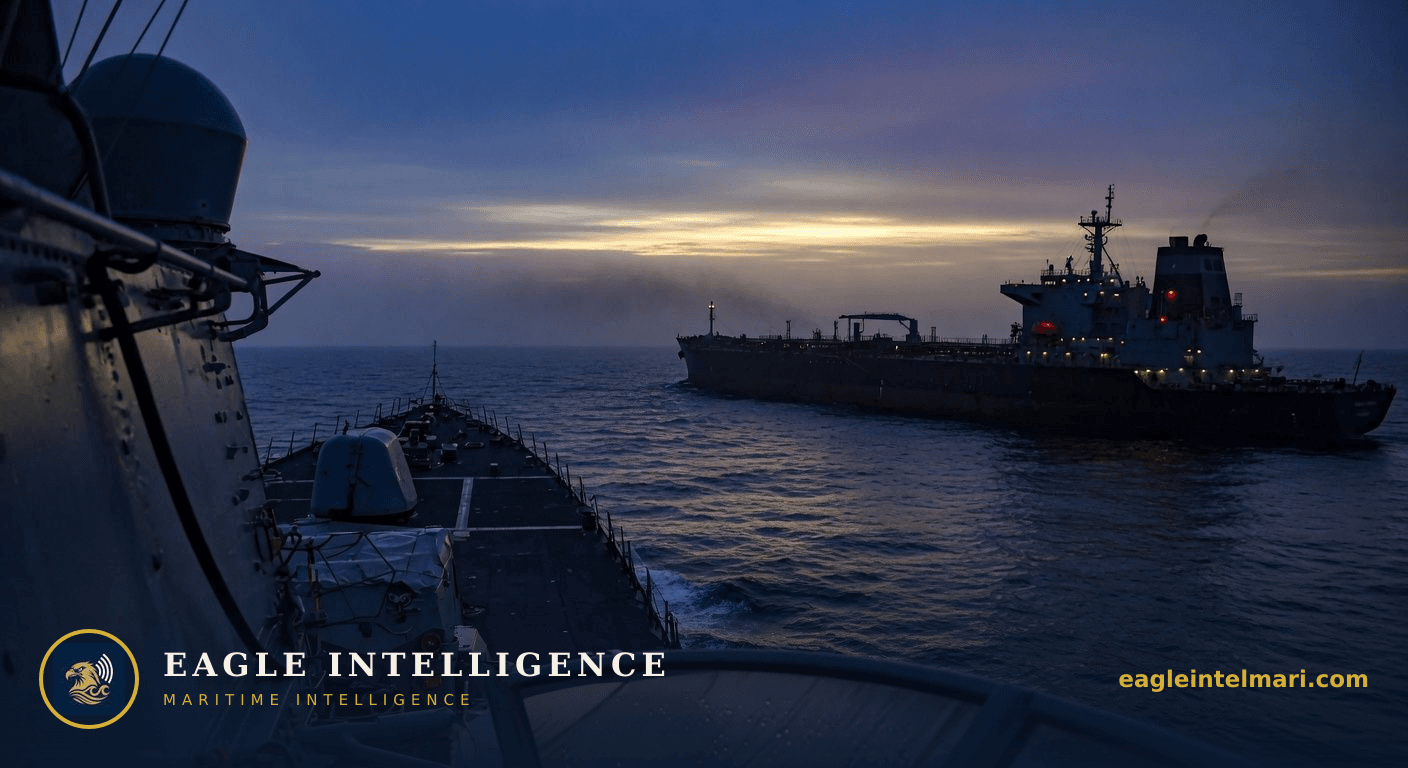
U.S. forces disabled a sanctioned oil tanker attempting to reach an Iranian port on Tuesday, the sixth commercial vessel stopped since Washington began enforcing a maritime blockade. The action underscores a deliberate campaign to choke off seaborne crude deliveries to Iran and raises immediate questions about how long the remaining shadow fleet can continue operating.
Each successive interdiction lowers the expected success rate for captains and owners willing to test the cordon. With six vessels already removed from service in a matter of weeks, the probability of safe arrival has shifted from a calculated gamble to a demonstrably poor bet. Owners still running older tonnage under obscure flags now face a daily decision: accept rapidly rising insurance quotes or divert cargoes to alternative buyers before the next patrol intercepts them.
The remaining vessels still carrying Iranian crude must either accept dramatically higher war-risk premiums or seek new flags and managers, both of which add friction and delay. Hull insurers, already wary of repeated claims, are likely to demand higher deductibles or outright refuse cover for repeat offenders. Charterers who previously relied on discounted Iranian barrels now confront a narrower window to move product before freight rates spike further.
Flag states that have tolerated repeated sanctions violations now risk secondary sanctions themselves. Several smaller registries have already begun quietly refusing new Iranian-linked applications, forcing operators to hunt for even more obscure jurisdictions. Ports that once provided convenient ship-to-ship transfer points in the Arabian Sea are tightening access controls, lengthening voyage times and increasing fuel burn for vessels forced to loiter farther offshore.
Seafarers aboard these tankers face the most immediate personal risk. Interdictions frequently result in prolonged detentions, lost wages, and uncertain repatriation. Experienced officers are already declining contracts on sanctioned tonnage, tightening the labor market for the remaining vessels and pushing crewing costs higher. P&I clubs have begun reminding members that coverage may be void where vessels knowingly breach blockade zones.
If interdictions continue at the current pace, the blockade could remove another four to six vessels by late summer, effectively freezing most Iranian crude exports by sea. A negotiated pause in enforcement would allow a limited number of compliant voyages under strict monitoring, stabilizing spot prices but leaving the shadow fleet permanently diminished. The most volatile path involves Iranian retaliation against shipping in the Strait of Hormuz, which would trigger a sharp spike in global war-risk rates and force naval powers to expand convoy operations.
The present campaign recalls the 1984–1988 Tanker War, when both Iran and Iraq targeted neutral shipping to pressure opponents. Today’s environment differs in one critical respect: enforcement is overwhelmingly one-sided and backed by superior surveillance and boarding capacity. That asymmetry suggests the current blockade can be sustained longer than its 1980s predecessor, provided political will in Washington remains constant.
Advertisement
Advertisement
Live 1–5 shipping war-risk level across monitored chokepoints.
⚠️ Intelligence Disclaimer: This analysis is produced by Eagle Intelligence's AI-assisted automated analysis system and is provided for informational purposes only. See our editorial standards. It is not a substitute for official maritime safety advisories from UKMTO, MSCHOA, IMO, or flag state authorities. Operational decisions should always be based on official guidance and professional judgment. Eagle Intelligence accepts no liability for any loss arising from reliance on this content.
Live chokepoint status, war-risk shifts, and the daily maritime wire, straight to your inbox. Free.
Leave a comment
All comments moderated for quality
