Japan’s time-chartered VLCCs are executing ship-to-ship transfers in Malaysia and sourcing US barrels to bypass Strait of Hormuz disruptions, forcing a structural change in crude logistics for East Asian refiners.
Advertisement
Advertisement
Japan’s oil refiners are rerouting VLCC logistics through Malaysian waters and the US Gulf to maintain crude inflows while Hormuz movements remain constrained, a shift that is already altering voyage economics and tonnage deployment across the Pacific.
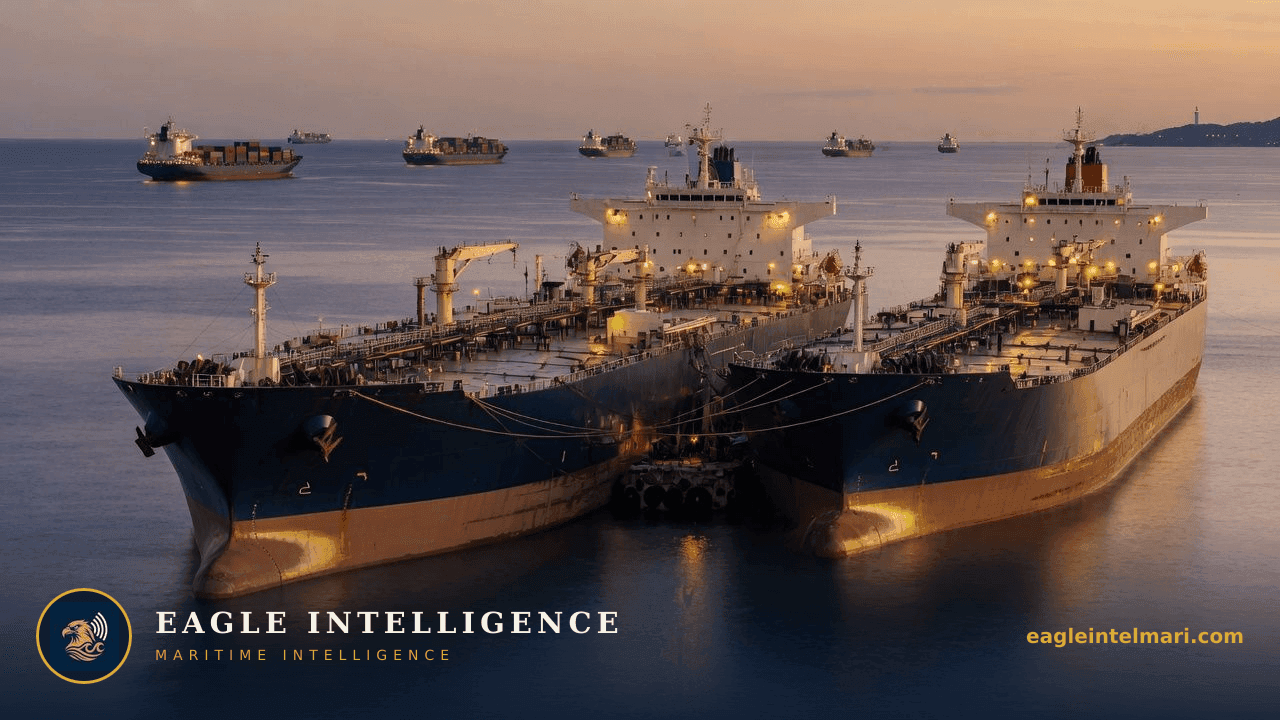
Time-chartered supertankers are now routinely conducting ship-to-ship transfers off Malaysia instead of loading directly at Gulf terminals. This workaround allows cargoes to reach Japanese ports without transiting the strait, but it adds days, lightering costs and coordination complexity that owners and charterers had previously avoided.
Several of these VLCCs have switched to loading in the US Gulf and heading westward via the Cape or Panama. The longer hauls consume more tonnage and tighten availability for other charterers, particularly those still hoping to lift Middle East barrels when Hormuz reopens.
Not all vessels are finding alternative work. Some remain partially idle, burning cash while waiting for clearer signals on Hormuz transit windows. This creates immediate leverage for charterers seeking cheaper rates on vessels that would otherwise be fixed into long-haul Middle East voyages.
Hull and P&I underwriters are already repricing war-risk premiums for any tonnage that still attempts Hormuz passage. Crewing departments face parallel questions: whether to accept bonuses for Hormuz transits or to keep seafarers on vessels locked into Malaysian STS loops with uncertain discharge dates.
If Hormuz traffic normalises within four weeks, Malaysian STS operations will likely unwind quickly and US Gulf loadings will ease. A prolonged closure beyond Q3 would entrench the Malaysia hub, push more Japanese demand toward US and West African grades, and lift period-charter rates for modern VLCCs by 15-25 percent. A partial reopening with selective restrictions would create the most volatile outcome, with owners splitting fleets between high-premium Hormuz runs and safer but lower-yielding Malaysian loops.
Advertisement
Advertisement
Live Hormuz transit status and war-risk band.
Live 1–5 shipping war-risk level across monitored chokepoints.
⚠️ Intelligence Disclaimer: This analysis is produced by Eagle Intelligence's AI-assisted automated analysis system and is provided for informational purposes only. See our editorial standards. It is not a substitute for official maritime safety advisories from UKMTO, MSCHOA, IMO, or flag state authorities. Operational decisions should always be based on official guidance and professional judgment. Eagle Intelligence accepts no liability for any loss arising from reliance on this content.
Live chokepoint status, war-risk shifts, and the daily maritime wire, straight to your inbox. Free.
Leave a comment
All comments moderated for quality
