Owners and charterers now have a viable third yard cluster for 174,000-cubic-metre LNG newbuildings, forcing immediate recalibration of delivery slots and pricing discussions with Korean and Japanese builders.
Advertisement
Advertisement
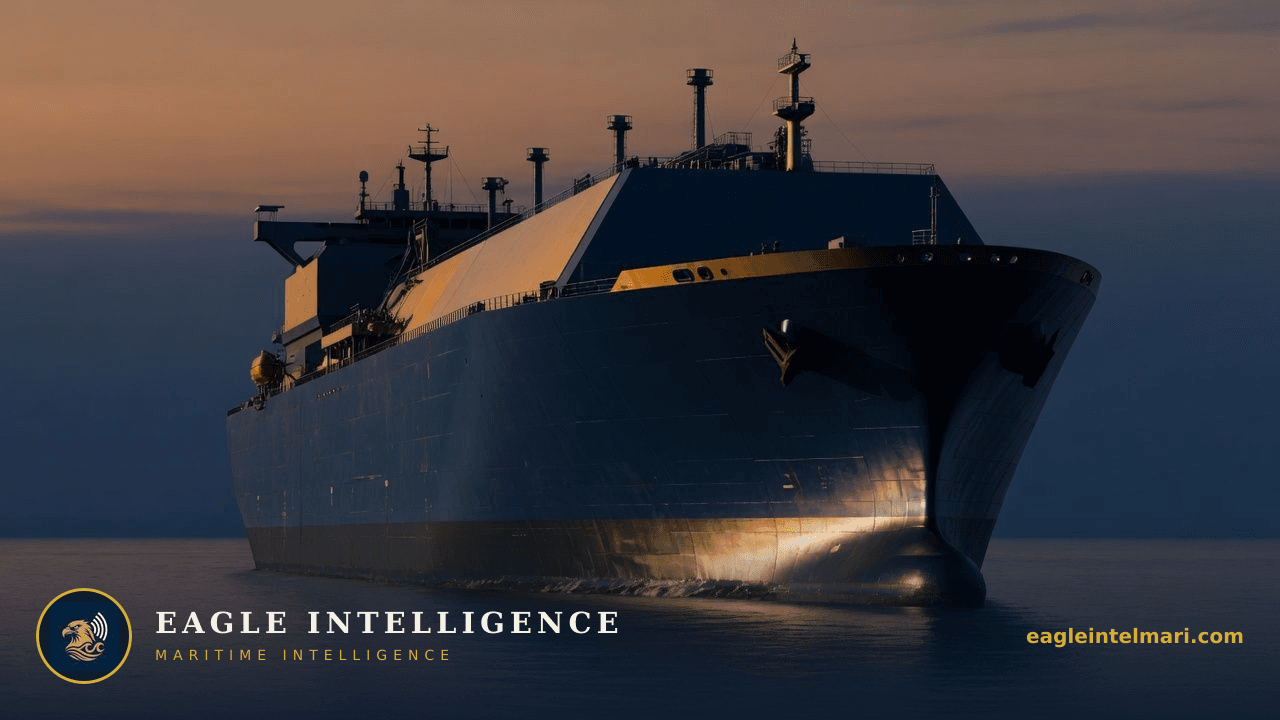
LNG charterers evaluating newbuild contracts must now weigh Chinese yards against the traditional Korean and Japanese options following Tuesday's handover of two 174,000-cubic-metre vessels.
The delivered ships match the exact capacity range now favoured by QatarEnergy and several US exporters for their 2027-2029 expansion waves. At this size, operators achieve optimal cargo parcels without triggering the higher port dues or canal restrictions that apply to the 200,000-plus cbm Q-Flex successors. Charterers locking in tonnage for Atlantic-to-Asia routes therefore gain a new negotiating lever: Chinese yards can quote against Hyundai, Samsung and Mitsubishi without the previous technology gap.
Previous Chinese LNG carriers relied on membrane containment licences from GTT or Moss Rosenberg designs. The two vessels handed over this week were designed and classed entirely under domestic approvals, eliminating royalty fees that previously added several million dollars per hull. Owners who had been reluctant to place orders in China because of these pass-through costs now see a clearer total-cost-of-ownership calculation, particularly for vessels that will trade under long-term charters where daily rates are fixed.
Hyundai Heavy Industries and Samsung Heavy Industries had already lengthened their LNG orderbooks into 2029. The arrival of credible domestic competition gives charterers leverage to threaten dual-yard tenders, which in turn compresses the premiums Korean builders have commanded since 2022. For any owner still holding an option on a 2028 delivery in Ulsan or Geoje, the Chinese milestone shortens the window in which those yards can demand 15-20 percent above 2024 benchmark prices.
P&I clubs and hull underwriters have historically applied elevated deductibles or additional premiums to first-of-class Chinese gas carriers. With two identical vessels now in service and under Chinese classification society survey, the data set for loss records begins to form. Early indications from brokers suggest that owners placing follow-on orders could see war-risk and marine hull quotes converge toward Korean levels within 18 months, provided the first two units complete uneventful laden voyages through the Strait of Malacca.
Chinese officers and ratings qualified for LNG carriers remain fewer than those available from the Philippines or Eastern Europe. Operators accepting early Chinese newbuildings will therefore compete for the same limited pool of experienced Chinese LNG officers already serving existing tonnage. Manning agencies report that daily wage differentials for these specialists have already widened by roughly $80-120 per day; any acceleration in Chinese deliveries will widen that gap further and may force owners to accept mixed-nationality crews earlier than planned.
Liberia and the Marshall Islands have signalled willingness to review Chinese class society documentation, yet several European charterers still require dual class or additional vetting before accepting a vessel on a 15-year time charter. The two delivered carriers will therefore serve as de-facto test cases for flag acceptance; any delay in obtaining statutory certificates will push the effective commercial delivery date beyond the yard handover milestone already announced.
Advertisement
Advertisement
⚠️ Intelligence Disclaimer: This analysis is produced by Eagle Intelligence's AI-assisted automated analysis system and is provided for informational purposes only. See our editorial standards. It is not a substitute for official maritime safety advisories from UKMTO, MSCHOA, IMO, or flag state authorities. Operational decisions should always be based on official guidance and professional judgment. Eagle Intelligence accepts no liability for any loss arising from reliance on this content.
Live chokepoint status, war-risk shifts, and the daily maritime wire, straight to your inbox. Free.
Leave a comment
All comments moderated for quality
