Hormuz VLCC Fixtures Face Narrow Window as Brent Slips to $72.69
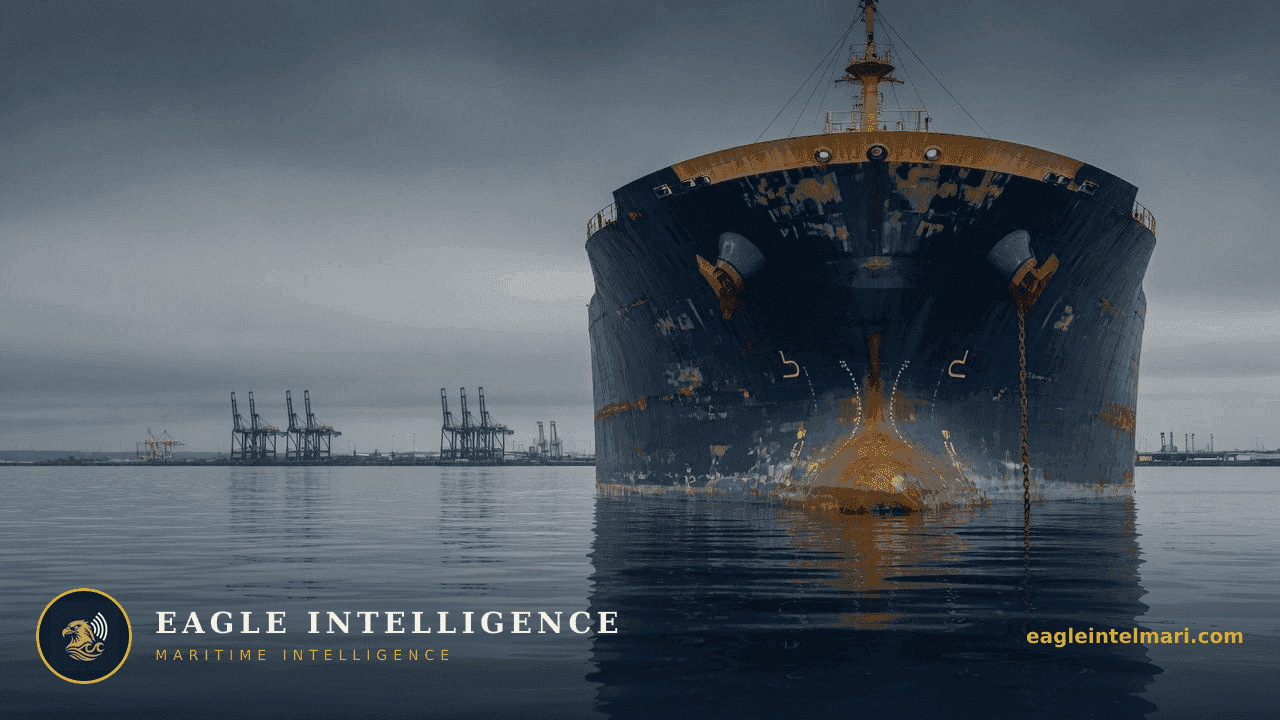
Tanker owners and charterers with Gulf loadings now weigh whether to lock in June and July fixtures before any U.S.-Iran diplomatic opening closes.
Live war-risk alerts, Hormuz status, regulatory changes, port disruptions and shipping-market intelligence — updated around the clock.

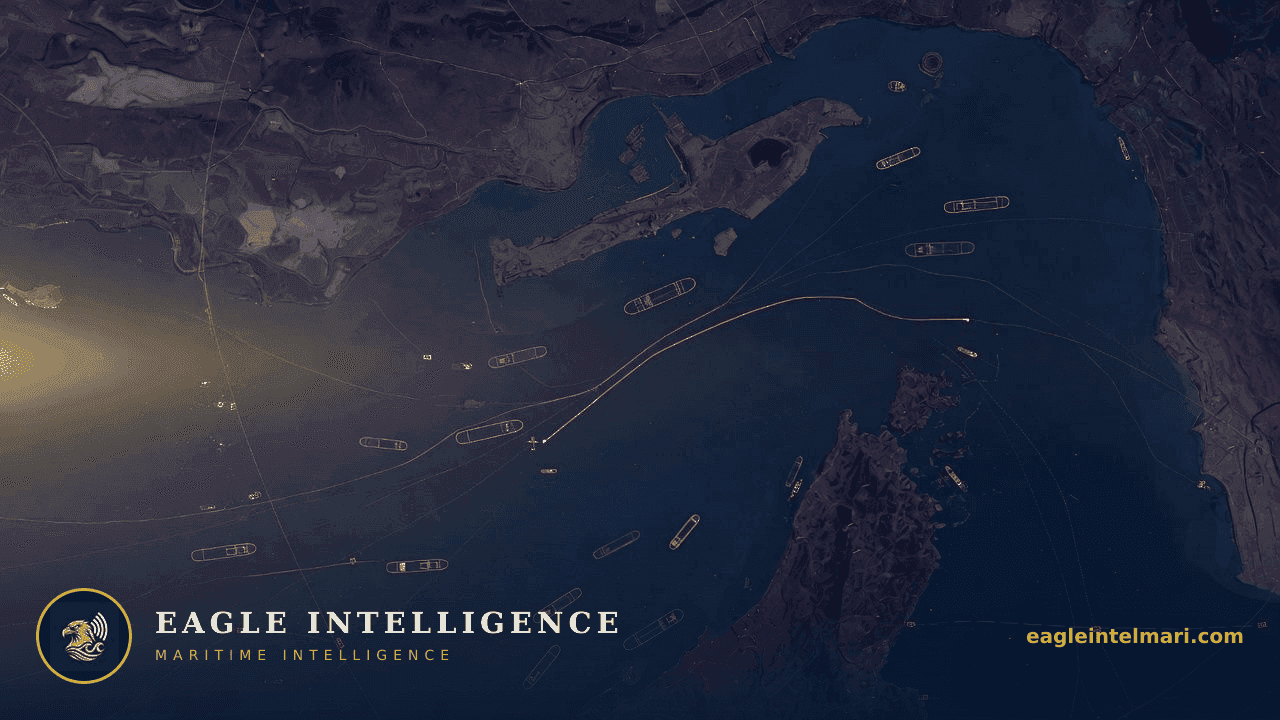
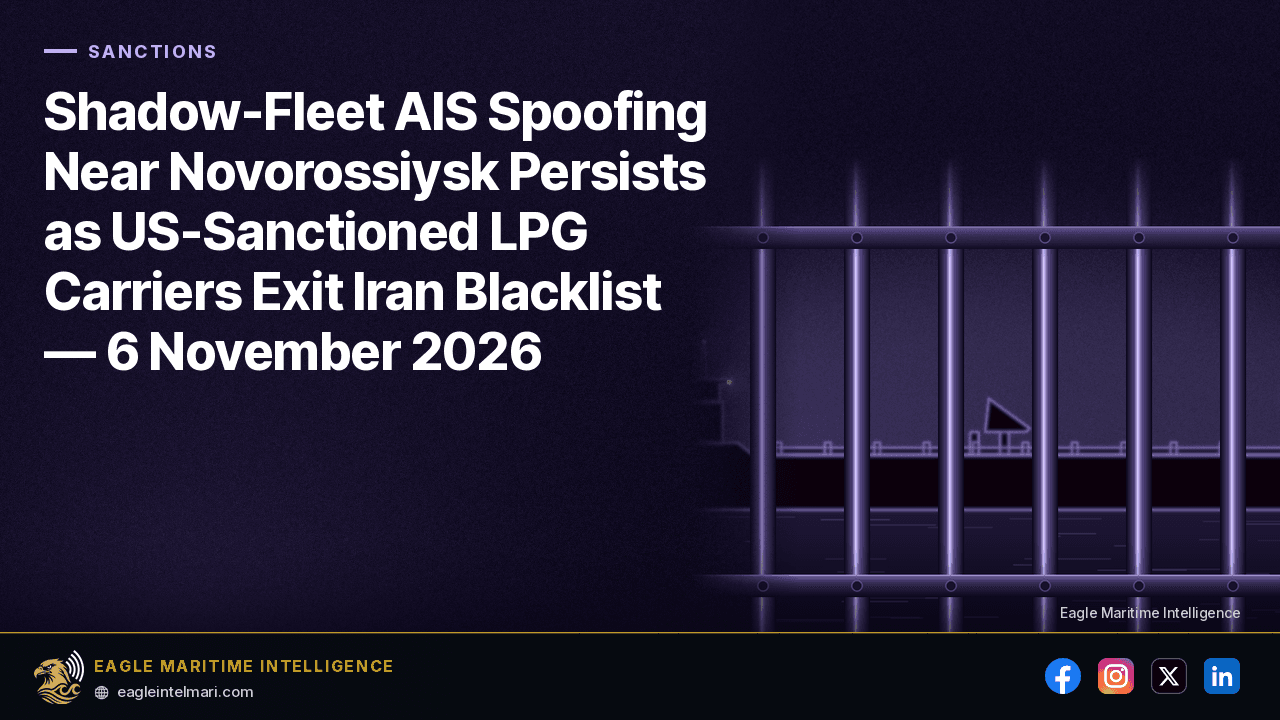
Seven sanctioned Russian tankers have been spoofing AIS signals for 90 days to mask voyages from Novorossiysk while US-sanctioned LPG carriers were removed from Iran’s PGSA non-compliance list; the pattern shows enforcement announcements outpacing actual detentions and leaves charterers, agents and crews exposed to unpaid claims and port refusals.
Eagle Intelligence · Read full article →

Tanker owners and charterers with Gulf loadings now weigh whether to lock in June and July fixtures before any U.S.-Iran diplomatic opening closes.

Tanker owners and charterers are sending VLCCs back through the Strait of Hormuz after Iran’s recent strikes, betting that traffic volume itself now serves as the best deterrent.

Shipowners and charterers in the dry bulk sector must decide whether to fix spot tonnage now or hold for a rebound after the Baltic Dry Index fell for the sixth consecutive session to 2,490 points.

Shipowners holding dry-bulk tonnage face a clear timing decision on asset sales after values rose steadily through the first half of 2026 on firmer freight, higher utilisation and stronger commodity demand.

Tanker owners and charterers must now decide whether to risk the Strait of Hormuz at 90 percent reduced throughput or absorb extended Cape voyages, after two strikes in 72 hours forced suspension of the IMO evacuation route.

Maersk’s upward revision of 2026 earnings signals sustained freight-rate strength that now shapes chartering and capacity decisions across the container sector.

Naval oceanographers and Arctic-route planners now operate the ex-RV Petrel, whose record of deep recoveries gives the service an immediate edge in seabed mapping north of the Bering Strait.

Tanker owners routing through the Strait of Hormuz must now decide whether to maintain scheduled transits, suppress AIS, or accept sharply higher war-risk premiums after weekend attacks reduced the number of vessels openly broadcasting their passage.

Renewed US and Iranian military exchanges in the Strait of Hormuz dominate the period, triggered by drone strikes on commercial tankers and ending a short-lived pause in hostilities. Gulf VLCC loadings have resumed but owners and charterers face immediate routing and war-risk premium decisions, while secondary developments in the Baltic and digital seafarer tools add operational complexity. The pattern links directly to existing shipping recovery pressures in the Red Sea and Hormuz corridors.

Baltic LNG operators and their insurers must now decide whether to reroute, arm escorts or accept combatant status for Russian energy hulls after Estonia documented heavy machine guns on one of Moscow’s key carriers.
Showing 271–280 of 921 articles